ATTENTION: Visitors looking for the Royal Eagle restaurant website, click here
Showing posts with label Music. Show all posts

20100802

Old Roman Chant

I recently purchased a beautiful CD called "Chants de l'Eglise de Rome: Période Byzantine." It is a recording of hymns from a period in history when the Eastern style of worship had a strong influence on the Church of Rome.

Historically, Rome was always kind of the oddball of the Christian world. They used a different language, had different liturgical practices, and the bishop of the Roman church was the only Orthodox patriarch in the west. These and other differences contributed to the slow drifting apart of the Eastern and Western halves of the Church, and eventually led to the tragic split that became formal in the middle of the eleventh century.

About four hundred years before that split, the Italian peninsula was heavily populated by Eastern Christians (Greek, Arab, etc) whose influence is apparent in the art, architecture, and music of that era.

The liner notes from the CD tell the story in more detail:
OLD ROMAN CHANT 7th-8th CENTURIES
Byzantine period

The repertory to which the works on this record belong is commonly called the "Old Roman." It is the early chant of the Church of Rome, anterior to that which is today called the "Gregorian," which came into existence in the Carolingian Empire, probably in the region of Metz, deriving its structure from the Roman chant, but completely modifying its ornamentation.

The early chant of the Church of Rome took shape during the 7th and 8th centuries. Its distinctly Oriental character, which gives it the aspect of an ornamented cantilation, is by no means surprising when one remembers that at this period Italy was dependent not only on the Byzantine Emperor, but was also a land of asylum for a large Greek colony which had sought refuge there.

In fact, after the invasion of Palestine by the Persians, the number of Syrian and Greek monasteries multiplied in Italy from the South as far as inside Rome itself. And the iconoclast quarrel was all the more reason for the monks to flee from the Orient and re-assemble in the Italian peninsula. Between 726 and 775 nearly fifty thousand monks took refuge in Southern Italy. Many popes of Syrian or Greek origin presided over the destinies of the Church of Rome at the period (fourteen out of twenty popes between 644 and 772 were Greek-speaking). The "Liber pontificalis" mentions, besides their Oriental origins, the musical competence of three of them: Leo II, Sergius I, and Gregory III. It was under the influence of these popes that the Roman liturgy became profoundly Eastern in character.

Introduced into Gaul by Pepin the Short and then under Charlemagne, the Old Roman chant gave birth to the Carolingian chant, similar in musical structure, but very different in ornamentation.

Paradoxically the Carolingian chant later became the official "Gregorian" chant, even to the point of supplanting in Rome itself the Old Roman, which finally disappeared in the 13th century.
Although a number of Roman popes were speakers of Greek, the lingua franca of the western Church at the time was Latin. So, while the hymns on this CD all sound very Byzantine, they are all in Latin rather than in Greek. That's just fine with me, as Latin, in my opinion, is a far prettier language than Greek.

Here is a sample from the CD. It is a hymn called "Terra Tremuit" ("the earth trembled") which is based on Psalm 76:


Terra tremuit et quievit
dum resurgeret in iudicio Deus, alleluia.
Notus in Iudea Deus in Israel magnum nomen eius, alleluia,
dum resurgeret in iudicio Deus, alleluia.
Et factus est in pace locus eius et habitatio eius in Sion, alleluia,
dum resurgeret in iudicio Deus, alleluia.
Ibi confregit cornua arcum, scutum, gladium et bellum,
iluminans tu mirabiliter a montibus aeternis, alleluia.
Terra tremuit et quievit, dum resurgeret in iudicio Deus, alleluia.

(The earth trembled and was still,
when God arose in judgment, alleluia.
In Judah is God known: His name is great in Israel, alleluia,
when God arose in judgment, alleluia.
His dwelling is in peace and in repose, and in Sion is His habitation, alleluia,
when God arose in judgment, alleluia.
There He broke bow arrows, shield, sword, and war weapons,
you are glorious, more wonderful than eternal mountains, alleluia.
The earth trembled and was still,
when God arose in judgment, alleluia)

20100506

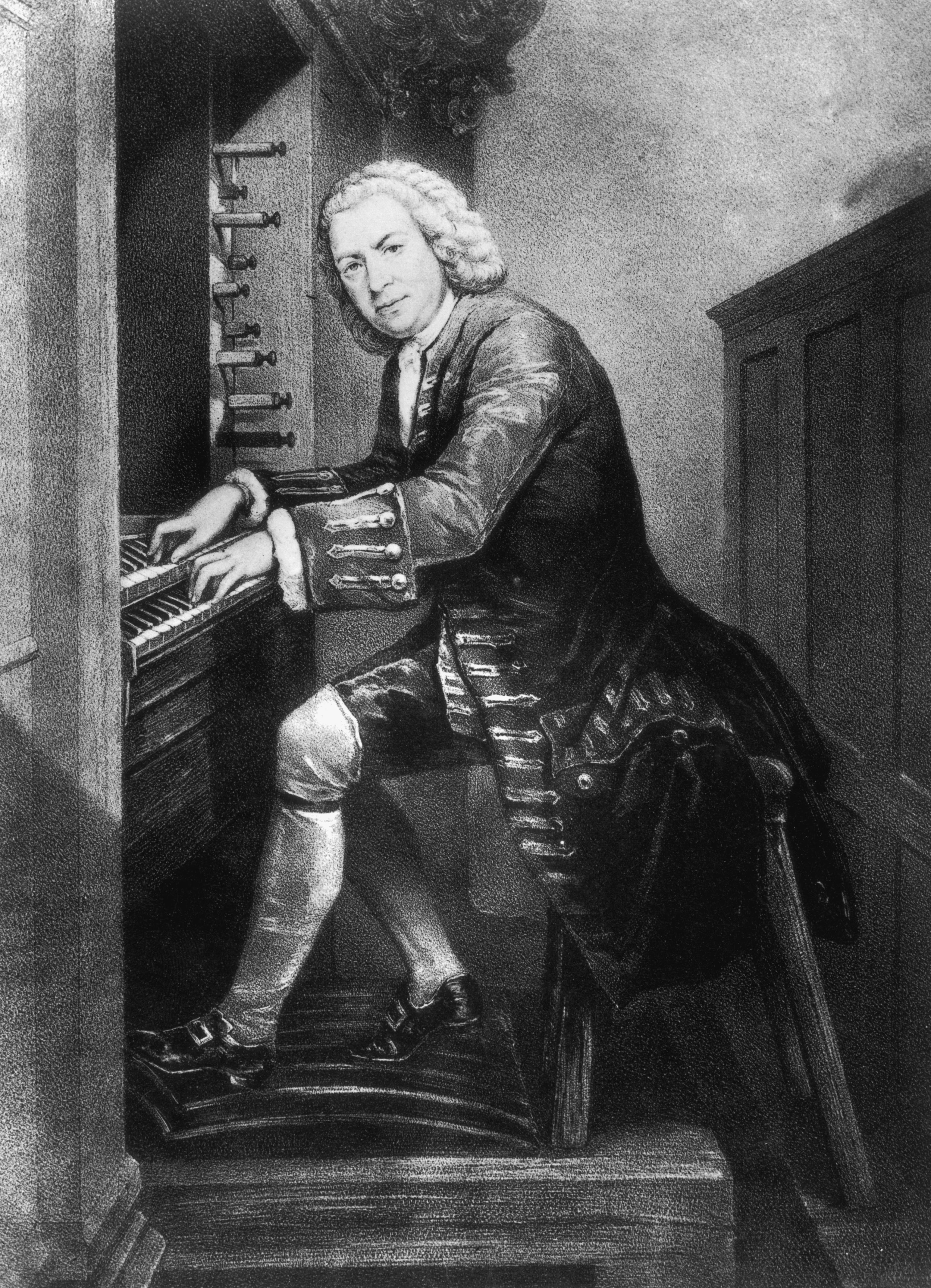
Bach: Mass in B Minor

So there we were: Two Orthodox Christians, sitting in a Presbyterian church, listening to an Episcopalian choir performing the music of a Lutheran.

Two Saturdays ago, Kathryn and I saw the Oakland Choral Society (which is not an Episcopal choir, per se, but is populated by some of our Episcopalian friends) perform Bach's Mass in B Minor at Grosse Pointe Memorial Church, which is a lovely pseudo-Gothic behemoth next to the War Memorial. (if you were at our wedding reception you now where it is.) It was a beautiful performance of one of my very favorite choral works by my hands-down favorite composer of sacred music. Bach's Mass in B Minor was cobbled together using leftover bits from other discarded works, but, even so, it is so powerful and beautiful that I'm nearly brought to tears every time I hear it.

But for all the many hundreds of times that I have listened to this piece, it never really occured to me to pay much attention to the words. This performance was the first time I had heard it since becoming Orthodox, and as I followed along with the performance I was struck by how closely the words of the Latin Mass match those of portions of the Orthodox liturgical services. In some places it's nearly verbatim.

The words of Bach's Mass are the standard words used in every choral Mass and are, with the exception of the first three lines, in Latin. A choral Mass is typically divided into six sections: Kyrie, Gloria, Credo, Sanctus, Benedictus, and Angus Dei. Sometimes those are divided further. Here are the sections:

I. Kyrie
Kyrie eleison; Christe eleison; Kyrie eleison
(Lord have mercy; Christ, have mercy; Lord, have mercy)

This is the only portion of the Latin Mass that is not in Latin. Rather, it is in Greek, and I have done some research to find out why that is and no one seems to know. But it is a very familiar phrase to anyone who has been to an Orthodox Divine Liturgy, where we say "Lord, Have Mercy" about fifty times throughout the service.

II. Gloria
Gloria in excelsis Deo et in terra pax hominibus bonæ voluntatis. Laudamus te, benedicimus te, adoramus te, glorificamus te, gratias agimus tibi propter magnam gloriam tuam, Domine Deus, Rex cœlestis, Deus Pater omnipotens.Domine Fili unigenite, Jesu Christe, Domine Deus, Agnus Dei, Filius Patris, qui tollis peccata mundi, miserere nobis; qui tollis peccata mundi, suscipe deprecationem nostram. Qui sedes ad dexteram Patris, miserere nobis. Quoniam tu solus Sanctus, tu solus Dominus, tu solus Altissimus, Iesu Christe, cum Sancto Spiritu in gloria Dei Patris. Amen.

(Glory to God in the highest, and on earth peace to men of good will. We praise You, we bless You, we adore You, we glorify You, we give thanks to You for Your great glory, Lord God, heavenly King, almighty God the Father. Lord Jesus Christ, only begotten Son, Lord God, Lamb of God, Son of the Father, who taketh away the sins of the world, Have mercy on us; You who take away the sins of the world, hear our prayers. Who sits at the right hand of the Father, have mercy upon us. For You are the only Holy One, the only Lord, the only Most High, Jesus Christ, with the Holy Spirit in the glory of God the Father, Amen.)

This section matches almost word-for-word The Great Doxology (from Matins):
Glory to God in the highest, and on earth peace, good will among men. We praise Thee, we bless Thee, we worship Thee, we glorify Thee, we give thanks to Thee for Thy great glory. O Lord, heavenly King, God the Father Almighty; O Lord, the only-begotten Son, Jesus Christ; and O Holy Spirit. O Lord God, Lamb of God, Son of the Father, that takest away the sin of the world; have mercy on us; Thou that takest away the sins of the world, receive our prayer; Thou that sittest at the right hand of the Father, have mercy on us. For Thou only art holy; Thou only art the Lord, O Jesus Christ, to the glory of God the Father. Amen.

III. Credo
Credo in unum Deum, Patrem omnipotentem... (I believe in one God, the Father Almighty...)

This is the Creed (a.k.a., the Nicene Creed, a.k.a., the Niceno-Constantinopolitan Creed) and I won't include the entire thing here. The version used in the Latin Mass is the same one used in all Western (i.e. Roman Catholic and Protestant) churches and matches that used in the East (Orthodox--both Eastern and Oriental--and Byzantine Catholic) except for two elements:

Where the original Creed says "And in one Lord Jesus Christ, the Son of God, the only-begotten, begotten of the Father before all ages, Light of Light, true God of true God...," the Latin version adds "God from God" right before "Light of Light.": "Deum de Deo, lumen de lúmine, Deum verum de Deo vero..."

The other addition is that of the Filioque, which the Latin text adds to the line "And in the Holy Ghost, the Lord and Giver of life, who proceedeth from the Father..." so that it reads "Et in Spíritum Sanctum, Dóminum et vivificántem: Qui ex Patre Filióque procédit."

IV. Sanctus
Sanctus, Sanctus, Sanctus, Dominus Deus Sabaoth; pleni sunt coeli et terra gloria tua. Hosanna in excelsis

(Holy, Holy, Holy, Lord God of Hosts; Heaven and earth are full of Your glory. Hosanna in the highest.)

This section matches the Anaphora from the Divine Liturgy, which is directly following the Creed:
Holy, Holy, Holy, Lord of Sabaoth; heaven and earth are full of Thy glory. Hosanna in the highest!

V. Benedictus
Benedictus qui venit in nomine Domini. Hosanna in excelsis

(Blessed is He who comes in the name of the Lord. Hosanna in the highest.)

This is simply a continuation of the Anaphora:
Blessed is He that cometh in the name of the Lord. Hosanna in the highest!

VI. Agnus Dei
Agnus Dei, qui tollis peccata mundi, miserere nobis.
Agnus Dei, qui tollis peccata mundi, dona nobis pacem.

(Lamb of God, who takes away the sins of the world, have mercy upon us.
Lamb of God, who takes away the sins of the world, have mercy upon us.
Lamb of God, who takes away the sins of the world, grant us peace.)

This isn't an exact match, but it's pretty close to a repeat of the Great Doxology from Matins:
Lamb of God, Son of the Father, that takest away the sin of the world; have mercy on us;
Thou that takest away the sins of the world, receive our prayer; Thou that sittest at the right hand of the Father, have mercy on us.

Much of this is simply quoting the Bible, so it shouldn't be too surprising that the services match so closely. Here is the final part of Bach's Mass, called Dona Nobis Pacem (Grant Us Peace), for your listening pleasure. Enjoy.

20100326

Good enough for me...

As you probably know, there are many points on which I take issue with Evangelical Protestantism. This is not one of them.
Enjoy...


Here's another version of the song by the Caravans

*I'm not inviting a discussion over whether or not the Christian Faith is a "religion" in the strictest sense. I think you get the point.

20100112

There's some good contemporary Christian music out there, and there's some, ah...not-so-good contemporary Christian music. (I'd put the majority of it in the second category, but that's just me.) When I was in college a friend introduced me to the music of Caedmon's Call, who I still enjoy to this day. Their music was kinda rock/folk. Lots of acoustic guitars and bongos, an occasional banjo. (I haven't heard their more recent material, so I don't know if they're still any good, but they were) I wouldn't necesarily call them a Christian band. But they are certainly a band made up of Christians, with some decidedly Christian themes to their music (like U2, P.O.D., Johnny Cash, Van Morrison).

Not that I've really been searching, but I have not heard any contemporary Christian music that I would compare to (or that is anywhere near as good as) Caedmon's Call. Until now.

I just became aware of an Orthodox Christian country band (yes, you read that right) from Lafayette, IN called the SmallTown Heroes. They claim that they are "not a band," but "friends who play music," and supposedly describe themselves as "Byzantine Bluegrass." I'm not sure what that means, but, having listened to a few snippets of their songs [here], I would definitely not classify them as "bluegrass." Nor is there really anything in their lyrics or music that is overtly Orthodox per se (except for maybe: "I want to be a picture on your Sanctuary wall..."); I mean, they're not singing in Greek or anything.

But they're good. There's something about them that makes me think of Caedmon's Call. Maybe it's the acoustic guitars, maybe it's the occasional female voice. Maybe it's that moody quality that appeals to twenty-somethings. It may not bring you to the foot of the Throne the way the monks of Valaam will, but it seems like something worth listening to. Their CD is available from Saint Romanos Records (which has a lot of non-traditional Orthodox music). And, according to their website, they will be performing live at Sacred Grounds Coffee in Lafayette on Jan 16.


Note: Since I wrote this, I went ahead and bought their CD on iTunes, and I definitely recommend it. It is reminiscent of Caedmon's Call: folksy, with some rock-n-roll, a couple of sappy love songs, country-ish in a few places, with some Christian-themed lyrics. You won't hear any of it sung in church (ever), but it is a good CD.

20091011

Good King Wenceslas


Today, Christians who observe the Old Calendar celebrate the life of King Wenceslas of Bohemia, who was martyred in 935. The Following is from Holy Trinity Church in Baltimore:

The Holy Nobleborn Prince Vyacheslav (Wenceslaus) of the Czechs was a grandson of the holy Martyress and Princess Liudmila (Comm. 16 September), and he was raised by her in deep piety. He began to rule at age 18 after the death of his father prince Bratislav (+ 920). In spite of his youthful age, he ruled wisely and justly and concerned himself much about the Christian enlightenment of the people. The holy prince was a widely educated man, and he studied in the Latin and Greek languages. Saint Vyacheslav was peace-loving. He built and embellished churches, and in the Czech capital Prague he raised up a magnificent church in the name of Saint Vitus, and he had respect for the clergy. Envious nobles decided to murder the saint and at first to incite his mother against him, and later to urge his younger brother, Boleslav, to occupy the princely throne. Boleslav invited his brother to the dedication of a church, and then asked him to tarry and stay for still another day. In spite of the warnings of his servants, the holy prince refused to believe in a conspiracy and exposed his life to the will of God. On the following day, 28 September 935, when the nobleborn Vyacheslav went to matins, he was wickedly murdered at the doors of the church by his own brother by birth and that one's servants. His body was stabbed and thrown down without burial. The mother, hearing about the murder of her son, found and placed him in a recently consecrated church at the princely court. They were not able to wash off the blood splashed on the church doors, but after 3 days it disappeared by itself. Repenting himself, the perpetrator of the fratricide transferred the relics of Saint Vyacheslav to Prague, where they were placed in the church of Saint Vitus, which the martyr himself had constructed.

St Wenceslas is also the subject of a well-known Christmas carol. The song, which recounts a legendary event in the saint's life, is really not about Christmas at all; rather it tells a story that supposedly took place on St Stephen's Day, which in the Western Church is the day after Christmas (in the Eastern Church it is two days after):

Good King Wenceslas looked out, on the Feast of Stephen,
When the snow lay round about, deep and crisp and even;
Brightly shone the moon that night, tho' the frost was cruel,
When a poor man came in sight, gath'ring winter fuel.
"Hither, page, and stand by me, if thou know'st it, telling,
Yonder peasant, who is he? Where and what his dwelling?"
"Sire, he lives a good league hence, underneath the mountain;
Right against the forest fence, by Saint Agnes' fountain."
"Bring me flesh, and bring me wine, bring me pine logs hither:
Thou and I will see him dine, when we bear them thither."
Page and monarch, forth they went, forth they went together;
Through the rude wind's wild lament and the bitter weather.
"Sire, the night is darker now, and the wind blows stronger;
Fails my heart, I know not how; I can go no longer."
"Mark my footsteps, good my page. Tread thou in them boldly
Thou shalt find the winter's rage freeze thy blood less coldly."
In his master's steps he trod, where the snow lay dinted;
Heat was in the very sod which the saint had printed.
Therefore, Christian men, be sure, wealth or rank possessing,
Ye who now will bless the poor, shall yourselves find blessing.


Read more here.

20090620

1812


Molieben on the Borodino Field (Egor Zaitsev, 2000-2002) click to enlarge

As we approach July 4th, we will, as we do every year, be hearing a lot of Tchaikovsky's 1812 Overture. So, with that in mind, here is a quiz for my readers:

What does the 1812 Overture have to do with American independence?

a) It celebrates our victory over the British in the War of 1812
b) It was written to commemorate the death of the last signer of the Declaration of Independence.
c) Absolutely nothing whatsoever...but it has cannons!!!

The correct answer, of course, is "c." The 1812 Overture (also known as Торжественная увертюра 1812-ого года) was written to commemorate Russia's successful defense of Moscow from the invading French forces under Napoleon Bonaparte in September of 1812, which culminated in the Battle of Borodino. This battle, according to Wikipedia, "was the largest and bloodiest single-day action of the French invasion of Russia, involving more than 250,000 troops and resulting in at least 70,000 casualties." The battle ended in a draw, but damaged the resources and morale of the French forces, who were further deflated when they headed to Moscow in search of winter quarters only to find the city burned down by the retreating Russian army. Napoleon and this troops were forced to head home, encountering well-deserved hardship and misery the entire way. By the time they reached Poland, Napoleon's Grande Armée had lost ninety percent of its total force.

Tsar Alexander II commissioned the piece in 1880, and two years later it premiered in the plaza in front of Christ the Savior Cathedral in Moscow. Then in May 1891, Tchaikovsky conducted the New York Philharmonic in their performance of the piece at the dedication of Carnegie Hall in Manhattan.

Tchaikovsky, an Orthodox Christian, based the intro of the piece on the Troparion of the Cross, which is a hymn that we have sung many, many times in church:

O Lord, save Thy people,
and bless Thine inheritance!
Grant victory to Orthodox Christians
over their adversaries,
and by virtue of Thy Cross,
preserve Thy habitation.


Spasi Gospodi, lyudi tvoya
I blagoslovi dostoyanie tvoye.
Pobedi pravoslavnim khristianom
Na soprotivniya daruya;
I tvoyei sokhranyaya
Krestom tvoim zhitel'stvo.

Here is an abbreviated version of the 1812 Overture with chorus, but without cannons...sorry:


See also:
"How a rousing Russian tune took over our July 4th"
Full score of 1812 Overture

20090321

Blessed is the man who walketh not in the counsel of the ungodly...
(music from Rakhmaninov "Vespers")


20090203

Alfeyev: St Matthew Passion. No 1

Bishop Hilarion Alfeyev of Vienna includes among his talents the composition of spectacularly beautiful orchestral/choral music.

Here is a video clip of his "St Matthew Passion" perfomed in March 2007 in Moscow.


Hear more at Bishop Alfeyev's
website.

20090101

Happy New Year!

With the depressing appearance of more and more dried-up and discarded Christmas trees on curbs all over town, it's nice to attend a church whose celebration of Christmas is still nearly a week away...

This is a Christmas carol from "the Christians of the Middle East who have been witnessing to faith in the Saviour since His incarnation in their midst."