ATTENTION: Visitors looking for the Royal Eagle restaurant website, click here

20081207

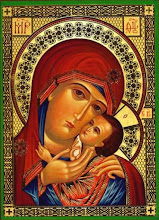
Feast of the Holy Great Martyr and Most Wise Katherine of Alexandria

Katherine was the daughter of Cestus, a wealthy patrician of Alexandria, the capital of Egypt and metropolis of the arts and sciences. She was widely admired not only for her noble birth but also for the exceeding beauty and intelligence that God had given her. Taught by the best masters and most illustrious philosophers, she learnt while still a girl to follow complex lines of argument and obtained a perfect understanding of the philosophical systems of Plato, Aristotle and their followers. She also excelled in the literary sphere, was familiar with the works of all the great poets from Homer to Virgil and was capable of discussing every subject, in a variety of languages learned from scholars and foreign visitors to the great city.

In her quest for knowledge, she had made herself acquainted with all the physical sciences, especially medicine, and there was no area of human wisdom beyond the range of her penetrating intellect. By the time she was eighteen, even the most learned scholars were in awe of her intellectual accomplishments. All this, combined with noble birth, beauty and wealth, made her an enviable match and there were suitors in plenty for her hand. But having a presentiment of the excellence of virginity, Katherine refused them all and made it a condition with her parents that she would accept none but a youth who equaled her in nobility, riches, beauty and wisdom.

Her mother, in despair of finding such a one, sent her to seek the advice of a holy Christian ascetic who lived not far from the city. He told Katherine that he did indeed know a man such as she was looking for, and possessed of that surpassing wisdom which is the very source and spring of all things visible and invisible—wisdom neither gained nor appropriated, but his eternal possession. He is noble also above all that we can think of, for He has authority over the whole universe and has made the world by his own power. Master of the worlds, principle of all wisdom and of all knowledge, He is also, the Elder told her, the most beautiful of the children of men (Psalm 44:3), for He is God incarnate: Son and eternal Word of the Father, who became man for our salvation and who desires to espouse every virginal soul.

As he bade her farewell, the ascetic gave her an icon of the Mother of God carrying the divine Child in her arms. That night the Mother of God appeared to Katherine, but Christ turned away and would not look at her, saying that she was ugly and unclean because she was still subject to sin and death. Grief-stricken, she went back to the ascetic who instructed her in the mysteries of the faith and gave her new birth unto eternal life in the waters of Baptism. Then the Holy Virgin appeared to Katherine again with Christ in her arms, who said to His Mother with joy, “Now I will accept her as my most pure bride for she has become radiant and fair, rich and truly wise!” In token and pledge of this heavenly betrothal, the Mother of God put a ring upon the finger of the maiden and caused her to promise to take no other spouse upon the earth.

Now in those days the Emperor Maximin (305-311), like Diocletian before him, tried to make all his subjects show their submission to his power by offering idolatrous sacrifices under pain of torture and death. When these impious rites were taking place in Alexandria, Katherine appeared before him in the temple and declared her allegiance, but severely reproved the idolatrous ceremonies. Struck by her beauty as much as by her boldness, the Emperor listened as she developed her argument, and he was overcome by her wisdom. Accepting her offer to engage the foremost scholars and orators of the Empire in public disputation, Maximin sent heralds all over the Roman world to bring together scholars, philosophers, orators and logicians.

There arrived at Alexandria fifty in all, who presented themselves before the Emperor and the crowd that gathered in the amphitheatre, to confront the slender young girl. Alone, but radiant with the grace of the Holy Spirit, she was in no fear of them, having been assured by the Archangel Michael in a vision that the Lord would speak through her mouth and cause her to overcome the wisdom of the world by the Wisdom that comes from on high. In that strength, Katherine showed up the errors and contradictions of oracles, poets and philosophers. She showed how they had recognized for themselves that the so-called gods of the pagans are demons and the expression of human passions. She even referred in support of her arguments to certain oracles of Sibyl and Apollo, which dimly tell of the divine Incarnation and life-giving Passion of the Son of God. Overthrowing their myths and fables, she proclaimed the creation of the world out of nothing by the one, true, eternal God, and the deliverance of man from death by the Incarnation of the only Son of the Father.

Having run out of arguments, the fifty orators were reduced to silence. Recognizing their error, they asked the Saint for Baptism, to the fury of the Emperor, who condemned them to be burnt alive on November 17. Finding Katherine immune to flattery, Maximin had her tortured and thrown in to prison, while a dreadful instrument of torture was constructed of four spiked wheels connected by an axle. Katherine was attached to this machine as soon as it was ready, but an angel came to free her and the death-dealing chariot hurtled down the slope killing many pagans on its way.

Seeing the feats of the holy Martyr, Maximin’s own wife was converted and visited Katherine in prison, escorted by the commander Porphyrius, a close friend of the Emperor, and by 200 soldiers, all of whom became disciples of Christ. Katherine received them with joy and foretold that they would soon bear away the crown of valiant athletes of the faith. The Emperor was enraged at such defiance within his household. Forgetful of all human feeling, he had his own wife cruelly tortured and beheaded on November 23. On the following day Porphyrius and his company were put to death. On November 25, Katherine was brought forth from her dungeon to appear at the tribunal, fairer and more radiant with heavenly joy than when she had entered it, for she saw that the day of her union with Christ had come at last. She was taken outside the city and, after a last prayer of thanksgiving to the Lord who had revealed to her the inexhaustible treasures of true wisdom, she was beheaded in her turn.

Her body was then conveyed by two angels from Alexandria to Mount Sinai. There, it was discovered in the eighth century by an ascetic who lived in the vicinity. The precious relic was later transferred to the Monastery that the Emperor Justinian had founded in the late sixth century. It is there to this day, giving forth a heavenly scent and working countless miracles.

The Filioque

The filioque (pronounced: filly-oh-quay) is one of those things that you've probably never heard of, but that was--and in many ways still is--a major issue in Christianity. I certainly had no idea what it was until about a year ago, and having learned a bit about it, I don't think it's an exaggeration to say that it is probably one of the top five most controversial subjects in all of Christian history.

The word "filioque" is Latin for "and the son." (filius means "son" and -que is a suffix meaning "and" that is attached to the end of the second of the two words it conjoins. It is considered a word of its own, which is why, for example, the motto of the Roman Republic, Senatus Populusque Romanus, is abbreviated "SPQR.") It was first inserted into the Nicene-Constantinopolitan Creed by sixth-century Spanish bishops, and eventually came to be accepted by the entire western Church, to the extreme consternation of the East. It amended the third article of the Creed to read "and in the Holy Spirit, the Lord, the Giver of life, Who proceedes from the Father and the Son..."

I first became aware of the filioque during my investigation of Roman Catholicism, and determined quickly that, as with any aspect of Trinitarian theology, its legitimacy is way beyond my ability to discern from a theological perspective, and is best left to the experts. However, I was able to look at Scripture and at history to get a sense of whether the filioque is an acceptable addition to the Creed, as the Roman Catholics and most Protestants believe, or a blunder and a travesty, as the Orthodox believe.

First a bit of background information: The first and second Ecumenical Councils composed a statement of faith outlining the very most basic and essential elements of the Christian Faith. It came to be called the Nicene-Constantinopolitan Creed, or Nicene Creed for short, and has been used as the baptismal confession ever since.

In 589, a local church council in Toledo, Spain, which was trying to suppress the Arian heresy, inserted the phrase "filioque" into the Creed in an attempt to bolster the doctrine of Christ's equality with the Father. The use of the filioque spread throughout Europe, but met sharp resistance in Rome, where Pope Leo III had the original text of the Creed engraved in Latin and Greek onto two silver tablets, which he displayed next to the tomb of St Peter along with the inscription:
HAEC LEO POSUI AMORE ET CAUTELA ORTHODOXAE FIDE (I, Leo, place here for the love and protection of the orthodox Faith)
For centuries, European churches continued to use the filioque even though Rome did not. Then, in 1014, at the coronation of Henry II as Holy Roman Emperor, Pope Benedict VIII included the filioque for the first time in a Roman Mass. This action scandalized the Eastern Churches, who removed the name of the Roman Pope from their roster of Orthodox Bishops. The West excommunicated the East. The East excommunicated the West, and the rest is history.

Now, according to Scripture, Christ promised to send the Holy Spirit, Who "proceeds from the Father" (Jn 15.26). Nowhere in Scripture is the Holy Spirit said to proceed also from the Son; however, I'm not aware that the Spirit is anywhere said not to proceed also from the Son. When I was attending RCIA last year, I asked one of the Catholic deacons about this and he told me that, because Christ said that He would send the Spirit, the correct understanding would be that the Spirit proceeds from the Father through the Son. Okay, so why not word it that way, I asked. He didn't have an answer.

I'm not too proud to admit that any doctrine involving the Trinity is far too sophisticated for me to discern intellectually. When someone who knows what they're talking about tells me that the Spirit proceeds from the Father and the Son, I nod my head and say "Okay." When they tell me that the Spirit proceeds only from the Father, I nod my head and say "Okay." That's about the best I can do when it comes to the theology of single versus double procession.

However, history tells me that the Creed was written and approved by two Ecumenical Councils--that is, it was approved by the whole Church...twice!!! It was then altered to include the filioque by a local council--that is, by a single diocese acting on its own. Whether their intentions were upright (and it appears that they were), there's no question that they overstepped their authority and unilaterally articulated an understanding of God that differed from that of the Church as a whole; and that was immediately rejected by the Church as a whole (including the popes of Rome themselves), only much later to gain acceptance gradually in the west.

I have read Orthodox theologians who say that the doctrine of double procession (the Spirit proceeds from two sources rather than from one) distorted the western church's understanding of the roles of the three Persons of the Trinity and led it eventually down the path to the doctrines of papal infallibility and universal jurisdiction, and then finally to the many-headed beast that is Protestant Christianity (not my words).

They make a strong case. But then so do the Roman Catholic theologians who oppose "the error that the Holy Ghost proceeds from the Father, not from the Son."

What is one to believe??

In the end, I have to cast my lot with the Church that has proven itself right with so many other doctrines, and that has clearly shown to have maintained the Faith of the Apostles more consistently than any other.

For more information:
The Filioque
The Filioque (Pelikan)
On the Question of the Filioque
One Single Source

20081205

Q&A

Q: What's all this "new calendar"/"old calendar" business?

A: In 46 B.C., Julius Caesar introduced a new calendar to the Roman world. It was called the Julian calendar, and was used by the entire Christian world until the late sixteenth century. However, it proved to be impossible to synchronize this calendar precisely with astronomical phases, so gradually the date of Easter drifted away from the March equinox. This was a slow drift, about 11 minutes per year, that nonetheless accumulated significantly over the centuries, so by 1582, during the reign of Pope Gregory XIII, the calendar was about ten days off from where it had been during the Council of Nicaea in 325.

It was this Pope Gregory who authorized the calendar that bears his name in an attempt to bring the civil calendar into sync with the astronomical movements and keep it there. The first countries to adopt the new Gregorian calendar were the predominantly Roman Catholic ones: Italy, Spain, Portugal. Eventually, the Protestant countries--England, Germany, Denmark, the American colonies--went along, followed by east Asian countries.

Countries that were predominantly Orthodox didn't get on board until much later. The Orthodox Church itself, ever reluctant to adopt any change at all--especially one initiated by a Roman pope--didn't even consider the Gregorian calendar until the early 20th century, when a few Orthodox bodies decided that they wanted to be able to celebrate certain holidays with their Protestant and Roman Catholic brethren. So they adopted the new calendar despite the protests of other Orthodox bodies.

Today, calendar usage within Orthodoxy falls generally into three groups:

1) Those who have fully adopted the Gregorian calendar (in the U.S. this is by far the largest group).

2) Those who continue to follow the old Julian calendar, but remain in communion with churches on the new calendar (This is a smaller group in the U.S. but elsewhere outnumbers the first group).

3) Those who not only reject the Gregorian calendar, but also have broken communion with the churches that have adopted it (this is a very, very small group).

The church that Kathryn and I attend falls into the second of these three categories. What this means is that they celebrate feast days thirteen days after new calendar churches do. For example, Christmas is celebrated on January 7th by the civil calendar, and St Patrick's Day is on March 30th.

However, all Orthodox churches, whether on the old system or the new, celebrate Easter together every year. (Orthodox Easter is not thirteen days after Protestant Easter, but is calculated according to an entirely different system about which I know nothing. In 2009, Orthodox Easter will be celebrated 7 days after Protestant/Roman Catholic Easter)

Go here for further information:
The Julian and Gregorian Calendars
The Calendar of the Orthodox Church
The Orthodox Ecclesiastical Calendar

20081204

Sola Scriptura, Part 6


Continued form last week [Part 1, Part 2, Part 3, Part 4, Part 5]

B. THE DOCTRINE OF SOLA SCRIPTURA DOES NOT MEET ITS OWN CRITERIA
You might imagine that such a belief system as Protestantism, which has as its cardinal doctrine that Scripture alone is authoritative in matters of faith, would first seek to prove that this cardinal doctrine met its own criteria. One would probably expect that Protestants could brandish hundreds of proof-texts from the Scriptures to support this doctrine — upon which all else that they believe is based. At the very least one would hope that two or three solid texts which clearly taught this doctrine could be found — since the Scriptures themselves say, "In the mouth of two or three witnesses shall every word be established" (II Corinthians 13:1).

Yet, like the boy in the fable who had to point out that the Emperor had no clothes on, I must point out that there is not one single verse in the entirety of Holy Scripture that teaches the doctrine of Sola Scriptura. There is not even one that comes close. Oh yes, there are innumerable places in the Bible that speak of its inspiration, of its authority, and of its profitability — but there is no place in the Bible that teaches that only Scripture is authoritative for believers. If such a teaching were even implicit, then surely the early Fathers of the Church would have taught this doctrine also, but which of the Holy Fathers ever taught such a thing?

Thus Protestantism's most basic teaching self-destructs, being contrary to itself. But not only is the Protestant doctrine of Sola Scriptura not taught in the Scriptures — it is in fact specifically contradicted by the Scriptures (which we have already discussed) that teach that Holy Tradition is also binding to Christians (II Thessalonians 2:15; I Corinthians 11:2).

Continued in Part 7 - Protestant Interpretive Approaches That Don't Work

20081203

Blessed art thou, O Lord God of our fathers:
Thy name is worthy to be praised and glorified for evermore:
For thou art righteous in all the things that thou hast done to us:
Yea, true are all thy works, thy ways are right, and all thy judgments truth.
In all the things that thou hast brought upon us,
And upon the holy city of our fathers, even Jerusalem,
Thou hast executed true judgment:
For according to truth and judgment didst thou bring
All these things upon us because of our sins.
For we have sinned and committed iniquity, departing from thee.
In all things have we trespassed, and not obeyed thy commandments,
Nor kept them, neither done as thou hast commanded us, that it might go well with us.
Wherefore all that thou hast brought upon us,
And every thing that thou hast done to us, thou hast done in true judgment.
And thou didst deliver us into the hands of lawless enemies,
Most hateful forsakers of God, and to an unjust king,
And the most wicked in all the world.
And now we cannot open our mouths, we are become a
Shame and reproach to thy servants; and to them that worship thee.
Yet deliver us not up wholly, for thy name's sake,
Neither disannul thou thy covenant:
And cause not thy mercy to depart from us,
For thy beloved Abraham's sake, for thy servant Issac's sake,
And for thy holy Israel's sake;
To whom thou hast spoken and promised,
That thou wouldest multiply their seed as the stars of heaven,
And as the sand that lieth upon the seashore.
For we, O Lord, are become less than any nation,
And be kept under this day in all the world because of our sins.
Neither is there at this time prince, or prophet, or leader,
Or burnt offering, or sacrifice, or oblation, or incense,
Or place to sacrifice before thee, and to find mercy.
Nevertheless in a contrite heart and an humble spirit let us be accepted.
Like as in the burnt offerings of rams and bullocks,
And like as in ten thousands of fat lambs:
So let our sacrifice be in thy sight this day,
And grant that we may wholly go after thee:
For they shall not be confounded that put their trust in thee.
And now we follow thee with all our heart,
We fear thee, and seek thy face.
Put us not to shame: but deal with us after thy lovingkindness,
And according to the multitude of thy mercies.
Deliver us also according to thy marvellous works,
And give glory to thy name, O Lord:
And let all them that do thy servants hurt be ashamed.
And let them be confounded in all their power and might,
And let their strength be broken;
And let them know that thou art God, the only God,
And glorious over the whole world

("The Prayer of Azariah," from Daniel 3.4-22, LXX)

Note: Azariah is the Hebrew name for Abednego. He and his companions, Shadrach (Hananiah) and Meshach (Mishael), were Jews during the Babylonian Exile (6th century B.C.) who were arrested and sentenced to death by fire for refusing to participate in pagan worship. This passage of Scripture is not included in Protestant Bibles, and is regarded as "Apocrypha" by most Protestants. Click
here for more information.

20081202

The Iconostasis and the Temple Curtain

Note: The iconostasis is a stand of full-length icons, behind which is the Altar and the Sanctuary where the priest performs most of his liturgical functions.

By Fr. Stephen Freeman, 3 March 2007

A recent email suggested to me that I might write about the iconostasis (the icon screen) found in Orthodox Churches. Some Protestants in particular have problems with it, feeling on the one hand that they are “shut out” of the liturgy to some extent or that Orthodox practice is restoring the “curtain of the Temple” that Christ’s crucifixion rent in two. Those are not surprising thoughts and are worth some comment.

I have to say up front that some Orthodox Churches have a much larger iconostasis than others, and some have a very minimalist iconostasis that essentially obscures nothing. Orthodoxy, as a dogmatic matter, has no demands in either direction. So what we are discussing here is what you will simply find in many Orthodox Churches (doors and curtains and a very substantial Icon Screen) but not necessarily in every Orthodox Church. Thus I am discussing a very common practice, but not a dogma of the Church. And that’s a very important distinction to make when thinking of Orthodoxy.

The development of the “icon screen” in Orthodoxy is itself the story of an evolution. I might add, that one of the earliest written descriptions of such a use of icons is found, in of all places, Britain, where the Ven. Bede mentions the erection of something like an icon screen by Benedict Biscop. This would have been in the 7th century or so. In the West, the Rood Screen (which exists in very few places at all today) came to serve a purpose somewhat similar to the iconostasis in the East. [Pictured at left is the rood screen at Lichfield Anglican Cathedral in England. Click on the picture for a larger view. "Rood" is the ancient Anglo-Saxon word for "cross." M.]

As my Archbishop says (and I agree), some things existed in Orthodoxy and disappeared for good reasons, while other things developed and came about for good reason. Orthodoxy is alive and does change (not dogmatically) while, we would say, remaining the same.

Having said all that (whew!) I turn to some preliminary thoughts. And they are not first about icons exactly. My first thought is the memory of an Anglican parishioner I had some 25 years or more ago who objected when I placed a very “Spanish” crucifix over the rear doors of the Church (the exit). A family had brought it back from South America. Like most Spanish crucifixes, it left little to the imagination.

This parishioner was deeply upset by my action and attacked the very idea of having a crucifix in the Church, arguing that “Christ is risen and not on the Cross! I do not want my children exposed to such a hideous thing!” I left the crucifix in its place and she never attacked me again (long story).

But she was wrong theologically. To depict Christ on the Cross (as in a crucifix) is no different than to preach: “Jesus Christ and Him crucified.” What was going on in that particular woman’s mind was something she had been told (incorrectly) about Roman Catholicism and was reacting from incorrect theological information.

In the same manner, to see an iconostasis in an Orthodox Church, and assume that it exists in order to separate people from God is to seriously misread the meaning of the screen and the nature of Orthodox iconography.

The iconostasis at the Church of the Holy Sepulcher, Jerusalem

The icon screen grew historically and has certainly changed its function over time. Orthodox explanations of the iconostasis have also evolved with that development. The thoughts I offer here are not a dogmatic explanation of the iconostasis (it’s not a matter of dogma) but are common in Orthodox thought.

In some pious commentaries on Orthodox services, the gates of the icon screen are compared to the gates of paradise and their opening and closing to specific actions and moments in salvation history. Thus, the closing of the gates early in the service of Great Vespers is compared to the shutting of paradise to Adam and the priest standing before the gates praying represents our repentance before God.

Such explanations are just what I have termed them, pious explanations. But they are not “incorrect” for being pious explanations. They are ways to think of the actions that are taking place. (Incidentally I could think of nothing deadlier than attending a service and meditating on when a certain practice developed, etc. – that’s not worship – it’s misplaced academics).

Most especially in the Divine Liturgy (Eucharist), the doors can have a very profound meaning (as well as the curtain if one is used). But never are they used to “shut us off from God.” They are used to heighten the sense of drama in the Liturgy and to mark certain moments as particularly “holy” if you will. But the end of the “drama” comes with the curtain and doors opening and the gifts of Christ’s Body and Blood being brought forth to the people! Nothing could be more in harmony with the gospel.

Indeed, this liturgical action is a reminder of the nature of our salvation. It is a gift that is given to us, not a right, nor property common to us all. The action of the Holy Gifts being “brought out” to us is very much in keeping with the Gospel itself.

To be more blunt, we in America have imported our sense of “democracy” into our liturgical sensibilities. We believe that nothing should be secret, nothing hidden, nothing marked off as set apart. We are a nation that witnesses people on Jerry Springer saying things that should only be said in confession. We have no shame.


The iconostasis in the Church of the Nativity, Bethlehem

What remains in Orthodox liturgy (and was once present in Roman Liturgies and even some forms of Anglican liturgies) is a deep sense of the Holy. The movement from Old Testament to New Testament has not democratized worship or destroyed the need for priests (Protestants are quick to speak of the “priesthood of all believers” but end up with no priesthood of any believers). Protestant reform movements that utterly destroyed Rood Screens and the architecture of medieval worship succeeded in a drive to declare that “all things are holy.” But just as the Puritan abolition of Christmas did not succeed in making everyday as holy as that day, such iconoclastic actions succeeded only in creating a secular world where nothing is holy and no day a holy day. Here I highly recommend Eamon Duffy’s The Stripping of the Altars for an amazing look at the actual details of the Reformation in England.

Our nation very likely needs icon screens or things that function in a way to help us know that the One whom we worship is holy. Knowing that, we know much more fully that the Holy One has condescended to our humanity and gives Himself to us in His humility. The loss of such distinctions has created the growing absence of reverence and even worship itself in our churches. The iconostasis does not separate us from God – it may very well be one of the few teaching tools that allow us to be united to Him.


For more:
Images of Iconostases

20081130

Fasting

Having just gone from Thanksgiving right into the Nativity (Advent) season, it's time to say a thing or two about fasting.

Fasting is very big in the Orthodox Church. Every single Orthodox Christian is expected to fast. They believe that, in order to develop the discipline to conquer sin, Christians must learn to control their most basic and primitive impulse: hunger. Without being able to control that, they reason, how can we hope to win out over more pressing temptations? (Christ set the example for this in Matthew 4.1-11 and Luke 4.1-13)

Generally speaking, fasting is an essential element of the Christian Life. Christ fasted and taught men to fast. (oca.org)

Fasting is not about attempting to atone for one's sins; it's not about earning favor with God; it's not about working one's way into heaven; it's not pietism; it's not works-righteousness; it's not legalism. It is simply about training our wills to say "no" to ourselves so we can learn to say "yes" to God. Fasting is never an end in itself, but is--like everything else in Orthodoxy--intended for the ultimate purpose of bringing us into union with God. It never occurs by itself, but is combined with prayer and repentance and a more intense focus on refraining from sin.

The Didache, a first-century church manual, instructed Christians that their "fasts must not be identical with those of the hypocrites [i.e., the Jews. Cf. Matt. 6:16]. They fast on Mondays and Thursdays; but you should fast on Wednesdays and Fridays." Orthodox Christians, therefore, fast on Wednesdays to remember Christ's betrayal and on Fridays to remember His crucifixion. They also fast during the periods leading up to important Feasts of the Church, for example Great Lent, which is the forty days prior to Easter, and the Nativity Fast, which occurs during the forty days before Christmas. I have been told that, when all the days of fasting are added up, they equal approximately half the year!

Fasting in the Orthodox tradition is not necessarily a complete lack of food (although it can be, for example, in the hours before receiving Communion Orthodox Christians are expected to eat nothing), but involves abstaining from certain foods, like wine, oil, and animal products. This practice, if I'm not mistaken, is from the Nazorite tradition.

The precise selection of foods from which to abstain has nothing to do with the notion that these foods are "unclean" in the traditional Jewish sense...or in any sense, really. The New Testament is clear that Christians need no longer be concerned with what foods are "clean" and "unclean" (Mk 7.18-20, Rom 14.14, Acts 10.10-15). The idea here is to say "no" to foods that are otherwise perfectly legitimate and acceptable, not because we're commanded to by Law, but because we choose to. So, then why these particular foods? I really don't know. Yet. But, in Orthodoxy, one learns by doing: "a good understanding have all they that do His commandments" (Ps 111.10).

The purpose of fasting is to learn discipline, to gain control of those things that are indeed within our control but that we so often allow to control us. (oca.org)
Growing up, I heard as much about fasting as I did about Mary. That is, I heard next to nothing about it. Neither the Baptist nor the Lutheran churches I attended placed any emphasis whatsoever on fasting. All my christian life I had no idea it was of any importance at all. I certainly didn't know how to fast, or when, or for how long, or to what end.
Fasting is clearly not optional inasmuch as Our Lord said, regarding fasting When you fast (Matt. 6:16), rather than If you fast. Our Lord, speaking of His disciples, said that after His departure, they would fast: when the bridegroom shall be taken from them, and then they shall fast" (Father Alexander Lebedeff)
I wonder now why it is that during more than thirty years as a Protestant, during which time I heard somewhere in the neighborhood of a thousand sermons, I don't once recall hearing the pastor encourage his flock to fast. Nearly every sermon I heard exhorted me to be like Christ, and to put Him at the very center of my life, and to deny myself, and live the way God wants me to live, and to be holy, and to treat my body as the temple of the Holy Spirit. And yet I never heard any mention of fasting as a means by which this is accomplished. My former churches never failed to remind me to pray and read my Bible, but for some reason they left out this important element of the Christian life.
"Fasting gradually disperses and drives away spiritual darkness and the veil of sin that lies on the soul, just as the sun dispels the mist. Fasting enables us spiritually to see that spiritual air in which Christ, the Sun who knows no setting, does not rise, but shines without ceasing. Fasting, aided by vigil, penetrates and softens hardness of heart. where once were the vapors of drunkenness it causes fountains of compunction to spring forth" (St Symeon the New Theologian: the Discourses).

"From the time of the Apostles, Prophets and Fathers till our own day, it is evident from the life of the Church that fasting is part of our "armor of light"; it is a mighty weapon against the enemy given into our hands by the Saviour Himself, Who is a type and example for us in all things and Who fasted in the flesh in order to teach us to fast" (
On Fasting).

"The Orthodox Church, regarding the human person as a unity of soul and body, has always insisted that the body must be trained and disciplined as well as the soul. 'Fasting and self-control are the first virtue, the mother, root, source, and foundation of all good'" (Ware, The Orthodox Chruch, p.300).
For more information:
The Fasting Rule of the Orthodox Church
Fasting (St Spyridon Cathedral website)
The True Nature of Fasting (Kallistos Ware)
Eastern Orthodox Fasting (Wikipedia)

Examples of Fasting in the Bible
Moses fasted for forty days and forty nights while he was on the mountain with God. (Ex 34.28)
King David fasted when his son with Bathsheba became sick (2Sm 12.15-25).
King Jehosaphat proclaimed a fast throughout Judah for victory over the Moabites and Ammonites who were attacking them (2Ch 20.3).
The prophet Isaiah scolded the Israelites for the unrighteous motives of their fasting (Is 58.3-13).
The prophet Joel called for a fast to avert the judgement of God. (Joel 1.14)
The people of Nineveh in response to Jonah's prophecy, fasted to avert the judgement of God (Jon 3.7).
The Jews of Persia, following Mordechai's example, fasted due to the genocidal decree of Haman. Queen Esther declared a three-day fast for all the Jews prior to risking her life in visiting King Ahasuerus uninvited (Est 4).
Christ told the Pharisees that His disciples would fast when he left them (Lk 5.33-39, Mt 9.14-15, Mk 2.18-20).
Jesus described the attitude one should take when fasting (Mt 6.16–18).
Jesus fasted for forty days and forty nights while in the desert (Mt 4.2, Lk 4.2).
Christ says that victory in spiritual warfare requires faith, prayer, and fasting (Mt 17.15-21, Mk 9.29)
The prophetess Anna, who proclaimed the birth of Jesus in the Temple, fasted regularly (Lk 2.36-37).

20081129

Apostle and Evangelist Matthew

The Holy Apostle and Evangelist Matthew, was also named Levi (Mark 2:14; Luke 5:27); he was one of the Twelve Apostles (Mark 3:18; Luke 6:45; Acts 1:13), and was brother of the Apostle James Alphaeus (Mark 2:14). He was a publican, or tax-collector for Rome, in a time when the Jews were under the rule of the Roman Empire. He lived in the Galilean city of Capernaum.

When Matthew heard the voice of Jesus Christ: "Come, follow Me" (Mt. 9:9), left everything and followed the Savior. Christ and His disciples did not refuse Matthew's invitation and they visited his house, where they shared table with the publican's friends and acquaintances. Like the host, they were also publicans and known sinners. This event disturbed the pharisees and scribes a great deal.

Publicans who collected taxes from their countrymen did this with great profit for themselves. Usually greedy and cruel people, the Jews considered them pernicious betrayers of their country and religion. The word "publican" for the Jews had the connotation of "public sinner" and "idol-worshipper." To even speak with a tax-collector was considered a sin, and to associate with one was defilement. But the Jewish teachers were not able to comprehend that the Lord had "come to call not the righteous, but sinners to repentance" (Mt. 9:13).

Matthew, acknowledging his sinfulness, repaid fourfold anyone he had cheated, and he distributed his remaining possessions to the poor, and he followed after Christ with the other apostles. St Matthew was attentive to the instructions of the Divine Teacher, he beheld His innumerable miracles, he went together with the Twelve Apostles preaching to "the lost sheep of the house of Israel" (Mt. 10:6). He was a witness to the suffering, death, and Resurrection of the Savior, and of His glorious Ascension into Heaven.

Having received the grace of the Holy Spirit, which descended upon the Apostles on the day of Pentecost, St Matthew preached in Palestine for several years. At the request of the Jewish converts at Jerusalem, the holy Apostle Matthew wrote his Gospel describing the earthly life of the Savior, before leaving to preach the Gospel in faraway lands.

In the order of the books of the New Testament, the Gospel of Matthew comes first. Palestine is said to be the place where the Gospel was written. St Matthew wrote in Aramaic, and then it was translated into Greek. The Aramaic text has not survived, but many of the linguistic and cultural-historical peculiarities of the Greek translation give indications of it.

The Apostle Matthew preached among people who were awaiting the Messiah. His Gospel manifests itself as a vivid proof that Jesus Christ is the Messiah foretold by the prophets, and that there would not be another (Mt. 11:3).

The preaching and deeds of the Savior are presented by the evangelist in three divisions, constituting three aspects of the service of the Messiah: as Prophet and Law-Giver (Ch. 5-7), Lord over the world both visible and invisible (Ch. 8-25), and finally as High Priest offered as Sacrifice for the sins of all mankind (Ch. 26-27).

The theological content of the Gospel, besides the Christological themes, includes also the teaching about the Kingdom of God and about the Church, which the Lord sets forth in parables about the inner preparation for entering into the Kingdom (Ch. 5-7), about the worthiness of servers of the Church in the world (Ch. 10-11), about the signs of the Kingdom and its growth in the souls of mankind (Ch. 13), about the humility and simplicity of the inheritors of the Kingdom (Mt. 18:1-35; 19 13-30; 20:1-16; 25-27; 23:1-28), and about the eschatological revelations of the Kingdom in the Second Coming of Christ within the daily spiritual life of the Church (Ch. 24-25).

The Kingdom of Heaven and the Church are closely interconnected in the spiritual experience of Christianity: the Church is the historical embodiment of the Kingdom of Heaven in the world, and the Kingdom of Heaven is the Church of Christ in its eschatological perfection (Mt. 16:18-19; 28:18-20).

The holy Apostle brought the Gospel of Christ to Syria, Media, Persia, Parthia, and finishing his preaching in Ethiopia with a martyr's death.

From oca.org

20081128

Advent...

...begins today.


20081127

Sola Scriptura, Part 5

Continued form last week [Part 1, Part 2, Part 3, Part 4]

FALSE ASSUMPTION # 3: Anyone can interpret the Scriptures for himself or herself without the aid of the Church

Though many Protestants would take issue with the way this assumption is worded, this is essentially the assumption that prevailed when the Reformers first advocated the doctrine of Sola Scriptura. The line of reasoning was essentially that the meaning of Scripture is clear enough that anyone could understand it by simply reading it for oneself, and thus they rejected the idea that one needed the Church's help in the process. This position is clearly stated by the Tubingen Lutheran Scholars who exchanged letters with Patriarch Jeremias II of Constantinople about thirty years after Luthers death:

Perhaps, someone will say that on the one hand, the Scriptures are absolutely free from error; but on the other hand, they have been concealed by much obscurity, so that without the interpretations of the Spirit-bearing Fathers they could not be clearly understood.... But meanwhile this, too, is very true that what has been said in a scarcely perceptible manner in some places in the Scriptures, has been stated in another place in them explicitly and most clearly so that even the most simple person can understand them.8

Though these Lutheran scholars claimed to use the writings of the Holy Fathers, they argued that they were unnecessary, and that, where they believed the Scriptures and the Holy Fathers conflicted, the Fathers were to be disregarded. What they were actually arguing, however, was that when the teachings of the Holy fathers conflict with their private opinions on the Scriptures, their private opinions were to be considered more authoritative than the Fathers of the Church. Rather than listening to the Fathers, who had shown themselves righteous and saintly, priority should be given to the human reasonings of the individual. The same human reason that has led the majority of modern Lutheran scholars to reject almost every teaching of Scripture (including the deity of Christ, the Resurrection, etc.), and even to reject the inspiration of the Scriptures themselves — on which the early Lutherans claimed to base their entire faith. In reply, Patriarch Jeremias II clearly exposed the true character of the Lutheran teachings:

Let us accept, then, the traditions of the Church with a sincere heart and not a multitude of rationalizations. For God created man to be upright; instead they sought after diverse ways of rationalizing (Ecclesiastes 7:29). Let us not allow ourselves to learn a new kind of faith which is condemned by the tradition of the Holy Fathers. For the Divine apostle says, "if anyone is preaching to you a Gospel contrary to that which you received, let him be accursed" (Galatians 1:9).9

Continued in Part 6 - The Doctrine of Sola Scriptura Does Not Meet its Own Criteria

8. Mastrantonis, 115.

9. Ibid., 198.

20081126

St John Chrysostom

St John Chrysostom, whose life and work are celebrated today, was a colossal figure in early Christianity. His surname Χρυσόστομος, which means "golden mouthed" in Greek, was given to him posthumously because of his legendary oration skills.

In his early years he became a monk and a hermit, during which time he committed the Bible to memory and fasted so severely that he permanently damaged his digestive system.

Eventually he returned to his hometown of Antioch, where he served as a deacon and a priest before being installed--despite his adamant protest--as Archbishop of Constantinople. He refused the lavish trappings that came with the office and continued to live in extreme austerity. His piety and holiness aroused the jealousy of religious and political leaders, as a result of whose scheming St John was exiled to the mountains of Armenia where he died of exposure in 407.

St John's sermons and letters have had an enormous influence on Christians throughout history. But he is probably best remembered for the Liturgy which bears his name and is celebrated daily in Orthodox churches worldwide.

For further information please see the following:

OCA biography
Website dedicated to the life and writings of St John Chrysostom
Divine Liturgy of St John Chrysostom
Homilies on First Corinthians
Homilies on Second Corinthians
Biography on Ecumenical Patriarch website
The Martyrdom of Saint John Chrysostom

20081125

The Holy Orthodox Popes of Rome

Orthodox churches on the new calendar, today celebrate the life and martyrdom of St Clement, who was one of the Seventy Apostles chosen by Christ in Luke 10, and who served as bishop of Rome (i.e. Pope) until his exile and execution around A.D. 100. So, today is a good day to say something about Orthodox popes.

Contrary to what I thought before I became acquainted with Orthodoxy, the Orthodox Church does not reject the papacy, only what the papacy has become. For the first thousand years after Pentecost, the Pope of Rome was in communion with the other Orthodox bishops of the world. In fact, he was one of the five Patriarchs, which were bishops of the five most important cities in the empire: Rome, Constantinople, Alexandria, Antioch, and Jerusalem. Because Rome was the biggest and most important city, the bishop of Rome was regarded as the honorary leader of the episcopate, much like St Peter was the honorary leader of the Apostles.

In 1054, the Church of Rome officially broke with the other Patriarchates and became known as the Roman Catholic Church, taking all of western Christianity with her.

The following (including the comments at the bottom) is provided by the Orthodox England website. It is a list of the Popes of Rome who are venerated as saints by the Orthodox Church. According to the website, "popes who already appear in all Eastern Orthodox calendars are marked with an asterisk."

St. Linus (+ c. 78), first pope, Martyr. A disciple of the Apostle Paul, he was consecrated by him. One of the Seventy Apostles, he is mentioned in 2 Timothy 4,21. He was pope for about twelve years and may have been martyred. Feast: 23 September (In the East 4 January and 5 November). *

St. Anacletus (Cletus) (+ c. 91), by origin a Greek from Athens and possibly a martyr. His name, correctly Anencletus, means 'blameless' (see Titus 1,7) and he may originally have been a slave. Feast: 26 April.

St. Clement of Rome (+ c. 101), martyr. One of the Seventy Apostles and a Church Father, he was consecrated by the Apostle Peter. He is mentioned in Philippians 4,3 and his letter to the Church of Corinth still exists. He was much venerated in the West in the early centuries and still today in the East. The church of San Clemente in Rome probably stands on the site of his house. According to tradition, he was banished to the Crimea and there martyred. Feast: 23 November (in the East 4 January, 22 April, 10 September and 25 November). *

St. Evaristus (+ c. 109), perhaps a martyr and almost certainly of Hellenic/Jewish origin. Feast: 26 October.

St. Alexander I (+ c. 116), the fifth pope and possible a martyr and by tradition a Roman. Feast: 3 March (in the East 16 March).*

St. Sixtus (Xystus) I (+ c. 125), possibly a martyr. A Roman of Greek origin. Feast: 3 April. *

St Telesphorus (+ c. 136), a martyr, Greek by origin. Feast: 5 January (in the East 22 February). *

St. Hyginus (+ c. 142), by origin a Greek philosopher from Athens. Also perhaps a martyr. Feast: 11 January.

St. Pius I (+ c. 155), from Aquilea, probably born a slave and perhaps the brother of Hermas who wrote 'The Shepherd'. He defended the Church against Gnosticism. Possibly a martyr. Feast: 11 July.

St. Anicetus (+ 166) the tenth pope and of Syrian origin, he fixed the date of Easter, opposed the Gnostics, perhaps martyred. Feast: 17 April.

St. Soter (+ 174), of Greek descent, he may have been martyred. Feast: 22 April.

St. Eleutherius (+ 189), Greek, possibly martyred. Feast: 26 May.

St. Victor (+ 198), an African and the first Latin pope. A forceful character, he fought for Orthodoxy and against Gnosticism. He may have been martyred. Feast: 28 July. *

St. Zephyrinus (+ 217), of Greek descent. Although not a strong character, he still fought for Orthodoxy against Adoptionism and Modalism and may have been martyred for it. Feast: 26 August.

St. Callistus I (+ 222), the fifteenth pope and originally a slave. Pope Callistus, with his Greek name, was known for his mercifulness and defended married clergy against fanatics. He condemned modalism. Probably martyred. Feast: 14 October.

St. Urban I (+ 230), Roman, possibly martyred. Feast: 25 May.

St. Pontian (+ 235), Roman, he was persecuted for the faith and deported to Sardinia, where he died as a confessor. Feast: 19 November.

St. Antherus (+ 236), Greek and perhaps martyred. Feast: 3 January (5 August in East). *

St. Fabian (+ 250), Roman martyr. Described as an incomparable man, 'his death matched the purity and goodness of his life', he did much to help the poor. Feast: 20 January (5 August in the East). *

St. Cornelius (+ 253), the twentieth pope and a Roman, he was greatly helped by St Cyprian of Carthage in the struggle against novatian fanaticism. He was renowned for his mercifulness and died as a result of persecution. Feast: 16 September.

St. Lucius (+ 254), a Roman he was exiled as soon as he was elected in a persecution. Supported by St Cyprian, he was certainly a confessor and perhaps was martyred. Feast: 4 March.

St. Stephen I (+ 257), a Roman and a strong character, perhaps a martyr, he is well known for his argument with St Cyprian of Carthage about the baptism of heretics. St Stephen defended the view of economy, that invalid baptism outside the Church was made valid by entry into the Church, and there was no need to repeat the actual rite. Feast: 2 August. *

St. Sixtus II (+ 258), an Athenian. He was 'a good and peace-loving man' who was much helped by Dionysius, Bishop of Alexandria. He was martyred by beheading, together with his seven deacons, one of whom was St Lawrence. He was and is greatly venerated in the Orthodox Church, West and also East. Feast: 7 August (10 August in the East). *

St. Dionysius (Denis) (+ 268), one of the most important Roman popes of the third century. He was a learned Greek, who opposed several heresies, helped the persecuted and also reorganized the Church in Rome. Feast: 26 December.

St. Felix I (+ 274), the twenty-fifth pope. A Roman, he opposed the adoptianist heresy. Feast: 30 May.

St. Eutychian (+ 283), a native of Tuscany. Feast: 7 December.

St. Gaius (+ 296), possibly from Dalmatia. It seems that he was martyred together with his brother, a priest, and his children. Feast: 22 April (11 August in the East). *

St. Marcellinus (+ 304), possibly a martyr, and certainly a penitent for previous errors and apostasy. Feast: 2 June (7 June in the East). *

St. Marcellus I (+ 309), a confessor who died as a result of persecution. Feast: 16 January (7 June in the East). *

St. Eusebius (+ 310), the thirtieth pope and a Greek by origin. He was deported to Sicily by the Emperor and died there as a confessor. Feast: 17 August.

St. Miltiades (+ 314), probably from Rome, although he had a Greek name. The Emperor Constantine gave him a palace on the Lateran as his residence. He condemned Donatism. Feast: 10 December.

St. Sylvester I (+ 335), Roman. Feast: 31 December (2 January in the East). *

St. Mark (+ 336), Roman. Feast: 7 October.

St. Julius I (+ 352), Roman. A defender of St. Athanasius, this most Orthodox Pope condemned arianism. Feast: 12 April.

St. Liberius (+ 366). The thirty-fifth pope, he was not of strong character and even compromised the Faith at one point in his life, confessing arianism. However, like St Marcellinus, he then repented, atoned and is recognised as a saint of God. Feast: 27 August. *

St. Damasus (+ 384). Of Spanish origin, he was born in Rome in c. 305, the son of a priest. He fought for Orthodoxy and opposed several heresies. He did much to establish the Latin text of the Bible, developed the liturgy and the veneration of the Roman martyrs. Although as a new pope, he made several arrogant errors, he repented for these and was recognized as a saint at the end. Feast: 11 December.

St. Siricius (+ 399), Roman. An imperious man like St Damasus, he nevertheless forbade the harsh treatment of heretics and supported ascetics. He received the support of St Ambrose of Milan and opposed those who slandered the Mother of God. Feast: 26 November.

St. Anastasius I (+ 401). A man of poverty and apostolic mind, he did much to stop the spread of origenism. Feast: 19 December.

St Innocent I (+ 417). The son of St Anastasius I, he had an imperious character and thirty-six letters of his survive. He supported St John Chrysostom and condemned pelagianism. Feast: 28 July.

St Zosimus (+ 418), the fortieth Pope, by origin a Greek. Although initially he made many errors of tact and judgement, he was anti-pelagian. Feast: 26 December.

St Boniface I (+ 422), a Roman and son of a priest. He was kind, humble and fought for Orthodoxy. Feast: 4 September.

St Celestine I (+ 432). A strong character, he was active against pelagianism, he sent St. Germanus of Auxerre to Britain and St. Palladius to Ireland. He also strongly opposed nestorianism and supported St Cyril of Alexandria. Feast: 6 April (8 April in the East). *

St Sixtus III (+ 440), Roman. He vigorously opposed the heresies of both Pelagius and Nestorius. Feast: 28 March.

St. Leo I, 'the Great' (+ 461). He was born in Rome at the end of the fourth century. He was very energetic, opposed many heresies and protected Rome from the barbarian Huns and Vandals. His teaching on Christ was acclaimed by all the Orthodox at the Council of Chalcedon in 451. Feast: 11 April (In the East 18 February) *.

St. Hilary (+ 468), the forty-fifth pope and by origin Sardinian, he actively opposed many heresies. Feast: 28 February.

St. Simplicius (+ 483), he supported the Orthodox in the East against monophysitism. Feast: 10 March.

St. Felix II (+ 492), the son of a priest, he was also the grandfather of St. Gregory the Great. He sternly opposed monophysitism. Feast: 1 March.

St. Gelasius I (+ 496), African, but born in Rome. He helped the poor and was sternly opposed monophysitism. Of imperious character, he put the authority of the Pope on the same level as that of the Emperor. We have from him over a hundred letters or fragments and six theological works. He was the greatest Pope of the fifth century after St Leo. Feast: 21 November.

St. Anastasius II (+ 498), Roman and the son of a priest, he had a conciliatory character. Feast: 8 September/19 November.

St. Symmachus (+ 514), the fiftieth pope and by origin Sardinian, he was very active and a builder of churches. Feast: 19 July.

St. Hormisdas (+ 523), from Italy and father of St. Silverius (see below), he helped end the monophysite schism. Feast: 6 August.

St. John I (+ 526), Tuscan. A confessor, he suffered much from the Arian Goth Theodoric, King of Italy. He was immediately revered as a saint on his repose. Feast: 18 May.

St. Felix III (+ 530), the fifty-third pope and saint in succession, he was greatly loved for his simplicity and almsgiving. He was succeeded by Boniface II, who was the first pope of Germanic origin, and John II, neither of whom is considered a saint. John II was the first pope to change names on assuming that office. Feast: 22 September.

St. Agapitus I (+ 536), the son of a priest, he opposed monophysitism and reposed in Constantinople. Feast: 22 April and 20 September (In the East 17 April). *

St. Silverius (+ 537), he was exiled to Asia Minor as a result of political intrigues. He later died in exile from starvation and various hardships and injustices. He was venerated as a martyr for Orthodoxy. He was succeeded by five popes who are not saints. Feast: 20 June.

St. Gregory I, 'the Great' [left] (in the East 'the Dialogist') (+ 604). One of only two popes to be called 'the Great' (with St. Leo), this able and energetic saint was possibly the greatest of all Roman popes. Known as 'the Apostle of the English', he also did much to convert the Lombards and the Goths. A true monk and ascetic, he wrote much about the monastic life, and was greatly concerned for liturgical life and the poor. Some 850 of his letters survive as well as other extremely important patristic and pastoral works, especially his Dialogues. Notably, he condemned as 'antichrist' any bishop who claimed universal jurisdiction and supremacy. Feast: 12 March. *

Boniface IV (+ 615). A follower of St Gregory the Great, he was also a true monk. Preceded by two popes who are not saints. Feast: 25 May.

Deusdedit I (+ 618), Roman. 'Simple, devout, wise and shrewd', he loved ordinary priests and did much for those then suffering from the plague. He was succeeded by five popes who are not saints. Feast: 8 November.

St. Martin I (+ 655), from Umbria. Condemning the monothelite heresy, he was arrested in Constantinople and starved to death. He was the last Pope of Rome to be martyred. He is widely venerated in the East. Feast: 12 November (In the East 14 April). *

St. Eugene I (+ 657), Roman. Famed for his mildness and kindness to the poor, this saintly man resisted threats to his life from the Emperor in Constantinople. Feast: 2 June.

St. Vitalian (+ 672), opposed monothelitism and appointed the first Greek Archbishop of Canterbury, St Theodore. Feast: 27 January (In the East 23 July). *

St. Agatho (+ 681), Sicilian of Greek origin. Preceded by two popes who are not saints, he was a kindly and generous man, who also helped call the Sixth Oecumenical Council and helped end monotheletism. Feast: 10 January (20 February in the East). *

St. Leo II (+ 683), Sicilian, possibly of Greek descent. He confirmed the condemnation of a predecessor, the heretical Pope Honorius I (+ 638), who had fallen into the monothelite heresy. He loved the poor and was also much concerned with church music. Feast: 3 July.

St. Benedict II (+ 685), Roman. He loved the poor and was humble-minded and gentle. Feast: 7 May.

St. Sergius I (+ 701), born in Palermo, he was a Syrian. Able and energetic, he did much for missionary work in England and northern Europe. He loved the liturgy and church singing and introduced the feast of the Exaltation of the Cross into the West. He was preceded by two popes who are not saints and succeeded by four other non-saints, two Greeks and two Syrians. Feast: 8 September.

St. Gregory II (+ 731), the most outstanding Roman pope of the eighth century An able leader, he condemned iconoclasm as a heresy and did much to encourage missionary work, like that of

St Boniface among the German tribes. He restored churches and fostered the monastic life. Feast: 11 February.

St. Gregory III (+ 741), Syrian. He was acclaimed Pope by the crowds at his predecessor's funeral. He vigorously opposed iconoclasm, built churches and had them adorned with frescos, and also encouraged the monastic life and fostered missionary work in northern Europe. Feast: 28 November.

St Zacharias (+ 752), a Greek and the last Orthodox saint in this see, he opposed iconoclasm, adorned churches with frescos, and did much for missionary work and peace all over western Europe. Feast: 15 March.

Readers will notice that information on many of the early popes is lacking. Many of these are also traditionally held to be martyrs, but there is some uncertainty about this. It should be added that many of the popes were opposed by antipopes, often heretics. This became more and more the case in the Middle Ages when the Orthodox period of the papacy is over and the institution becomes more political and worldly than religious and spiritual.

The reader will no doubt be struck by the fact so many of the early popes are revered as saints, indeed, the first fifty-three in continuous succession. If we take the period up till St Zacharias inclusive, of 90 popes, 68 are revered as saints. Perhaps even more striking is the fact that since St Zacharias, the last Orthodox Roman pope to be a saint, there have been no fewer than 173 popes. Of these only seven are today considered to be saints by the Vatican: one of these was Nicholas I, the notorious filioquist who condemned St Photius of Constantinople, another was Leo IX, the pope ultimately responsible for excommunicating Patriarch Michael of Constantinople in 1054.

Thus with our thoughts on the holy Orthodox popes of Rome, let us pray with one mind and one soul for the salvation of the once Orthodox lands of the West and their salvation in this new millennium.

Holy Orthodox Popes of Rome, pray to God for us!

20081124

Looking East

This is a brand-new thing.
The author of the blog Orrologion has begun a series of Yahoo groups for the purpose of allowing inquirers of particular religious (or non-religious) backgrounds to ask questions about Orthodoxy of people who can provide competent answers. Here are links to a few of them:

For Evangelicals, Roman Catholics (Eastern Rite), Lutherans, Presbyterians.

More links can be found here.
O God, come to my assistance!
O Lord, hasten to help me!
Shame and disgrace upon those who seek my life!
Let them turn back and be confounded who wish me evil!
Let them now turn in shame who jeer at me:
"Well done! Well done!"
But let all who search for
You be glad and rejoice in You,
And let those who love your salvation,
O God, always say: "The Lord be exalted!"
As for me, I am wretched and poor:
God shall be my help.
You are indeed my help and my salvation,
O Lord: tarry not!
(From the Compline Service; A Prayer for Remembrance, Psalm 69, LXX)

Note: Because the Septuagint and Protestant Bibles number the Psalms differently, the above psalm is number 70 in post-Reformation versions of the Old Testament

20081123

Q&A

Q: Excuse me, did I just hear the priest say "most holy Theotokos save us"? Please explain how that is not blatantly contrary to Scripture, since "no one comes to the Father, except through" Jesus, (Jn 14.6), who came to "save that which was lost" (Matt 18.11), and since "there is no other name under heaven given among men, whereby we must be saved (Acts 4.12). Calling upon Mary to "save us" is in direct opposition to the teachings of the Bible!

A: Yeah, that freaked me out the first time I heard it, too. It was at the very first Vespers service that I attended at a local Greek parish, and I thought, "This could be the deal-breaker." It bothered me so much that I confronted the priest afterwards.

He admitted that it is a difficult thing for a Protestant to hear, and that it troubled him the first time he heard it, too (he was a convert from Pentecostalism). He explained to my satisfaction why this phrase is not improper or contrary to biblical teaching, but it is still a little uncomfortable for me to heard it, even now, especially having come from a faith tradition in which Mary is little more than an afterthought. I suppose it just takes some getting used to.

So, is the statement "Theotokos, save us" really attributing to Mary something that should only be attributed to God? Is this usurping the work of Christ? It seems to, but rest assured that Orthodox Christians do not believe for one second that Mary died on the cross for our sins, or that she rose from the dead, or that she is seated at the right hand of the Father, etc. Any Orthodox Christian will tell you that it was Christ and Him alone "who for us men and for our salvation came down from the heavens." The prayers and hymns and writings of the Orthodox Church testify again and again to this foundational, non-negotiable truth.

Well, then if the Bible says, and the Orthodox believe, that there is no other name whereby we must be saved, isn't the statement in question plainly contrary to both? It would appear so, but if this sort of language were truly contrary to biblical teaching then we would, of course, expect no similar use of the word "save" in Scripture, except in reference to the direct work of God. Right?

However, we read in the Bible that St Paul hopes to save the Jews through his example (Rom 11.14), and that he believes that by being "all things to all men" he may save some (1Co 9.22). He also tells husbands and wives that they are able to save each other (1Co 7.16), and says that he himself was saved through the prayer of the Philippians (Php 1.19).

Paul later tells his protégé Timothy that he can save himself and others by his adherence to doctrine (1Ti 4.16), and that a woman can be saved by bearing and raising a faithful Christian (2.15).

St Peter is said to be able to save entire households merely by his words (Acts 11.14), and St Jude instructs us to save people with fear (Jude 1.23). St James tells us that prayer can save the sick (Jam 5.15), and that when we convert a sinner, we save a soul and "cover a multitude of sins" (v.20).

Clearly it's not contrary to biblical teaching to believe that we have a role in the salvation of others. We don't save them by dying on the cross, of course, but by preaching the Gospel, by prayer, by being a good example. It's worth mentioning at this point that the Orthodox do not believe, as their Protestant brethren do, that salvation is the result of a one-time, momentary conversion of faith. Rather, it requires daily, hourly, minute-by-minute conversion. That is, constant repentance and self-denial. That's why serious Orthodox Christians go to church every day, and surround themselves with religious imagery, and give alms, and fast regularly, and pray constantly, and make the sign of the cross about eleven-thousand times a day: not because they believe these good works will earn them a place in heaven, but because they want to stay constantly focused on Christ, and away from self, and tuned-in to what is true and honest and just and pure and lovely. It is also why Orthodox Christians rely on the prayers and good council of other Orthodox Christians: to keep them on the straight and narrow. It is in this manner that Orthodox Christians save each other, just like Sts Paul, Peter and Timothy did.

Is it really unreasonable, then, to think that Mary can likewise save us?

Should we not look to her for her prayer and for her example of obedience, so that we will not deliberately keep on sinning, but will continue grounded and settled in the faith; so we will continue to do the will of God, and work out our salvation with fear and trembling; so that we will not be cut off, or disqualified, or denied; so we won't come out worse in the end than we were at the beginning and be assigned a place with the unbelievers?

Like so many other things in the Orthodox Church, the phrase "Most holy Theotokos, save us," is indeed arresting and horrifying to a lifelong Protestant like me. But, like so many other initially arresting, horrifying aspects of Orthodoxy, this phrase does prove, on close examination, to be perfectly consistent with biblical teaching. And as I become more and more familiar with the context surrounding certain Orthodox statements and actions and disciplines, the more clearly I can see how much sense they make within the broader scope of Orthodox worship and devotion.

Read these for more information:
Orrologion (blog): On Prayer to the Saints; or, "Everything which is God's became man's"
Pillar and Ground of Truth (blog): "Most holy Theotokos, save us!" Part 1, Part 2, Part 3

20081121

Let us never forget the Ottoman genecide against the Armenians, Greeks, Kurds and Assyrians.

The following is from Koinonia:

Attention Everyone, PLEASE CIRCULATE TO ALL YOUR FAMILY, FRIENDS, ETC. AND URGE THEM TO VOTE YES NOW!!!

MSNBC is doing a survey whether the Armenian Genocide should be recognized or not. As of a few minutes ago the numbers showed Yes 20%, No 80% !

The Turks have mobilized a global campaign to shift results towards "No" but we can['t] let them. The Armenian Genocide is a historical fact, along with other many other crimes against humanity of [sic] behalf of the Turks, and it should be recognized.

Please vote 'YES' at the below link and send it to everyone you know.

http://www.msnbc.msn.com/id/21253084

Despina Axiotakis
General SecretaryCyprus Federation of America
Phone: 201-444-8237
Fax: 201-444-0445
e-mail: cyprusfederation@aol.com
Cell: 201-981-5764

[And contact your Representative. M.]

20081120

Sola Scriptura, Part 4

Continued form last week [Part 1, Part 2, Part 3]

FALSE ASSUMPTION # 2: The Scriptures were the basis of the early Church, whereas Tradition is simply a "human corruption" that came much later.

Especially among Evangelicals and so-called Charismatics you will find that the word "tradition" is a derogatory term, and to label something as a "tradition" is roughly equivalent to saying that it is "fleshly," "spiritually dead," "destructive," and/or "legalistic."

As Protestants read the New Testament, it seems clear to them that the Bible roundly condemns tradition as being opposed to Scripture. The image of early Christians that they generally have is essentially that the early Christians were pretty much like 20th Century Evangelicals or Charismatics! That the First Century Christians would have had liturgical worship, or would have adhered to any tradition is inconceivable — only later, "when the Church became corrupted," is it imagined that such things entered the Church. It comes as quite a blow to such Protestants (as it did to me) when they actually study the early Church and the writings of the early Fathers and begin to see a distinctly different picture than that which they were always led to envision. One finds that, for example, the early Christians did not tote their Bibles with them to Church each Sunday for a Bible study — in fact it was so difficult to acquire a copy of even portions of Scripture, due to the time and resources involved in making a copy, that very few individuals owned their own copies. Instead, the copies of the Scriptures were kept by designated persons in the Church, or kept at the place where the Church gathered for worship. Furthermore, most Churches did not have complete copies of all the books of the Old Testament, much less the New Testament (which was not finished until almost the end of the First Century, and not in its final canonical form until the Fourth Century). This is not to say that the early Christians did not study the Scriptures — they did in earnest, but as a group, not as individuals. And for most of the First Century, Christians were limited in study to the Old Testament.

So how did they know the Gospel, the life and teachings of Christ, how to worship, what to believe about the nature of Christ, etc? They had only the Oral Tradition handed down from the Apostles. Sure, many in the early Church heard these things directly from the Apostles themselves, but many more did not, especially with the passing of the First Century and the Apostles with it. Later generations had access to the writings of the Apostles through the New Testament, but the early Church depended on Oral Tradition almost entirely for its knowledge of the Christian faith.

This dependence upon tradition is evident in the New Testament writings themselves. For example, Saint Paul exhorts the Thessalonians:
Therefore, brethren, stand fast and hold the traditions which ye have been taught, whether by word [i.e. oral tradition] or our epistle (II Thessalonians 2:15).

The word here translated "traditions" is the Greek word paradosis — which, though translated differently in some Protestant versions, is the same word that the Greek Orthodox use when speaking of Tradition, and few competent Bible scholars would dispute this meaning. The word itself literally means "what is transmitted." It is the same word used when referring negatively to the false teachings of the Pharisees (Mark 7:3, 5, 8), and also when referring to authoritative Christian teaching (1 Corinthians 11:2, 2 Thessalonians 2:15). So what makes the tradition of the Pharisees false and that of the Church true? The source! Christ made clear what was the source of the traditions of the Pharisees when He called them "the traditions of men" (Mark 7:8). Saint Paul on the other hand, in reference to Christian Tradition states, "I praise you brethren, that you remember me in all things and hold fast to the traditions [paradoseis] just as I delivered [paredoka, a verbal form of paradosis] them to you" (1 Corinthians 11:2), but where did he get these traditions in the first place? "I received from the Lord that which I delivered [paredoka] to you" (1 Corinthians 11:23). This is what the Orthodox Church refers to when it speaks of the Apostolic Tradition — "the Faith once delivered [paradotheise] unto the saints" (Jude 3). Its source is Christ, it was delivered personally by Him to the Apostles through all that He said and did, which if it all were all written down, "the world itself could not contain the books that should be written" (John 21:25). The Apostles delivered this knowldge to the entire Church, and the Church, being the repository of this treasure thus became "the pillar and ground of the Truth" (1 Timothy 3:15).

The testimony of the New Testament is clear on this point: the early Christians had both oral and written traditions which they received from Christ through the Apostles. For written tradition they at first had only fragments — one local church had an Epistle, another perhaps a Gospel. Gradually these writings were gathered together into collections and ultimately they became the New Testament. And how did these early Christians know which books were authentic and which were not — for (as already noted) there were numerous spurious epistles and gospels claimed by heretics to have been written by Apostles? It was the oral Apostolic Tradition that aided the Church in making this determination.

Protestants react violently to the idea of Holy Tradition simply because the only form of it that they have generally encountered is the concept of Tradition found in Roman Catholicism. Contrary to the Roman view of Tradition, which is personified by the Papacy, and develops new dogmas previously unknown to the Church (such as Papal Infallibility, to cite just one of the more odious examples) —the Orthodox do not believe that Tradition grows or changes. Certainly when the Church is faced with a heresy, it is forced to define more precisely the difference between truth and error, but the Truth does not change. It may be said that Tradition expands in the sense that as the Church moves through history it does not forget its experiences along the way, it remembers the saints that arise in it, and it preserves the writings of those who have accurately stated its faith; but the Faith itself was "once delivered unto the saints" (Jude 3).

But how can we know that the Church has preserved the Apostolic Tradition in its purity? The short answer is that God has preserved it in the Church because He has promised to do so. Christ said that He would build His Church and that the gates of Hell would not prevail against it (Matthew 16:18). Christ Himself is the head of the Church (Ephesians 4:16), and the Church is His Body (Ephesians 1:22-23). If the Church lost the pure Apostolic Tradition, then the Truth would have to cease being the Truth — for the Church is the pillar and foundation of the Truth (I Timothy 3:15). The common Protestant conception of Church history, that the Church fell into apostasy from the time of Constantine until the Reformation certainly makes these and many other Scriptures meaningless. If the Church ceased to be, for even one day, then the gates of Hell prevailed against it on that day. If this were the case, when Christ described the growth of the Church in His parable of the mustard seed (Matthew 13:31-32), He should have spoken of a plant that started to grow but was squashed, and in its place a new seed sprouted later on — but instead He used the imagery of a mustard seed that begins small but steadily grows into the largest of garden plants.

As to those who would posit that there was some group of true-believing Protestants living in caves somewhere for a thousand years, where is the evidence? The Waldensians 7 that are claimed as forebearers by every sect from the Pentecostals to the Jehovahs Witnesses, did not exist prior to the 12th Century. It is, to say the least, a bit of a stretch to believe that these true-believers suffered courageously under the fierce persecutions of the Romans, and yet would have headed for the hills as soon as Christianity became a legal religion. And yet even this seems possible when compared with the notion that such a group could have survived for a thousand years without leaving a trace of historical evidence to substantiate that it had ever existed.

At this point one might object that there were in fact examples of people in Church history who taught things contrary to what others taught, so who is to say what the Apostolic Tradition is? And further more, what if a corrupt practice arose, how could it later be distinguished from Apostolic Tradition? Protestants ask these questions because, in the Roman Catholic Church there did arise new and corrupt "traditions," but this is because the Latin West first corrupted its understanding of the nature of Tradition. The Orthodox understanding which earlier prevailed in the West and was preserved in the Orthodox Church, is basically that Tradition is in essence unchanging and is known by its universality or catholicity. True Apostolic Tradition is found in the historic consensus of Church teaching. Find that which the Church has believed always, throughout history, and everywhere in the Church, and then you will have found the Truth. If any belief can be shown to have not been received by the Church in its history, then this is heresy. Mind you, however, we are speaking of the Church, not schismatic groups. There were schismatics and heretics who broke away from the Church during the New Testament period, and there has been a continual supply of them since, for as the Apostle says, "there must be also heresies among you, that they which are approved may be made manifest" (ICorinthians 11:19)

Continued in Part 5 - FALSE ASSUMPTION # 3

7. The Waldensians were a sect that was founded in the 12th century founded by Peter Waldo which in some ways anticipated the Protestant Reformation. Due to persecution by the Roman Catholic Church this sect survived primarily in the mountainous regions of northwestern Italy. With the advent of the Protestant Reformation, the Waldensians came under the influence of the Reformed movement and essentially joined forces with it. Many early Protestant historians claimed that the Waldensians represented a remnant of "true" Christians that had existed prior to Constantine. Though today no credible historian would make such an unsubstantiated claim, many fundamentalists and cults like the Jehovahs Witnesses continue to claim descent from the early church through the Waldensians — despite the fact that the Waldensians still exist to this day, and they certainly do not claim the Jehovahs Witnesses.