20100122
Archpastoral Message of his Beatitude Metropolitan Jonah for Sanctity of Life Sunday 2010
Sanctity of Life Sunday
To the Venerable Hierarchs, Clergy, Monastics and Faithful of the Orthodox Church in America
Dearly Beloved in Christ:
As Orthodox Christians, we strongly affirm the value and sanctity of all human life, from the moment of conception to the final breath one takes. This affirmation is theologically based, in that each person bears within him or her self the image of God, and has the potential to fulfill that image by likening him/herself to God. To artificially terminate life is to transgress on that which is holy; it is unthinkable, a grave sin.
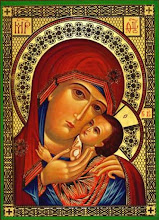
Every one of our churches and our homes bear the image of the infant Christ cradled in the arms of His Mother, an image that is supremely human, and supremely divine. It is the image of divine Motherhood, that the Son of God was conceived, borne and nurtured by His Most Pure Mother. God is thus revealed in the Motherhood of the Virgin; bearing us in Her holy embrace of love. This image also reveals God's love for us, that he became like us in every way--a fetus in His Mother's womb, an infant in Her arms, a little child. God has sanctified every aspect of human life, becoming what we are that He might make us like Himself.
As Orthodox, every aspect of our lives is iconic. Every child is an image of the Christ Child, every person an image of God. Each bears infinite potential to attain to the Likeness, to sainthood, to holiness. Marriage also is an icon, as the union of man and woman in the flesh blessed by God, and bringing forth the fruit of children, is an image of our union with one another in Christ in the Kingdom.
Christian marriage and family are the sacred context not only for the rearing of children, but as the basic core of our identity and reference point of stability. The family is the place where we are nurtured and accepted, find solace and consolation, and thus the faithful family becomes the place where these very human emotions and feelings are filled with grace and sanctified. Whether we are very young or very old, the family is the context of our life, in which we work out our salvation. We experience God's Fatherhood, and divine Motherhood; we experience the nurturing love which becomes a participation in divine communion. And as we breathe our last, should we not remember the image of the crucified Christ, carried in the arms of his mother, in her grief, the grief of every mother for her child?
We affirm the sanctity of life, made holy by the incarnation of the Christ. We affirm that every stage of our life has been sanctified. We affirm marriage of one man and one woman as the foundation of the family, the image of our union with God, and the means of sanctifying the lives of all members of that family by the grace of love and divine communion.
These are desperate times. Our society is in despair. It is a despair that manifests itself in the breakdown of essential relationships, of marriage and family. Continued unemployment leads to hopelessness, and the breakdown of trust that one is able to provide; this leads to the breakdown of marriages, and the bitterness that goes with it. Returning soldiers, with posttraumatic stress just below the surface, enter into relationships that often turn brutal and abusive. Marriage, and the very family itself are in question, with the issue of homosexual unions. The majority of marriages end in divorce, and the majority of children grow up without fathers or mothers; and how many pregnancies end in abortion? Despair is the primary context which could make it even possible for a mother to destroy her unborn child.
We offer, always, the way to healing and reconciliation for those who have fallen short and fallen into sin, in an embrace of love. We offer hope to those who have lost hope through the guilt of sin. We offer consolation to those in sorrow. We offer support and guidance to build families that work out their salvation together, and become the rock and foundation of our culture. Through these things, re-incarnating Christ's love and redemption in hearts, in real faces, in institutions of concrete service and healing, we offer hope to our people, our culture, our society, and through that hope, joy as we see God reborn in our lives and in those of all around us.
Yours in Christ,
+JONAH
Archbishop of Washington
Metropolitan of All America and Canada
SANCTITY OF LIFE PETITIONS AND PRAYERS
These petitions are to be inserted into the Litany of Fervent Supplication as part of the annual commemoration of Sanctity of Life Sunday.
--Again we pray that You will grant to the people of this nation the will to do good, to flee from evil, and to practice all righteousness, making us respectful of life and sharers of Your blessings, caring for one another in mercy and truth.
--Again we pray that You will banish all evil from our hearts and wickedness from our laws, enabling us to be servants of Your holy will and performers of Your love.
--Again we pray that You will kindle in our hearts the will to care for the needy, to show kindness to the poor, to aid the homeless and help the helpless.
The following prayer is to be read after the singing of "Blessed be the Name of the Lord" for the second time.
Let us pray to the Lord.
Lord, have mercy.
O Lord Jesus Christ, the only-begotten Son, Who are in the bosom of the Father, True God, source of life and immortality, Light of Light, Who came into the world to enlighten it: You were pleased to be conceived in the womb of the Virgin Mary for the salvation of our souls by the power of Your All-Holy Spirit. O Master, Who came that we might have life more abundantly, we ask You to enlighten the minds and hearts of those blinded to the truth that life begins at conception and that the unborn in the womb are already adorned with Your image and likeness; enable us to guard, cherish, and protect the lives of all those who are unable to care for themselves. For You are the Giver of Life, bringing each person from non-being into being, sealing each person with divine and infinite love. Be merciful, O Lord, to those who, through ignorance or willfulness, affront Your divine goodness and providence through the evil act of abortion. May they, and all of us, come to the life of Your Truth and glorify You, the Giver of Life, together with Your Father, and Your All-Holy and Life-giving Spirit, now and ever and unto ages of ages. Amen.
"Blessed be the Name of the Lord" is then sung for the third time, followed by the usual dismissal.
From oca.org
20100120
20100119
Forty Christians killed in Nigeria
More than 40 people have been killed in the Nigerian city of Jos, Plateau State, after around 200 Muslim youths attacked Christians near a Catholic church in Nasarawa Jos, yesterday, sparking retaliatory violence.
According to local sources, the Muslim youths claimed to have gathered to renovate a house next to St Michael’s Catholic Church, owned by a Muslim man, who had allegedly murdered three Christians during violence in Jos North in November 2008. However, instead of renovating the house, the youths are reported to have launched an unprovoked assault on a female passer-by before attacking St Michael’s Church, killing and injuring several members. They also set fire to a score of local houses and businesses and churches...
Read the rest here.
20100112
Not that I've really been searching, but I have not heard any contemporary Christian music that I would compare to (or that is anywhere near as good as) Caedmon's Call. Until now.
I just became aware of an Orthodox Christian country band (yes, you read that right) from Lafayette, IN called the SmallTown Heroes. They claim that they are "not a band," but "friends who play music," and supposedly describe themselves as "Byzantine Bluegrass." I'm not sure what that means, but, having listened to a few snippets of their songs [here], I would definitely not classify them as "bluegrass." Nor is there really anything in their lyrics or music that is overtly Orthodox per se (except for maybe: "I want to be a picture on your Sanctuary wall..."); I mean, they're not singing in Greek or anything.
But they're good. There's something about them that makes me think of Caedmon's Call. Maybe it's the acoustic guitars, maybe it's the occasional female voice. Maybe it's that moody quality that appeals to twenty-somethings. It may not bring you to the foot of the Throne the way the monks of Valaam will, but it seems like something worth listening to. Their CD is available from Saint Romanos Records (which has a lot of non-traditional Orthodox music). And, according to their website, they will be performing live at Sacred Grounds Coffee in Lafayette on Jan 16.
Note: Since I wrote this, I went ahead and bought their CD on iTunes, and I definitely recommend it. It is reminiscent of Caedmon's Call: folksy, with some rock-n-roll, a couple of sappy love songs, country-ish in a few places, with some Christian-themed lyrics. You won't hear any of it sung in church (ever), but it is a good CD.
The Blessing of the Electronics
From TimesOnline:
Great efforts have been made to modernise the Church of England, but its liturgy dates from before the arrival of the Nokia 6310, and until yesterday, none had been brave enough to adapt its ceremonies to address the modern mysteries of 3G network coverage, iPhone apps and variable battery life.
But if anyone can, [Rev Canon David Parrott] can.
Yesterday, in the church of the City of London Corporation, he presented an updated version of Plow Monday, an observance that dates from medieval times. On this day, the first Monday after Twelfth Night, farm labourers would bring a plough to the door of the church to be blessed.
Men and women coming to his church no longer used ploughs; their tools were their laptops, their iPhones and their BlackBerries.
...the congregation held their phones in the air, and Canon Parrott addressed the Almighty. “By your blessing, may these phones and computers, symbols of all the technology and communication in our daily lives, be a reminder to us that you are a God who communicates with us and who speaks by your Word. Amen.”
Read the rest here
20100110
No one has been hurt in the attacks, which began Friday. They follow a high court's ruling that Christians can use the word "Allah" in literature printed in the country's official language, Malay.
In Malay, the word for God is "Allah," as it is in Arabic.
But many in the predominantly Muslim country, including the government, believe the word should be exclusive to Islam.
Read the rest here.
20100109
The Holy Protomartyr Stephen the Archdeacon
Stephen was a kinsman of the Apostle Paul and one of those Jews who lived in the Hellenic provinces. Stephen was the first of the seven deacons whom the holy apostles ordained and appointed to the service of assisting the poor in Jerusalem. For this, he is called the archdeacon. By the power of his faith, Stephen worked great miracles among the people. The wicked Jews disputed with him, but they were always defeated by his wisdom and the power of the Spirit, Who acted through him. Then the shameful Jews, accustomed to calumnies and slander, incited the people and the elders of the people against the innocent Stephen, slandering him as though he had blasphemed against God and against Moses. False witnesses were quickly found who confirmed this. Stephen then stood before the people, and all saw his face as it had been the face of an angel (Acts 6:15), that is, his face was illumined with the light of grace as was once the face of Moses when he spoke with God. Stephen opened his mouth and enumerated the many good works and miracles that God had performed in the past for the people of Israel, as well as the many crimes and opposition to God on the part of this people. He especially rebuked them for the killing of Christ the Lord, calling them betrayers and murderers (Acts 7:52). And while they gnashed their teeth, Stephen beheld and saw the heavens open and the glory of God. That which he saw, he declared to the Jews: Behold, I see the heavens opened and the Son of Man standing on the right hand of God! (Acts 7:56). Then the malicious men took him outside the city and stoned him to death. Among his persecutors was his kinsman Saul, later the Apostle Paul. At that time, the Most-holy Theotokos, standing on a rock at a distance with St. John the Theologian, witnessed the martyrdom of this first martyr for the truth of her Son and God, and she prayed to God for Stephen. This occurred one year after the descent of the Holy Spirit upon the apostles. Gamaliel, a prince of the Jews and a secret Christian, clandestinely took St. Stephen's body and buried it on his own estate. Thus, this first among the Christian martyrs gloriously reposed and took up his habitation in the Kingdom of Christ God.20100108
Bad Vestments
This really has nothing to do with anything, but I thought I'd throw this out.One of the blogs I visit when I need a good laugh is called Bad Vestments, which is committed to "subjecting particularly awful Christian liturgical vestments to the ridicule they so richly deserve." Most of the targets of ridicule seems to be Episcopalian (in fact, I'd guess around 90%), but, believe it or not, there is one Orthodox priest in there. See if you can find him...
20100106
LXX v. Masoretic
20100104
Chaplain article
I assemble the chalice like I used to assemble my M-16 when I was enlisted. Piece by piece clicks into place and I extract an altar’s worth of furnishings from a couple of green weatherproof cases. My vestments are lightweight, small enough to be folded into a tight package. I’ve got my censer, and I’ve tucked incense and charcoal away in medicine bottles and metal cases. My gospel book is smaller than my appointment book. You could say that I haul all the altars of ancient Christendom on my back.
That’s what it’s like being an Orthodox Christian chaplain. You carry your religion with you, all 2,000 years of it. In a religion where an element of tradition that’s only 800 or 900 years old is still considered “new,” the events that played out in history books are as vital to you as things that happened to you yesterday. There are a lot of labels that we attach to our names – Greek Orthodox, Russian Orthodox, Serbian, Bulgarian, Romanian, Coptic, Ethiopian, etc. – but they all boil down to the same traditional approach to Christianity.
Coming to GTMO, even on a short-term basis, has been a wonderful experience so far. One of the challenges for any smaller religious community is that you may only get your services a few times a year. That’s why priests like me, who are currently assigned to other installations, make a point of visiting the more isolated American service members, flung out into the world at bases and posts that cling to the edges of countries everywhere on the globe. It may be someone else’s country, but we carry our nation in our heart. For small religious communities, worship is a part of your identity that links you to God, your family and your past. It is my honor and privilege to be able to feed that hunger for God through the ministry and the military allows me to do this for the sake of religious freedom.
I get surprised, too. Somebody I’d never met before hugged me yesterday. That’s what ministry boils down to – that bit of human contact that reminds us that we love each other. We’re often tired and miss family and can begin to view the day as a list of things to “get over” or “get through” but a community of strength and love surrounds us that we often forget about. I bring that care and concern in a chalice, in sermons or in counseling sessions. Other people bring it in a hug. How do you bring it?
As an Orthodox priest, I’ve served communities of countless ethnicities. The thing that binds us all is our common faith, a thing that cuts through time and circumstance to unite us. Through it all, our common dedication to justice, freedom and, most of all, love for one another, unite us as a nation.
The author of the article, Fr Matthew Streett, is the former assistant priest at Annunciation Cathedral in Baltimore. He is now an Air Force chaplain and will be visiting our base here in Baghdad and serving the Divine Liturgy on the feast of Theophany (new calendar) on Wednesday.
20100103
St Maximos Orthodox Church, Owego, NY
20091231
The Holy Martyr Sebastian and those with him
This glorious saint was born in Italy and brought up in the city of Milan. While still young, he dedicated himself to military service. Being educated, handsome and courageous, he received the favor of Emperor Diocletian, who appointed him captain of his imperial guard. Secretly he confessed the Christian Faith and prayed to the Living God. As an honorable, just and merciful man, Sebastian was greatly beloved by his soldiers. Whenever he could, he saved Christians from torture and death, and, when he was unable to do so, he exhorted them to die for Christ the Living God without turning back. Two brothers, Marcus and Marcellinus, who had been imprisoned for Christ and were already on the verge of denouncing Him and worshiping idols, were confirmed in the Faith by Sebastian, who strengthened them for martyrdom. As he spoke with them, encouraging them not to fear death for Christ, his face was illumined. Everyone saw his shining face, like that of an angel of God. Sebastian also confirmed his words by miracles: he healed Zoe, the jailer Nicostratus's wife, who had been mute for six years; he brought her, Nicostratus and his entire household to baptism; he healed the two ailing sons of Claudius the commander and brought him and his household to baptism; he healed Tranquillinus, the father of Marcus and Marcellinus, of gout and pains in his legs which had troubled him for eleven years, and brought him to baptism together with his entire household; he healed the Roman eparch Chromatius of the same illness and brought him and his son Tiburtius to baptism. The first of them to suffer was St. Zoe, whom they seized at the tomb of the Apostle Peter, where she was praying to God. After torturing her, they threw her into the Tiber River. They then seized Tiburtius, and the judge placed live coals before him, telling him to choose between life and death, that is, either to cast incense on the coals and to cense the idols or to stand barefoot on the hot coals. St. Tiburtius made the sign of the Cross, stood barefoot on the hot coals, and remained unharmed. After this, he was beheaded. Nicostratus was killed with a stake, Tranquillinus was drowned, and Marcus and Marcellinus were tortured and pierced with spears. Then Sebastian was brought before Emperor Diocletian. The emperor rebuked him for his betrayal, but Sebastian said: ``I have always prayed to my Christ for your health and for the peace of the Roman Empire.'' The emperor ordered that he be stripped naked and shot through with arrows. The soldiers shot him through with arrows until the martyr was so completely covered with arrows that his body was not seen because of them. When all thought that he was dead, he appeared alive and completely healthy. Then the pagans killed him with staves. He suffered gloriously for Christ his Lord and took up his habitation in the Kingdom of Christ in the year 287 at the time of Diocletian the Emperor and Gaius the Bishop of Rome.20091226
Twelve Days of Christmas
Everybody in the western world is familiar with the song about the Twelve Days of Christmas; I recently learned that it was written in 16th century England when Roman Catholics were being persecuted for their faith.
Partridge in a pear tree...Christ
Two Turtle Doves...Old and New Testaments
Three French Hens...Faith, Hope and Love
Four Calling Birds...The Four Gospels
Five Golden Rings...The first Five Books of the Old Testament, the "Pentateuch"
Six Geese A-laying...The six days of creation
Seven Swans A-swimming...The seven gifts of the Holy Spirit
Eight Maids A-milking...The eight beatitudes
Nine Ladies Dancing...The nine Fruits of the Holy Spirit
Ten Lords A-leaping...The Ten Commandments
Eleven Pipers Piping...The eleven faithful Apostles
Twelve Drummers Drumming...The twelve points of doctrine in the Nicene Creed
20091225
Nativity Sermon of St John Chrysostom
My ears resound to the shepherd’s song, piping no soft melody, but loudly chanting a heavenly hymn!
The angels sing!
The archangels blend their voices in harmony!
The cherubim resound their joyful praise!
The Seraphim exalt His glory!
All join to praise this holy feast, beholding the Godhead herein… on earth and man in heaven. He who is above now, for our salvation, dwells here below; and we, who were lowly, are exalted by divine mercy!
Today Bethlehem resembles heaven, hearing from the stars the singing of angelic voices and, in place of the sun, witnessing the rising of the Sun of Justice!
Ask not how this is accomplished, for where God wills, the order of nature is overturned. For He willed He had the powers He descended. He saved. All things move in obedience to God.
Today He Who Is, is born ! And He Who Is becomes what He was not! For when He was God, He became man-while not relinquishing the Godhead that is His…
And so the kings have come, and they have seen the heavenly King that has come upon the earth, not bringing with Him angels, nor archangels, nor thrones, nor dominions, nor powers, nor principalities, but, treading a new and solitary path, He has come forth from a spotless womb.
Yet He has not forsaken His angels, nor left them deprived of His care, nor because of His incarnation has He ceased being God. And behold kings have come, that they might serve the Leader of the Hosts of Heaven; Women, that they might adore Him Who was born of a woman so that He might change the pains of childbirth into joy; Virgins, to the Son of the Virgin…
Infants, that they may adore Him who became a little child, so that out of the mouths of infants He might perfect praise;
Children, to the Child who raised up martyrs through the rage of Herod; Men, to Him who became man that He might heal the miseries of His servants;
Shepherds, to the Good Shepherd who was laid down His life for His sheep;
Priests, to Him who has become a High Priest according to the order of Melchizedek;
Servants, to Him who took upon Himself the form of a servant, that He might bless our stewardship with the reward of freedom (Philippians 2:7);
Fishermen, to the Fisher of humanity;
Publicans, to Him who from among them named a chosen evangelist;
Sinful women, to Him who exposed His feet to the tears of the repentant woman;
And that I may embrace them all together, all sinners have come, that they may look upon the Lamb of God who takes away the sins of the world!
Since, therefore, all rejoice, I too desire to rejoice! I too wish to share the choral dance, to celebrate the festival! But I take my part, not plucking the harp nor with the music of the pipes nor holding a torch, but holding in my arms the cradle of Christ!
For this is all my hope!
This is my life!
This is my salvation!
This is my pipe, my harp!
And bearing it I come, and having from its power received the gift of speech, I too, with the angels and shepherds, sing:
“Glory to God in the Highest! and on earth peace to men of good will!
Courtesy of Scholé
20091222
Xmas
Along with “happy holidays” (which I actually use with my Christian friends because, I prefer covering Advent/Christmas/Epiphany in one fell swoop), “Xmas” is often the target of culture warriors, wanting to prevent Christ from getting the “x,” of all times, during the season of his birth!
However, Wikipedia (believe it or not!) points us to the truth that those who know Greek already are aware of: X is the Greek letter chi, and was often paired with rho, and used as a very ancient symbol for Jesus. In fact the chi-rho symbol was more common, and ancient, than the symbol of the cross.
In our society, in which classical education is lacking, it probably seems like a slight to our Lord to use “X” for his name, but hey, every great person needs a rocking nickname, and what could be cooler than “X?” Personally, I wouldn’t mind being called “X,” since it is sufficiently tough and yet has an air of mystery (a kind of “he’s cool, but don’t mess with him” type of name). But, in all seriousness, using “Xmas” is not an attack on Jesus, just an abbreviation with an ancient history. So, once December 25th gets here, have a very Merry Xmas, or if you have more time, a very merry Glorious Nativity of our Lord and God and Savior Jesus Christ (let’s see the heathens abbreviate that!).
(see this website for a well-intentioned but mistaken plea not to "cross out life's best name." m)
20091221
Candy-cane Lore
The stockings that I found as a child next to my bedroom door on the morning of December 6th—St. Nicholas’ feast day—and tucked under the tree on Christmas morning were always overflowing with goodies: oranges and apples, walnuts and pecans still in the shell, and candy, candy, candy!
But each candy meant something: There were always gum-drop bells in the stocking to represent the songs the angels sang to the shepherds about Christ’s birth, and chocolate coins for the bundles of gold coins Bishop Nicholas left for the poor family with three daughters. Finally, the big candy cane slipped over the cuff of the stocking was a symbol of the staff that Bishop Nicholas carried: every bishop carries one just like it, too, because the bishops are responsible for watching over the Lord’s flock.
My mother taught me to say an extra prayer for “my” bishop whenever I crunched into a candy cane, or hung one on a wreath or tree branch, so he’d do his job well. I just knew him as a kind, older man with a long white beard and bright purple “cape” who visited our parish several times a year; I had no other understanding of his duties. Now, as an adult, I know how much “my” bishop travels so that he can watch over, teach, and reassure ‘the flock”—building and strengthening the Church—and I know why my mother told me what she did! (Candy-cane season doesn’t seem like enough any more, so I’ve extended this personal tradition to be applied for all types of mints. Silly, I know, but a great reminder to pray…)
Here is another bite of “modern” candy-cane lore you might enjoy sharing with your children, adapted from ACSI Ohio River Valley Regional News, November/December 2000:
Many years ago, a pious old candy maker decided to make a special candy for Christmas, to remind people how important this holiday was and what it really meant. He started with pure white mint candy, to remind those who tasted it of the sinless nature of Christ and the way He came into the world: born of a pure virgin. He made the candy hard, so those who broke off pieces would remember the “rock” on which Christ built His Church, the statement of the Apostle Peter that He was indeed the only Son of God.
The candy maker shaped the stick of candy into a crook, to remind those who saw it that Jesus Christ is the both Good Shepherd and the Lamb of God. When He hears even one stray sheep calling, He will find him and return him to the flock, and He offered Himself as a sacrifice to bring salvation to all mankind.
Thinking that his candy creation was very plain, for all it symbolized, the candy maker added a thick red stripe to it, for the Blood that He shed on the Cross, along with three thin stripes, for the scourging and humiliation He suffered on our behalf.
The candy cane tells the story of our Lord and Savior, Jesus Christ!
20091219
St Nicholas

'Thou Didst Fulfill the Word of the True Shepherd'—St Nicholas the Wonderworker
20091206
Алекса́ндр Не́вский
St Alexander Nevsky, the Grand Prince of Novgorod and Vladimir, my father's patron saint, and the man who last year was voted the greatest Russian of all time, is remembered today:The Holy Prince Alexander Nevsky was born on May 30, 1220 in the city of Pereslavl-Zalessk. His father Yaroslav II, Theodore in Baptism (+1246), "a gentle, kindly and genial prince", was the younger son of Vsevolod III Large Nest (+ 1212), brother of the Holy Prince Yuri Vsevolodovich (February 4). St Alexander's mother, Theodosia Igorevna, a Ryazan princess, was Yaroslav's third wife. Their older son was the Holy Prince Theodore (June 5), who departed to the Lord at age fifteen. St Alexander was their second son.
His childhood was spent at Pereslavl-Zalessk, where his father was prince. The princely tonsure of the lad Alexander (a ceremony of initiation to be soldier) was done in the Savior Transfiguration Cathedral of Pereslavl by St Simon, Bishop of Suzdal (May 10), one of the compilers of the Kiev Caves Paterikon (Lives of the Fathers). From this Elder-hierarch, St Alexander received his first blessing for military service in the name of God, to defend the Russian Church and the Russian Land.
In 1227 Prince Yaroslav, at the request of the people of Novgorod, was sent by his brother Yuri, the Great Prince of Vladimir, to rule as prince in Novgorod the Great. He took with him his sons, Sts Theodore and Alexander. Dissatisfied with the Vladimir princes, the people of Novgorod soon invited St Michael of Chernigov (September 20), and in February 1229 Yaroslav with his sons departed to Pereslavl. The matter ended peacefully: in 1230 Yaroslav with his sons returned to Novgorod, and St Michael's daughter Theodosia was betrothed to St Theodore, the elder brother of St Alexander. After the death of the bridegroom in 1233 the young princess went to a monastery and became famous in monastic exploits as the nun St Euphrosyne of Suzdal (September 25).
From his early years St Alexander went along on his father's campaigns. In 1235 he participated in a battle at the River Emajogi (in present-day Estonia), where the forces of Yaroslav totally routed the Germans. In the following year Yaroslav went to Kiev, "settling" his son, St Alexander, to rule independently as prince at Novgorod. In 1239 St Alexander entered into marriage, taking as wife the daughter of the Polotsian prince Briacheslav. Some histories relate that the day the princess was baptized was the Name Day of her saintly spouse, and she was named Alexandra. His father, Yaroslav, blessed them at betrothal with the holy wonderworking icon of the Theodore Mother of God (the father was named Theodore in Baptism). Afterwards, St Alexander constantly prayed before this icon. Later, it was taken from the Gorodetsk Monastery, where he died, by his brother Basil of Kostroma (+1276), and transferred to Kostroma.
A very troublesome time had begun in Russian history: from the East came the Mongol Horde destroying everything in their path; from the West came the forces of the Teutonic Knights, which blasphemously and with the blessing of the Roman Pope, called itself "Cross-bearers" by wearing the Cross of the Lord. In this terrible hour the Providence of God raised up for the salvation of Russia holy Prince Alexander, a great warrior, man of prayer, ascetic and upholder of the Land of Russia. "Without the command of God there would not have been his prince."
Abetted by the invasion of Batu, by the ruin of Russian cities, by the dismay and grief of the nation, by the destruction of its finest sons and leaders, a horde of crusaders made incursions into the borders of Russia. First were the Swedes. "A king of Roman faith from the midnight land," Sweden, in 1240 gathered a great armed force and sent them to the Neva on many ships under the command of his son-in-law, Yarl (Prince) Birger. The haughty Swede sent his messengers to Novgorod to say to St Alexander: "Fight me if you have the courage, for I am already here and I am taking your land captive."
St Alexander, then not yet twenty years old, prayed a long time in the church of St Sophia, the Wisdom of God. He recited the Psalm of David, saying: "Judge, O Lord, those who injure me, fight against those who fight against me. Take hold of shield and buckler, and rise up to help me" (Ps. 34/35). Archbishop Spyridon blessed the holy prince and his army for the battle. Leaving the church, St Alexander exhorted his troops with words of faith: "The power of God is not in numbers, but in truth." With a smaller force, trusting in the Holy Trinity, the prince hastened towards the enemy to await help from his father, not knowing whether the enemy would attack, nor when.
But there was a miraculous omen: at dawn on July 15 the warrior Pelgui, in Baptism Philip, saw a boat, and on it were the Holy Martyrs Boris and Gleb, in royal purple attire. Boris said: "Brother Gleb, let us help our kinsman Alexander." When Pelgui reported the vision to the prince, St Alexander commanded that no one should speak about the miracle. Emboldened by this, he urged the army to fight valiantly against the Swedes.
"There was a great slaughter of the Latins, and a countless multitude was killed, and their leader was left with a mark upon his face from a sharp spear." An angel of God invisibly helped the Orthodox army: when morning came, on the opposite bank of the River Izhora, where the army of St Alexander was unable to proceed, was a multitude of the slain enemy. Because of this victory at the River Neva on July 15, 1240, the nation called the saint Alexander Nevsky.
The Teutonic Knights remained a dangerous enemy. In a lightning-quick campaign in 1241 St Alexander recaptured the ancient Russian fortress of Kopore, expelling the knights. But in 1242, the Germans succeeded capturing Pskov. The enemy boasted of "subjecting all the Slavic nation." St Alexander, setting forth in a winter campaign, liberated Pskov, that ancient home of the Holy Trinity, and in spring of the year 1242 fought a decisive battle against the Teutonic Order. On the ice of Lake Chud both armies clashed on April 5, 1242. Raising his hands towards the heavens, St Alexander prayed: "Judge me, O God, and judge my strife with a boastful nation and grant help to me, O God, as to Moses of old against Amalek, and to my great-grandfather Yaroslav the Wise against accursed Svyatopolk."
By his prayer, by the help of God, and by military might the Crusaders were completely destroyed. There was a terrible slaughter, and there was such a crashing of striking spears and swords that it seemed as though the frozen lake were in motion and not solid ice, since it was covered with blood. When they turned to flee, the enemy was pursued and slashed by Alexander's army "as if they sped through the air, and there was nowhere for the enemy to flee." Later, they led a multitude of captives behind the holy prince, marching in disgrace.
Contemporaries clearly understood the universal historical significance of the Great Battle of the Ice, and the name of St Alexander was celebrated throughout Holy Russia, "through all the lands, from the Egyptian Sea to Mount Ararat, from both sides of the Varangian Sea to Great Rome."
The western boundaries of the Russian land were safely secured, and it was time to guard Russia from the East. In 1242 St Alexander Nevsky and his father Yaroslav journeyed to the Horde. Metropolitan Cyril blessed them for this new service of many hardships: it was necessary to turn the Tatars from enemies and plunderers into honorable allies, and this required "the meekness of an angel and the wisdom of a snake."
The Lord crowned the holy mission of the defenders of the Russian land with success, but this required years of hardship and sacrifice. Prince Yaroslav passed from this life. Having made an alliance with Khan Batu, he was required, however, to travel to faraway Mongolia, to the capital of all the nomadic empire. The situation of Batu himself being precarious, he sought the support of the Russian princes, wishing to break with his own Golden Horde from faraway Mongolia. And there in turn, they trusted neither Batu nor the Russians.
Prince Yaroslav was poisoned. He died in agony, surviving the Holy Martyr Michael of Chernigov, whose relative he nearly became, by only ten days. Since his father bequeathed him an alliance with the Golden Horde, it was necessary for St Alexander Nevsky to hold fast to it in order to avert a new devastation of Russia. Sartak, the son of Batu, had accepted Christianity, and was in charge of Russian affairs with the Horde. He became his friend, and like a brother to him. Vowing his support, St Alexander allowed Batu to launch a campaign against Mongolia, to become the chief power in all the Great Steppes, and to raise up the Tatar Christian leader, Khan Munke (most of his Tatar Christians were Nestorians) on the throne in Mongolia.
Not all the Russian princes possessed the wisdom of St Alexander Nevsky. Many hoped for European help in the struggle against the Mongol Yoke. St Michael of Chernigov, Prince Daniel of Galich, and Andrew, St Alexander's brother, conducted negotiations with the Roman Pope. But St Alexander well knew the fate of Constantinople, seized and devastated by Crusaders in the year 1204. His own personal experience taught him not to trust the West. The alliance of Daniel of Galich with the Pope, giving him nothing in return, was a betrayal of Orthodoxy, a unia with Rome. St Alexander did not want this to happen to his Church.
When ambassadors of the Roman Pope appeared in 1248 to seduce him also, he wrote in answer that the Russians were faithful to the Church of Christ and to the belief of the Seven Ecumenical Councils: "These we know very well, but we do not accept your teaching." Catholicism was unsuitable for the Russian Church, and a unia signified a rejection of Orthodoxy, a rejection of the source of spiritual life, a rejection of the historical future foreordained by God, and the dooming of itself to spiritual death.
In the year 1252 many Russian cities rose up against the Tatar Yoke, supporting Andrew Yaroslavich. The situation was very risky. Again there arose a threat to the very existence of Russia. St Alexander had to journey to the Horde once more, in order to prevent a punitive Tatar incursion on the Russian lands. Defeated, Andrew fled to the Swedes seeking the help of those very robbers whom his great brother had crushed with the help of God at the Neva.
St Alexander became the ruling Great Prince of All Rus: Vladimir, Kiev and Novgorod. A great responsibility before God and history lay upon his shoulders. In 1253, he repelled a new German incursion against Pskov; in 1254 he made a treaty with Norway concerning peacetime borders; in 1256 he went on a campaign to the Finnish land. The chronicler called it "the dark campaign," because the Russian army went along through the polar night, "going to impassable places, unable to see neither day nor night". Into the darkness of paganism St Alexander brought the light of Gospel preaching and Orthodox culture. All the coastal region was enlightened and opened up by the Russians.
In 1256 Khan Batu died, and soon his son Sartak was poisoned, the one who was like a brother to Alexander Nevsky. The holy prince journeyed a third time to Sarai in order to confirm peaceful relations of Rus and the Horde with the new Khan, Berke. Although the successor to Batu had accepted Islam, he needed the alliance with Orthodox Rus. In 1261, by the diligent efforts of St Alexander and Metropolitan Cyril, a diocese of the Russian Orthodox Church was established at Sarai, the capital of the Golden Horde.
There followed an epoch of great Christianization of the pagan East, and St Alexander Nevsky prophetically speculated about the historical vocation of Rus. The holy prince used every possibility to uplift his native land and the ease its allotted cross. In 1262 by his decree in many of the cities the Tatar collectors of tribute and the conscription of soldiers were stopped. They waited for a Tatar reprisal. But the great intercessor of the nation again journeyed to the Horde and he wisely directed the event into quite another channel. Having been dismissed for the uprising of the Russians, Khan Berke ceased to send tribute to Mongolia and proclaimed the Golden Horde an independent entity, making it a veritable shield for Russia from the East. In this great uniting of the Russian and Tatar lands and peoples the future multi-national Russian State was matured and strengthened. Later, within the bounds of the Russian Church, was encompassed nearly the entire legacy of Ghenghis Khan to the coasts of the Pacific Ocean.
This diplomatic journey of St Alexander Nevsky to Sarai was his fourth and last. The future of Rus was rescued, his duty before God was fulfilled. But his power was wholly devoted, and his life put to the service of the Russian Church. On the return journey from the Horde St Alexander fell deathly ill. Unable to reach Vladimir, in a monastery at Gorodets the prince-ascetic gave up his spirit to the Lord on November 14, 1263, completing his difficult earthly path by receiving the monastic schema with the name of Alexis.
Metropoltan Cyril, the spiritual Father and companion of the holy prince, said in the funeral eulogy: "Know, my child, that already the sun has set for the land of Suzdal. There will be no greater prince in the Russian land." They took his holy body to Vladimir, the journey lasted nine days, and the body remained undecayed.
On November 23, before his burial at the Nativity Monastery in Vladimir, there was manifest by God "a wondrous miracle and worthy of memory." When the body of St Alexander was placed in the crypt, the steward Sebastian and Metropolitan Cyril wanted to take his hand, in order to put in it the spiritual gramota (document of absolution). The holy prince, as though alive, reached out his hand and took the document from the hand of the Metropolitan. "Because of their terror, and they were barely able to stumble from his tomb. Who would not be astonished at this, since he was dead and the body was brought from far away in the winter time."
Thus did God glorify the saintly Soldier-Prince Alexander Nevsky. The universal Church glorification of St Alexander Nevsky took place under Metropolitan Macarius at the Moscow Cathedral in 1547. The Canon to the saint was compiled at that time by the monk Michael of Vladimir.
20091129
Be Ye Perfect
The command Be ye perfect is not idealistic gas. Nor is it a command to do the impossible. He is going to make us into creatures that can obey that command. He said (in the Bible) that we were "gods" and He is going to make good His words. If we let Him--for we can prevent Him, if we choose--He will make the feeblest and filthiest of us into a god or goddess, a dazzling, radiant, immortal creature, pulsating all through with such energy and joy and wisdom and love as we cannot now imagine, a bright stainless mirror which reflects back to God perfectly (though, of course, on a smaller scale) His own boundless power and delight and goodness. The process will be long and in parts very painful; but that is what we are in for. Nothing less. He meant what He said. (Mere Christianity, Book IV, Ch. 9. Counting The Cost)C.S. Lewis, who in the passage above describes what sounds an awful lot like the Orthodox doctrine of theosis, was born 111 years ago today.
For more information:
Shine as the Sun: C.S. Lewis and the Doctrine of Deification
20091121
Called to the Holy Mountain

"The holy peninsula of Mount Athos reaches 31 miles out into the Aegean Sea like an appendage struggling to dislocate itself from the secular corpus of northeastern Greece. For the past thousand years or so, a community of Eastern Orthodox monks has dwelled here, purposefully removed from everything except God. They live only to become one with Jesus Christ. Their enclave—crashing waves, dense chestnut forests, the specter of snowy-veined Mount Athos, 6,670 feet high—is the very essence of isolation."
20091115
The Future of Worship?

20091020
Forty Excuses
1. "I can’t become Orthodox, because I am comfortable where I am."
Did Christ say "I have come that they may have comfort, familiarity, etc."? He did not. He said "I have come that they may have life, and have it to the full" (Jn 10.10). If you are not in the Orthodox Church, you are simply not living the Christian life to its fullest. Period.
2. "I can’t become Orthodox, because I was raised Roman Catholic/Protestant."
So, what's the problem? The Apostles were all raised Jewish. Then they recognized Christ for who He was and followed Him. You were raised Christian, and that's a good thing. But now it's time take your Christian life farther than you thought it could go.
3. "I can’t become Orthodox, because you don’t believe in the Pope."
The only man we believe in is Christ; He alone is the head of the Church and does not need a "vicar."
4. "I can’t become Orthodox, because you don’t have the filioque."
Nor does the New Testament. (See Jn. 15.26 or Acts 2.33); nor did the Nicene Creed prior to the 6th century; nor even did the Church of Rome until the eleventh century.
5. "I can’t become Orthodox, because you believe in the Real Presence."
We simply take Christ at His word: "This is my body..." (Mt 26.26-29; Mk 14.22-24; 1Co 11.23-26). Why don't you?
6. "I can't become Orthodox because you baptize infants."
So did the New Testament Church; that's how people came into the Church in the first place: adults and infants. Only many centuries later did people begin to reject this practice. Christ said "Let the children come to me and do not hinder them" (Lk 18.16). Do you think perhaps that refusing them membership in the Church because they are unable to articulate their faith to your satisfaction might be hindering them?
Infant baptism isn’t some new thing that medieval Roman Catholics came up with just to be troublesome. It has been with the Church from the beginning, undisputed until some sixteenth-century European decided that he could out-think a millennium and a half worth of eastern theologians and scholars.
7. "I can’t become Orthodox because doctrine doesn't really matter anyway."
I think St Paul may beg to differ: He wrote that “if anybody is preaching to you a gospel other than what you accepted, let him be eternally condemned!” (Ga 1.8-9). He told Timothy to “command certain men not to teach false doctrines,” (1 Tm 1.3). He told Titus that an elder in the Church “must hold firmly to the trustworthy message as it has been taught, so that he can encourage others by sound doctrine and refute those who oppose it,” and that Titus himself “must teach what is in accord with sound doctrine” (1.9, 2.1).
The question isn't whether doctrine matters--it clearly does. Very few people who take their faith seriously will argue otherwise. The question rather is: what doctrine do you choose to believe: that which has been taught by and lived out within the life of the Church for two thousand years, or that which has been pieced together by "cunning and craftiness of men in their deceitful scheming” (Ep 4.11-16)? (See also 1Ti 4.6, 4.16, 6.3-4; 2Ti 4.2-3)
8. "I can’t become Orthodox, because you pay too much attention to saints."
We believe, as we confess in the Liturgy, that "God is wondrous in His saints." We laud the saints, not because of their own accomplishments, but because of the work that God has accomplished through them. We also look to them as partners in prayer, and as role models. Who are your role models? Who are the role models of your children?
9. "I can’t become Orthodox, because you pay too much attention to Mary."
None of our beliefs and practices with regard to Mary are simply about Mary, but are a direct reflection of our beliefs about the Incarnation of Christ.
The Orthodox Church has two--and only two--dogmas concerning the Virgin Mary: 1) She is the Theotokos (that is, the Birthgiver of God. In other words: Jesus was fully divine even from His conception in the womb), and 2) She is ever-virgin (that is, the womb that bore God was consecrated and was therefore never again used for any secular purpose).
10. "I can’t become Orthodox, because you use 'vain repetition.'"
It's unfortunate that people have the mistaken idea that any repetition must be vain, or in vain. Repetition does not make a prayer vain; what makes a prayer vain is the heart of the person saying the prayer, which of course is not something we can judge.
Is it vain to call on the Lord for mercy? Is it vain to repeat "Holy, Holy, Holy"?
Why is it acceptable to reprise the chorus of a "praise song" a dozen or more times, and yet reciting the Lord's Prayer might be "vain repetition"?
Read Psalm 136 and consider whether that qualifies as "vain repetition."
11. "I can't become Orthodox because you don't believe in Original Sin."
Actually we do. What we don't accept is the Augustinian doctrine of original guilt, whereby the guilt of Adam's sin is transmitted from generation to generation through the act of human reproduction. The Orthodox Church teaches that human beings are born into the consequences of, rather than with the guilt of, Adam's sin.
So did the Church of the New Testament. Why doesn't yours?
13. "I can’t become Orthodox, because you don't believe in Sola Scriptura."
Nor does the Bible teach such a doctrine. We certainly hold the Bible in very high esteem (and use it more than any other Christian body). But we also believe, as Christ said, that man lives by "every word that proceeds from the mouth of God," not just those words that happened to be committed to writing. St Paul told the church at Thessaloniki to hold to the teaching they had received, whether it came to them in writing or "by word of mouth" (2Th 2.15). Clearly sola scriptura is not a biblical teaching.
14. "I can’t become Orthodox, because you use 'canned prayers.'"
Every Christian worship community uses prewritten prayers. Every one. Hymns, psalms, "praise songs." They are all pre-written. Without pre-written prayers, community worship would be chaotic, and St Paul wrote in 1 Corinthians 14.40 that, in the Church, "all things should be done decently and in order." The choice, therefore, isn't between "canned prayers" and no "canned prayers." The choice really is about which "canned prayers" you choose to use: ones that have been with the Church for centuries upon centuries, and have been prayed (and are still being prayed!) by multitudes of saints, martyrs, ascetics, etc. Or a collection of songs that have maybe been around since the Civil War at the earliest, and that may or may not be used someday by your grandchildren.
15. "I can't become Orthodox because you believe in works righteousness."
We believe no such thing. The Orthodox Church teaches--as does the Bible--that faith is more than intellectual assent or verbal expression. It must me demonstrated through action, proved by the way we live, otherwise it isn't real (Jam 2.14-26). Christ told us to be perfect (Mt 5.48), so this is what we strive for (Rom 12.2; 2Cor 4.16-17; Eph 4.21-24; 1Thess 4.1-8). This takes work.
Yes we believe that good works are necessary because they 1) demonstrate that faith is genuine, and 2) are a means by which we continue to deny ourselves and grow more and more in the likeness of God.
Works are NOT 1) an attempt to earn salvation, 2) a reparation for sin, 3) a way to appease God's anger.
Read the following verses and consider whether they support the notion that our salvation requires no effort whatsoever on our part: Mt 7.21-6; Mt 10.40-2; Mt 19.17; Mt 25.31-46; Lk 6.46; Jn 13.17; Rom 2.6-8, 13; 1 Cor 4:4; 1 Cor 9.27; Gal 5.6; Php 2.12-3; 1 Ti 5.8; Heb 10.26-8; Jas 2.14-26.
16. "I can't become Orthodox because your services are not entertaining enough."
If what you want is entertainment, then why go to church at all? Really. Stay home and watch TV.
17. "I can't become Orthodox because you don't practice open communion."
Actually, the Orthodox Church allows and encourages everybody to receive Communion. But we do take very seriously St Paul's warning not to do so in an unworthy manner (1Co 11.23-31). Refusing to unite oneself with the Orthodox Church would be to "discern not the body" (v.29), and would put someone in jeopardy of "eating or drinking judgment" onto oneself. We believe, as St Paul says, that "a man ought to examine himself before he eats of the bread and drinks of the cup" (v.28), and that this is only properly done within the sacramental, spiritual, and devotional life of the Church. So, yes, everyone is allowed to receive Communion in the Orthodox Church, however you must be an Orthodox Christian first.
18. "I can't become Orthodox because I'm not Greek, Russian, Romanian, etc."
Neither were the Apostles.
19. "I can't become Orthodox because you have too many rules."
Actually we don't have rules. What we do have is a set of practices that have, through the past 20 centuries, proven to make saints.
Consider this: If someone wants to be a marathon runner or an Olympic swimmer, one must maintain a strict regimen that includes a proper diet, adequate sleep, refraining from smoking and excessive drinking, proper hydration, etc. There isn't a set of "rules" that dictate, in a legal sense, what one must to to be an athlete, but these things have been tried and have proven effective at conditioning one's body.
Conditioning one's soul also requires a strict regimen. It's no accident that St Paul repeatedly uses athletic imagery to illustrate the Christian's pursuit of holiness (Acts 13.25, 20.24; 1Co 9.24-27; Gal 2.2, 5.7; Php 3.13-14; 1Ti 4.7-8; 2Ti 2.5, 4.7-8). In fact, the word used to describe this pursuit, asceticism, comes from the Greek word ἄσκησις, which means athletic exercise. The Church, through the guidance of the Holy Spirit, has given us a set of practices that will make us spiritual athletes, including prayer, repentance, fasting, observing holy days, participating in the sacraments, and attending corporate worship. All of which are designed for the purpose of conditioning our soul, of helping us follow Christ's instruction to deny ourselves, of becoming more like Him.
Lance Armstrong didn't get to where he is by spending an hour a week on a stationary bike, and the rest of his time in front of the TV eating Munchos. Likewise, one will never reach the level of holiness attained by the likes of St Paul by spending an hour a week in church and the rest of the time focused on secular pursuits. Spiritual athleticism--just like physical athleticism--requires dedication and hard work.
20. "I can't become Orthodox because I don't see all your beliefs and practices in the Bible."
The Bible was not written to be an exhaustive instruction manual on all matters of faith and practice. If you insist on being able to find a clear, unmistakable instruction in the Bible on every single belief and practice of the Church, then perhaps you can show me where it is stated that we are to perform "baby dedications." Where is the verse that instructs us to attend Sunday School? Where in the Bible does it say that Communion is merely symbolic and that baptism is strictly for adults?
In fact every single one of our beliefs and practices has biblical support. Do yours?
21. "I can't become Orthodox because you do things differently than we do at our church."
Have you considered that maybe that's a good thing?
22. "I can’t become Orthodox, because you kiss icons."
In the Orthodox Church we kiss a lot of things including the Cross and each other. People often kiss things for which they feel love and respect. Have you ever kissed a picture of a loved one?
23. "I can’t become Orthodox, because I'm just not ready yet."
What are you waiting for? If you're expecting a burning bush or a Road to Damascus-type experience (Acts 9), you'll be waiting a long, long time. Perhaps you can follow the example of Simon and Andrew who, when Christ told them "Follow me," they didn't hesitate; they didn't think about it, or consider it, or take notes, or discuss it, or hem and haw and think about it some more. They dropped what they were doing; as the text says, "Immediately, they left their nets and followed him." (Mt 4.18-20). James and John did the same thing: "Immediately, they left the boat and their father, and followed him" (v.22). When Philip shared the good news of Jesus with the Ethiopian eunuch, the latter didn't insist on taking the time to consider his options and figure out whether the Church was right for him. Rather, the very moment they approached some water, the Ethiopian insisted on joining the Church right then and there: "See, here is water! What is to prevent my being baptized?" (Acts 8.26-38) Perhaps you should ask yourself the same question: "What is to prevent my being baptized?"
24. "I can’t become Orthodox, because there is too much political strife within the Orthodox Church."
Yes, we are all too aware that our church is brimming with sinners. Like every other Christian body in the world, our members suffer from pride, greed, impatience, lust, envy, and all the rest. That's just a fact of human frailty. What we don't suffer from is doctrinal uncertainly. In the words of the radio host Steve Robinson, "We can't come into the Church and idealize it. Just because it's two thousand years old, we can't come in thinking it's a perfect organization. We've had two thousand years to work out dogma and tradition, but we're constantly adding new sinners." Sorry, but you're just not going to find a Christian body that doesn't include sinners. So, at least be part of the one that has its doctrine straight.
25. "I cannot become Orthodox, because you don’t sing our hymns."
Protestant hymns are indeed beautiful and even some of the modern Evangelical "praise songs" are decent (although some do leave a bit to be desired), but their beauty, their message, their spirituality, and their theological depth in no way even approaches that of Orthodox hymns. Our hymns were written by prophets, priests, kings, holy elders, theologians, emperors, angels, and even the Virgin Mary herself. If you want to hear real hymns, come to an Orthodox Church.
26. "I can’t become Orthodox, because the services might be in a language I don't understand."
It's a shame this excuse doesn't seem to be preventing people from converting to Islam, in which every service, everywhere in the world, is conducted in Arabic. Most Orthodox services will be in a language you do understand, but if not, take comfort in knowing that God receives our worship and our prayers regardless of the language. And besides, hearing the Gospels read in the original language is a powerful thing.
27. "I can’t become Orthodox, because the services are always the same."
Actually they're not. Very rarely are two services identical.
28. "I can’t become Orthodox, because it doesn't match up with history."
I have never heard this excuse, but if I did I might laugh out loud. If there is any Christian body that matches up with history, it is the Orthodox Church. That fact is simply undeniable. John Henry Newman was a Roman Catholic bishop, but his position was perfectly consistent with Orthodoxy when he wrote that "one thing at least is certain; whatever history teaches, whatever it omits, whatever it exaggerates or extenuates, whatever it says and unsays, at least the Christianity of history is not Protestantism. If ever there were a safe truth, it is this.... To be deep in history is to cease to be a Protestant" (An Essay on the Development of Doctrine, Introduction 5).
29. "I can’t become Orthodox, because I will no longer be free to change the Faith and pick from it what I want."
Exactly! You don’t come to the Church to change the Faith, you come to the Church to be changed by the Faith. Or are you under the delusion that you don't need changing?
30. "I can’t become Orthodox, because your services are too liturgical."
How liturgical is too liturgical? Nearly every Christian worship community (with a few unfortunate exceptions) is liturgical to a point. That is, they follow a pattern from week to week. This is not a bad thing; as we have already seen, worship in the Church is to be conducted "decently and in order."
Read God's meticulous instructions to the Israelites for the form, manner, and conduct of their worship (Ex 25-30, 35-40; Lev 1-8, 21-25, Num 6-11). These instructions have an extraordinarily high level of attention to detail. We are simply worshiping God in the manner that He has quite clearly shown He wants to be worshiped.
31. "I can’t become Orthodox, because I already believe what you believe."
Then what are you waiting for?!
32. "I can’t become Orthodox, because [insert lame excuse here]."
Sorry that's just not reason enough not to unite yourself immediately with the Body of Christ (Col 1.18,24), the Pillar and Foundation of the Truth (1Ti 3.15), the Fullness of Him Who Fills Everything in Every Way (Ep 1.23).
33. "I can’t become Orthodox, because you don’t have the same calendar."
Correction: it is you who does not have the same calendar.
34. "I can’t become Orthodox, because it’s too Middle Eastern."
Christ was Middle Eastern, too. Perhaps you thought He was a gum-chewin, baseball cap-wearin, SUV-drivin, flag-wavin American? Ah, no.
35. "I can’t become Orthodox, because I'm not very religious."
Perfect! The Orthodox Faith isn't a religion, it's a relationship; In fact it's more than a relationship, it's an actual participation in the Life of Christ. In the words of Fr. Andrew Damick, it is a "program for the healing of the human soul."
36. "I can’t become Orthodox, because I might be forced to climb down off my throne."
Not "might"... "WILL" You will be forced to climb off your throne.
37. "I can’t become Orthodox, because women have to wear skirts and cover their heads. It’s like Islam."
There are many reasons to revile Islam, but its sense of modesty (which it picked up from the ancient Christians) is not one of them.
38. "I can’t become Orthodox, because my family will think I've joined a cult and will reject me."
They may. Or they may recognize the truth of the Orthodox Faith and follow you into the Church. But if, God forbid, your family should alienate you for your beliefs, remember that Christ warned His followers that His teachings would result in division within families (Lk 12.51-53). Are you not willing to risk that for Christ?
39. "I can’t become Orthodox, because the services are too long."
There are exactly 168 hours in the week. If you find it so difficult to sacrifice three of those hours (which is 1.8% of your week), then you need to go to Church more than you realize.
40. "I can’t become Orthodox, because you have to stand during your services."
See excuse #1
20091016
What is “Halloween”?

The answer to this is in two parts: The Christian meaning of this day, and the anti-Christian meaning of this day:
The Christian “All-Hallows’ Eve”
“Halloween” is short for “All Hallows’ Eve,” that is, the evening before the Western Christian feast day of All Saints. “Hallow” is an old-fashioned word for “Holy”. So the “Day of All-Hallows” means the “Day of All-Saints.” “E’en” is short for evening. “Halloween” then, in its Christian meaning, refers to the evening before All Saints’ Day, which is November 1 on the western Roman calendar (the eastern Roman, or Byzantine, calendar places the commemoration of All Saints on the Sunday after Pentecost). This feast was instituted when old Rome and the Western European lands were still Orthodox, and therefore for centuries Orthodox Christians in the West observed All Saints’ Day on 1 November, and, like all traditional Christians, the pious people attended church services on the evening before the feast as well, which in this case was the eve of All Saints, or “All Hallows’ Eve” in old-fashioned English.
The Anti-Christian “Halloween”
The occult, demonic “Halloween” practices derive from the Druidic religion of the Celtic people who inhabited the British Isles. This is why, until very recently, the “spooky” Halloween was only celebrated in the British Isles, America, and other countries of British origin. Only recently has the “ghost and goblin” version of Halloween been – alas – spreading into formerly Orthodox and Roman Catholic countries.
When Christianity came to Britain, the Church found pagan people, the Celts, who celebrated a feast of their god “Samhain”, the Lord of Death, in the fall. On the night of “Samhain”, it was believed that the spirits of the dead roamed the earth and needed to be appeased, so that they would not work evil. To imitate this ritually, people would pretend to be the dead and roam from house to house demanding “treats.” On this dreadful night, as well, there were probably human sacrifices to appease death, as there were human sacrifices at many of the major Druidic holidays.
When the Church came to Britain and Ireland, of course, She strove mightily against the pagan religion of the Druids and attempted to stamp out such practices. In revenge, the pagans intensified their practices. This included, on “Samhain”, harassing those who would not give them “treats” – thus the threat of “tricks”. It also came to include mocking Christian practices: for example, “decorating” with skeletons was done in mockery of the veneration of the relics of the saints. The carved pumpkin is a mockery of the revered skull of a saint.
The original date of “Samhain” varied, because the Celts had a lunar, not solar, calendar. But after the Romans introduced the Julian calendar in Britain, “Samhain” came to be fixed on the night before November 1st. Thus it stood in direct conflict with the vigil for the Feast of All Saints.
It was very clear, then, that on the Eve of All Hallows, only PAGANS roamed the streets demanding ‘treats’, while CHRISTIANS KEPT VIGIL FOR THE HOLY FEAST DAY in a pious and Godly manner. When we go “trick or treating” we are, whether we know it or not, identifying with the pagans against the Christians.
But Isn’t the Modern “Halloween” Harmless?
Some people may object to all this and say, “Well, that was true at ONE TIME, but NOW Halloween is just a time for kids to dress up, get candy, and enjoy themselves.” I am afraid this is wishful thinking. The facts are these:
The “cute-ification” of the witches, demons, and other symbols of Halloween is not harmless. On the contrary, it is the NORMALIZATION of things that are EVIL. Things that are evil should not be depicted as if they were friendly or harmless. This teaches children the opposite of what they should be learning. And even if our children dress up as something harmless, they are “swimming,” as it were, in the atmosphere of the occult symbols that are everywhere at Halloween, and we are lending support to the whole thing by being part of it.
Real witches still exist, and they STILL regard “Halloween” as one of their “holy” nights. All over the United States alone, thousands of “Wiccan” and “Church of Satan” practitioners perform evil ceremonies on this night, ranging from the Wiccan neo-pagan nature worship to actual Satanic rituals. On a night when such things are known to go on, it is more important than ever not to confuse our Christian identity with things that are anti-Christian. It is also a night when we should intensify our prayers to combat the forces of evil.
By taking part in the pagan Halloween, we make ourselves part of the rapid de-Christianization of the United States and Europe. Current data indicate that the number of people who “keep” Halloween is constantly growing and may at some point surpass the number of people who observe Christmas in the United States! Do we want to contribute to this trend?
We may THINK that we “mean no harm” by “doing Halloween,” but uncritical behavior regarding invisible realities that we don’t really understand often invites demonic activity. Why should we take a chance on letting demons into our lives? Are we absolutely sure that Halloween is so harmless?
We Don’t Want Our Kids to Feel Left Out
Parents underestimate their children all the time. Children, and especially teenagers, are naturally idealistic and heroic. If you explain to your children why we don’t “do” Halloween, they may be a little disappointed, but in the long run, they will feel spiritual joy and a more profound sense of their own Christian identity. Also, standing up heroically like this when they are young prepares them for much bigger sacrifices they may have to make as adults to keep their integrity and their Faith.
What Should We Do on “Halloween”?
In the Orthodox Church, of course, the night before November 1st is not “All Saints’ Eve,” for we celebrate the Feast of All Saints on the First Sunday after Pentecost. But we can have Church services – Vespers and a Paraclesis, for example, can be served just about any night of the Church year, especially when there is a pastoral need. AND we can plan wholesome and enjoyable non-Halloween activities for our children and youth on that night, either at Church or in our homes, so that they have a healthy substitute for trick or treating.
What About Halloween “Month” at the Public Schools?
It is a fact that the entire month of October, lately, seems to be “consecrated” by the public schools – especially in the elementary grades - to witches, goblins, ghosts, and so forth. This is even more evidence that Halloween is part and parcel of the agenda of de-Christianization of society. Can you imagine if you tried to devote December to stories and decorations related to Christmas, as once was the case in public schools? There would be lawsuits in thousands of school districts based on “separation of Church and state.” The disappearance of Christmas and the emergence of Halloween as the major “holiday” in the fall semester at school is a major triumph for paganism in its unending war against Christianity.
During this month, we have to monitor what our children are being taught, what their activities are in class, etc. We must keep explaining to them that witches are real and are not cute but evil, that “ghosts” of the dead do not leave heaven or hell, where the spirits of the dead really are, but rather devils masquerade as the dead to frighten and mislead people, and so forth.
ALSO – depending on your school district, parents may have a lot more control over what goes on in class than you think. Chances are, there are other parents who don’t care for “Halloween month” either, and if enough of you get together and ask for a change, changes can happen. We are usually too passive and think that our children’s education is the school board’s, school administration’s, and teachers’ business. It is only secondarily their business; primarily, it is OUR business. We have to be brave and assertive.
Of course, families that home-school their children or who send their children to clear-sighted church schools where they do not “do” Halloween, do not have this problem.
20091014
King Harold II

On this date in 1066, the last Orthodox king of England, Harold Godwinson, mere days after battling Viking raiders in the north, died in defense of his homeland against the invading Norman forces in the Battle of Hastings on the southern coast of England. The leader of the invasion, William, duke of Normandy, often known today as "William the Conquerer," had long believed himself entitled to the English crown, but had found his nobles less than enthusiastic about risking an invasion. Only when William had secured a papal blessing for the invasion--in return for promising to suppress the English Church and install Norman bishops loyal to Rome--was he able to raise an army suitable for the undertaking.
Christians of Anglo-Saxon England had always recognized the Pope as their patriarch and most of them were probably not aware that, twelve years prior, the church of Rome had severed ties with the churches of the East. Thus, it must have come as a terrible shock to see their attackers, thundering toward them on their massive war horses, flying the papal banner.
On the day he died,
After the Norman invasion, English bishops were imprisoned, exiled or put to death, and were replaced by French-speaking Norman bishops. Thus England became Roman Catholic and remained so until 1534, when King Henry VIII declared himself the head of the Church of England. It is a well-known story, but one with a little-known epilogue:the God-loving King Harold, together with his loyal troops, commended themselves to God, for those whom they had honored as brethren and leaders in the Faith had foresaken them. Shouting the Orthodox English battle cry, which invoked the aid of the Holy Cross, King Harold and his faithful soldiers faced down their foes and would have had the victory in a closely matched battle...The blessed King Harold was shot in the eye with an arrow. He plucked it out and continued to fight bravely. In the end, however, he was cut down by Norman knights and hacked to pieces. His body was desecrated, and many Norman Crusaders abused the remains of the fallen king, a thing to which not even pagans and Turks had been wont to do with the remains of their foes (Orthodox Tidings).
Read more here:To the Orthodox mind, there is an even more direct link with Hastings. Harold's daughter (born 1056) was to flee England after the Invasion for friendly Denmark and thence Russia. Here she married the future Grand-Prince of Kiev, Vladimir Monomach, in the Cathedral of Our Saviour in Chernigov in April 1074. Vladimir, himself half-Greek, was the grandson of St Anne of Novgorod, who had been baptised by the Glastonbury monk and missionary, St Sigfrid of Sweden. Among the children of Vladimir and Gytha was St Mstislav-Harold (in holy baptism, Theodore, feasted on 15 April), who bore a Slav name as well as that of his maternal grandfather. According to chroniclers, 'no woman in all the world was ever happier than her', Gytha had twelve children, another of whom, George (Yuri), founded Moscow. (Orthodox England)
The Fall of Orthodox England
Entry from OrthodoxWiki
Entry from Wikipedia
King Harold's Battle Force
About Bosham and the Battle
BBC article about grave of King Harold II
Royal Mystery on Brink of Solution
20091011
Good King Wenceslas

Today, Christians who observe the Old Calendar celebrate the life of King Wenceslas of Bohemia, who was martyred in 935. The Following is from Holy Trinity Church in Baltimore:
St Wenceslas is also the subject of a well-known Christmas carol. The song, which recounts a legendary event in the saint's life, is really not about Christmas at all; rather it tells a story that supposedly took place on St Stephen's Day, which in the Western Church is the day after Christmas (in the Eastern Church it is two days after):The Holy Nobleborn Prince Vyacheslav (Wenceslaus) of the Czechs was a grandson of the holy Martyress and Princess Liudmila (Comm. 16 September), and he was raised by her in deep piety. He began to rule at age 18 after the death of his father prince Bratislav (+ 920). In spite of his youthful age, he ruled wisely and justly and concerned himself much about the Christian enlightenment of the people. The holy prince was a widely educated man, and he studied in the Latin and Greek languages. Saint Vyacheslav was peace-loving. He built and embellished churches, and in the Czech capital Prague he raised up a magnificent church in the name of Saint Vitus, and he had respect for the clergy. Envious nobles decided to murder the saint and at first to incite his mother against him, and later to urge his younger brother, Boleslav, to occupy the princely throne. Boleslav invited his brother to the dedication of a church, and then asked him to tarry and stay for still another day. In spite of the warnings of his servants, the holy prince refused to believe in a conspiracy and exposed his life to the will of God. On the following day, 28 September 935, when the nobleborn Vyacheslav went to matins, he was wickedly murdered at the doors of the church by his own brother by birth and that one's servants. His body was stabbed and thrown down without burial. The mother, hearing about the murder of her son, found and placed him in a recently consecrated church at the princely court. They were not able to wash off the blood splashed on the church doors, but after 3 days it disappeared by itself. Repenting himself, the perpetrator of the fratricide transferred the relics of Saint Vyacheslav to Prague, where they were placed in the church of Saint Vitus, which the martyr himself had constructed.
Good King Wenceslas looked out, on the Feast of Stephen,
When the snow lay round about, deep and crisp and even;
Brightly shone the moon that night, tho' the frost was cruel,
When a poor man came in sight, gath'ring winter fuel.
"Hither, page, and stand by me, if thou know'st it, telling,
Yonder peasant, who is he? Where and what his dwelling?"
"Sire, he lives a good league hence, underneath the mountain;
Right against the forest fence, by Saint Agnes' fountain."
"Bring me flesh, and bring me wine, bring me pine logs hither:
Thou and I will see him dine, when we bear them thither."
Page and monarch, forth they went, forth they went together;
Through the rude wind's wild lament and the bitter weather.
"Sire, the night is darker now, and the wind blows stronger;
Fails my heart, I know not how; I can go no longer."
"Mark my footsteps, good my page. Tread thou in them boldly
Thou shalt find the winter's rage freeze thy blood less coldly."
In his master's steps he trod, where the snow lay dinted;
Heat was in the very sod which the saint had printed.
Therefore, Christian men, be sure, wealth or rank possessing,
Ye who now will bless the poor, shall yourselves find blessing.
20091009
Things You'll Never See in an Orthodox Church, Part 18
COLUMBIA STATION, Ohio (AP) -- An Ohio bride and ghoul have vowed to love each other and haunt and howl at the moon together at a Halloween-themed wedding. Sixty-one-year-old Jack Holsinger and 44-year-old Connie Spitznagel were both made up as pale-faced vampires for their scare-emoney Saturday night at a haunted house near Cleveland. The two chose the location because it's operated by the same people who own a campground where the couple met.
Holsinger arrived in a coffin inside a hearse, and the coffin was carried to the altar by six pallbearers. Minister Greg Kopp was dressed as Jason in the "Friday the 13th" movies. After the vows were exchanged, he ordered Holsinger not to kiss his new bride but instead to bite her on the neck.
20091007
"Orthodoxy and Heterodoxy" redux