There are certain practices within the Orthodox Church that will cause a lifelong Protestant like me to recoil and start citing Christ's warnings about the "traditions of men" (Mk 7.8).
It turns out that this reaction is really more a result of the lingering after-effects of Post-Reformation "Romaphobia" than of any particular scriptural or doctrinal objections.
Here is a very brief defense of a few such practices for your consideration.
Crucifix: When Protestants display the cross, it will normally not include the
Corpus. They feel that a bare cross better represents the doctrine of the Resurrection. However, a crucifix doesn’t deny the Resurrection any more than a bare cross affirms it. Does an empty cross necessarily indicate an empty tomb? Wouldn't the cross still have been empty if Christ
hadn't risen from the dead?
Displaying the cross—either with or without the
Corpus—is proper as long as the reason for doing so is in keeping with sound Christian doctrine. It would be wrong, for example, for someone to display the crucifix with the intention of suggesting that Christ
didn't rise from the dead. But who's doing
that?!
"Just as Moses lifted up the snake in the desert, so the Son of Man must be lifted up, that everyone who believes in him may have eternal life." (Jn 3.14-15; cf. Num 21:6-9)
…but we preach Christ crucified: a stumbling block to Jews and foolishness to Gentiles… (1 Co 1.23)
I resolved to know nothing while I was with you except Jesus Christ and him crucified. (1 Co 2.2)
You foolish Galatians! Who has bewitched you? Before your very eyes Jesus Christ was clearly portrayed as crucified. (Gal 3.1)
“
Father”: Christ tells us "Call no man your father on earth, for you have one Father, who is in heaven." (Mt 23.9) Why then would calling a priest “father” not be a direct violation of a very clear instruction from God? Why, in fact, would calling one’s own biological father “father” not also be a violation?
Christ was using hyperbole to rebuke the Pharisees for their pride in not looking to God as the source of all authority and fatherhood and teaching, and did not intend to forbid all use of the titles “father” or “teacher” that weren’t directed at God.
Here are several New Testament references to legitimate spiritual fatherhood:
…in Christ Jesus I became your father through the gospel. (1 Co 4.14–15)
My dear children, for whom I am again in the pains of childbirth until Christ is formed in you… (Gal 4.19)
My dear children, I write this to you so that you will not sin. (1 Jn 2.1)
I have no greater joy than to hear that my children are walking in the truth. (3 Jn 4)
Timothy, my son, I give you this instruction in keeping with the prophecies once made about you… (1 Ti 1.18)
You then, my son, be strong in the grace that is in Christ Jesus. (2 Ti 2.1)
I appeal to you for my son Onesimus, who became my son while I was in chains. (Phm 10)
She who is in Babylon, chosen together with you, sends you her greetings, and so does my son Mark. (1 Pt 5.13)
Incense: There are many places in the Bible where incense is used as an offering to God and as a sign of our prayers rising to Him:
"And thou shalt make an altar to burn incense upon." (Ex 30.1-8)
"He is to put the incense on the fire before the Lord..." (Lv 16.12-13)
May my prayer be set before you like incense. (Ps 141)
"...in every place incense shall be offered unto My name." (Mal 1.11)
...they presented unto him gifts; gold, and frankincense and myrrh. (Mt 2.9-11)
[Zechariah] was chosen by lot, according to the custom of the priesthood, to go into the temple of the Lord and burn incense. (Lk 1.8-12)
And when he had taken it, the four living creatures and the twenty-four elders fell down before the Lamb. Each one had a harp and they were holding golden bowls full of incense, which are the prayers of the saints. (Rev 5.8)
The smoke of the incense, together with the prayers of the saints, went up before God. (Rev 8.3-5)
*Intercession of the Saints: Christians often ask each other to pray on their behalf. This practice is certainly biblical (Rom 15.30; 2 Th 3.1), but why limit those intercessory prayers only to the Saints on earth? Why not ask for the prayers of the Saints who have finished the race and who are now face-to-face with the Almighty? St James says that the "prayer of a righteous man is powerful and effective." (Jam 5.16) Well, the Christians who are in Heaven are about as righteous as it gets. St Paul reminds us also that we are surrounded by "a great cloud of witnesses" (Heb 12.1) who are still very much a part of the Church and who are every bit as willing and able to pray for us as are the people sitting next to us in the pews.
Making the Sign of the Cross: Christians (with very few exceptions) appreciate the value of displaying the cross, and rejoice in the love and sacrifice that the cross brings to mind. We display the cross on our cars, our churches, our Bibles, in our houses, on our clothes, on rings, earrings, and suspended from chains around our necks. It follows then that we should feel no compunction whatsoever about making the sign of the cross on ourselves at every opportunity. Our attitude should be like that of St Paul, who wrote, "God forbid that I should glory, save in the cross of our Lord Jesus Christ, by whom the world is crucified unto me, and I unto the world." (Gal 6.14)
Consider also what some of the early Church Fathers had to say about it:
John Chrysostom, bishop of Constantinople (4th cent): "When, therefore, you sign yourself, think of the purpose of the cross, and quench any anger and all other passions. Consider the price that has been paid for you."
Tertullian, theologian (2nd cent): "In all our travels and movements, in all our coming in and going out, in putting on our shoes, at the bath, at the table, in lighting our candles, in lying down, in sitting down, whatever employment occupies us, we mark our forehead with the sign of the cross."
Athanasius, bishop of Alexandria (4th cent): "By the sign of the cross...all magic is stayed, all sorcery confounded, all the idols are abandoned and deserted, and all senseless pleasure ceases, as the eye of faith looks up from Earth to heaven."
Cyril, bishop of Jerusalem (4th cent): "Let us not be ashamed to confess the Crucified. Let the cross, as our seal, be boldly made with our fingers upon our brow and on all occasions over the bread we eat, over the cups we drink, in our comings and in our goings, before sleep, on lying down and rising up, when we are on the way and when we are still."
Basil, bishop of Cappadocia (4th cent), affirmed the sign of the cross as a practice handed down from the Apostles, "who taught us to mark with the sign of the cross those who put their hope in the name of the Lord."
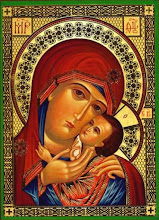
*Mary: “Hail, full of grace, the Lord is with thee!” (Lk 1.28) The Archangel Gabriel said it. Why should we deny it? Mary’s cousin Elizabeth certainly didn’t deny it: “Blessed art thou among women, and blessed is the fruit of thy womb.” (v.42) Mary herself said that “from henceforth all generations shall call me blessed.” (v.48)
Is it enough then to give her a quick mention once a year at Christmas, and maybe again at Easter, and then neglect her for the rest of the year?
Absolutely not!
This is the woman who actually
bore God! (hence the title Θεοτόκος), whom Elizabeth calls “the mother of my Lord.” (Lk 1.43)
Should she be worshipped? No. But she is the most important person ever created and certainly deserves more than the bit role to which the Protestant world has relegated her.
Relics: The Lord has seen fit in the past to perform miracles through the relics of His Saints (living and departed), and continues to do so to this very day.
Once while some Israelites were burying a man, suddenly they saw a band of raiders; so they threw the man's body into Elisha's tomb. When the body touched Elisha's bones, the man came to life and stood up on his feet. (2 Kg 13.21)
God did extraordinary miracles through Paul, so that even handkerchiefs and aprons that had touched him were taken to the sick, and their illnesses were cured and the evil spirits left them. (Acts 19.11-12)
It was not Elisha's bones or Paul's handkerchiefs that cause the miracles; it was God working through these items
*We will address these topics more fully in future posts.
 Q: Why do Orthodox crosses often portray a skull and crossbones? Isn't that a sign of evil or a symbol of the Illuminati or other secret organizations?