ATTENTION: Visitors looking for the Royal Eagle restaurant website, click here
Showing posts with label Liturgy. Show all posts

20100720

Things You'll Never See in an Orthodox Church, Part 22

(Newser) – A Dutch priest is in hot water for praying—in vain—that the Netherlands would defeat Spain at a Mass celebrated the day of the World Cup final, reports the BBC. Paul Vlaar decorated his church in the team color, orange; wore orange and white vestments; and played along as a churchgoer kicked a soccer ball down the aisle. He's been suspended so he can observe "a period of reflection," says his bishop. "Everybody supports Pastor Paul and we don't see what was so bad," a parishioner tells the AP.

source

20100506

Bach: Mass in B Minor

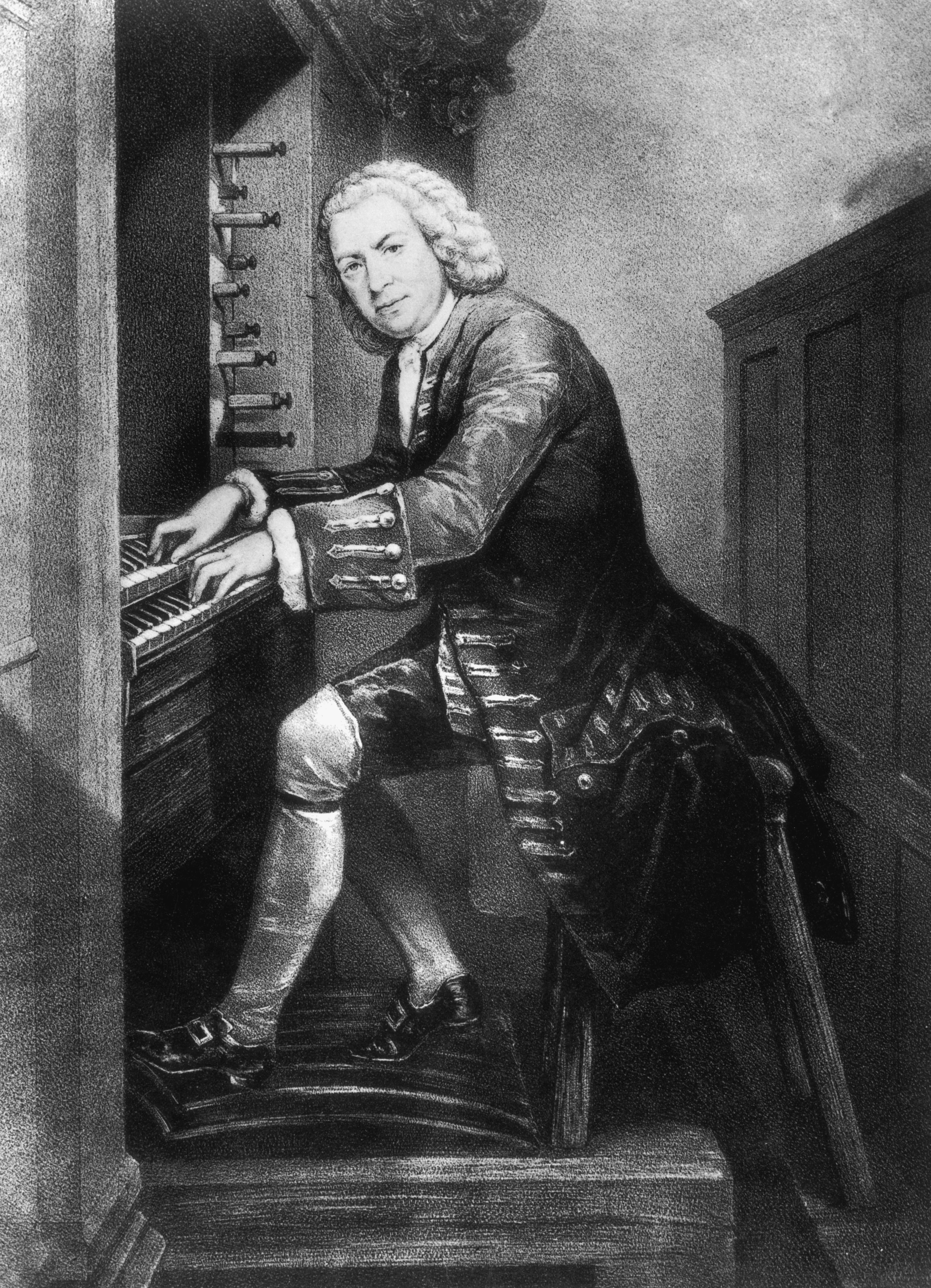
So there we were: Two Orthodox Christians, sitting in a Presbyterian church, listening to an Episcopalian choir performing the music of a Lutheran.

Two Saturdays ago, Kathryn and I saw the Oakland Choral Society (which is not an Episcopal choir, per se, but is populated by some of our Episcopalian friends) perform Bach's Mass in B Minor at Grosse Pointe Memorial Church, which is a lovely pseudo-Gothic behemoth next to the War Memorial. (if you were at our wedding reception you now where it is.) It was a beautiful performance of one of my very favorite choral works by my hands-down favorite composer of sacred music. Bach's Mass in B Minor was cobbled together using leftover bits from other discarded works, but, even so, it is so powerful and beautiful that I'm nearly brought to tears every time I hear it.

But for all the many hundreds of times that I have listened to this piece, it never really occured to me to pay much attention to the words. This performance was the first time I had heard it since becoming Orthodox, and as I followed along with the performance I was struck by how closely the words of the Latin Mass match those of portions of the Orthodox liturgical services. In some places it's nearly verbatim.

The words of Bach's Mass are the standard words used in every choral Mass and are, with the exception of the first three lines, in Latin. A choral Mass is typically divided into six sections: Kyrie, Gloria, Credo, Sanctus, Benedictus, and Angus Dei. Sometimes those are divided further. Here are the sections:

I. Kyrie
Kyrie eleison; Christe eleison; Kyrie eleison
(Lord have mercy; Christ, have mercy; Lord, have mercy)

This is the only portion of the Latin Mass that is not in Latin. Rather, it is in Greek, and I have done some research to find out why that is and no one seems to know. But it is a very familiar phrase to anyone who has been to an Orthodox Divine Liturgy, where we say "Lord, Have Mercy" about fifty times throughout the service.

II. Gloria
Gloria in excelsis Deo et in terra pax hominibus bonæ voluntatis. Laudamus te, benedicimus te, adoramus te, glorificamus te, gratias agimus tibi propter magnam gloriam tuam, Domine Deus, Rex cœlestis, Deus Pater omnipotens.Domine Fili unigenite, Jesu Christe, Domine Deus, Agnus Dei, Filius Patris, qui tollis peccata mundi, miserere nobis; qui tollis peccata mundi, suscipe deprecationem nostram. Qui sedes ad dexteram Patris, miserere nobis. Quoniam tu solus Sanctus, tu solus Dominus, tu solus Altissimus, Iesu Christe, cum Sancto Spiritu in gloria Dei Patris. Amen.

(Glory to God in the highest, and on earth peace to men of good will. We praise You, we bless You, we adore You, we glorify You, we give thanks to You for Your great glory, Lord God, heavenly King, almighty God the Father. Lord Jesus Christ, only begotten Son, Lord God, Lamb of God, Son of the Father, who taketh away the sins of the world, Have mercy on us; You who take away the sins of the world, hear our prayers. Who sits at the right hand of the Father, have mercy upon us. For You are the only Holy One, the only Lord, the only Most High, Jesus Christ, with the Holy Spirit in the glory of God the Father, Amen.)

This section matches almost word-for-word The Great Doxology (from Matins):
Glory to God in the highest, and on earth peace, good will among men. We praise Thee, we bless Thee, we worship Thee, we glorify Thee, we give thanks to Thee for Thy great glory. O Lord, heavenly King, God the Father Almighty; O Lord, the only-begotten Son, Jesus Christ; and O Holy Spirit. O Lord God, Lamb of God, Son of the Father, that takest away the sin of the world; have mercy on us; Thou that takest away the sins of the world, receive our prayer; Thou that sittest at the right hand of the Father, have mercy on us. For Thou only art holy; Thou only art the Lord, O Jesus Christ, to the glory of God the Father. Amen.

III. Credo
Credo in unum Deum, Patrem omnipotentem... (I believe in one God, the Father Almighty...)

This is the Creed (a.k.a., the Nicene Creed, a.k.a., the Niceno-Constantinopolitan Creed) and I won't include the entire thing here. The version used in the Latin Mass is the same one used in all Western (i.e. Roman Catholic and Protestant) churches and matches that used in the East (Orthodox--both Eastern and Oriental--and Byzantine Catholic) except for two elements:

Where the original Creed says "And in one Lord Jesus Christ, the Son of God, the only-begotten, begotten of the Father before all ages, Light of Light, true God of true God...," the Latin version adds "God from God" right before "Light of Light.": "Deum de Deo, lumen de lúmine, Deum verum de Deo vero..."

The other addition is that of the Filioque, which the Latin text adds to the line "And in the Holy Ghost, the Lord and Giver of life, who proceedeth from the Father..." so that it reads "Et in Spíritum Sanctum, Dóminum et vivificántem: Qui ex Patre Filióque procédit."

IV. Sanctus
Sanctus, Sanctus, Sanctus, Dominus Deus Sabaoth; pleni sunt coeli et terra gloria tua. Hosanna in excelsis

(Holy, Holy, Holy, Lord God of Hosts; Heaven and earth are full of Your glory. Hosanna in the highest.)

This section matches the Anaphora from the Divine Liturgy, which is directly following the Creed:
Holy, Holy, Holy, Lord of Sabaoth; heaven and earth are full of Thy glory. Hosanna in the highest!

V. Benedictus
Benedictus qui venit in nomine Domini. Hosanna in excelsis

(Blessed is He who comes in the name of the Lord. Hosanna in the highest.)

This is simply a continuation of the Anaphora:
Blessed is He that cometh in the name of the Lord. Hosanna in the highest!

VI. Agnus Dei
Agnus Dei, qui tollis peccata mundi, miserere nobis.
Agnus Dei, qui tollis peccata mundi, dona nobis pacem.

(Lamb of God, who takes away the sins of the world, have mercy upon us.
Lamb of God, who takes away the sins of the world, have mercy upon us.
Lamb of God, who takes away the sins of the world, grant us peace.)

This isn't an exact match, but it's pretty close to a repeat of the Great Doxology from Matins:
Lamb of God, Son of the Father, that takest away the sin of the world; have mercy on us;
Thou that takest away the sins of the world, receive our prayer; Thou that sittest at the right hand of the Father, have mercy on us.

Much of this is simply quoting the Bible, so it shouldn't be too surprising that the services match so closely. Here is the final part of Bach's Mass, called Dona Nobis Pacem (Grant Us Peace), for your listening pleasure. Enjoy.

20100409

Botafumeiro

Some of us were talking about this last weekend, so I thought I'd go ahead and post it. It's the famous incense pot called the "Botafumeiro," which, incidentally, is Spanish for "attractor of curious tourists." It is located in the Santiago de Compostela Cathedral in Spain (which, by the way, also houses the relics of some guy named St James.)


20090612

The structure of Vespers


From Notes from Underground:

The core of Vespers goes back to the Old Testament: "When Aaron sets up the lamps in the evening, he shall burn it, a perpetual incense before the Lord from generation to generation" (Exodus 30:8).

So at the heart of Vespers are lights and incense. There is a procession of priests, deacons and other ministers with lighted lamps and incense, which comes from the north door of the sanctuary, and goes to the holy (central) door, and the altar and its lamps are censed by a deacon, while the congregation sings the hymn:

O gladsome light of the holy glory of the immortal Father: heavenly holy blessed Jesus Christ!Now that we have come to the setting of the sun, and beheld the light of evening, we praise the Father, Son and Holy Spirit.For meet it is at all times to praise Thee, Son of God and Giver of LifeTherefore all the world doth glorify Thee.

Then is sung:

The Lord is King! He is robed in majesty
For he has established the world so that it should never be moved!
Holiness befits Thy house, O Lord, for evermore!
Glory to the Father, and to the Son, and to the Holy Spirit, now and ever and unto ages of ages.
Amen.

Followed by intercessions and led by a deacon, after which it is sung again, interspersed with hymns (Aposticha) on the themes of the day.

You can find more information on Vespers here:
Orthodox Worship: Vespers
Vespers - Orthodox Wiki
What is Vespers? - a blogger writes for a friend visiting Vespers

20090610

The Divine Liturgy

There are several liturgies in use by the Orthodox Church. These include the Liturgy of St James, which is celebrated daily in Jerusalem, the Liturgy of St Mark, celebrated by the Church of Alexandria in Egypt, and the Liturgy of St Gregory, which is celebrated by Orthodox Churches of the western rite. Other well known liturgies are the Liturgy of St Basil, and the Liturgy of Presanctified Gifts, which are both celebrated during Great Lent, and the Liturgy of St John Chrysostom, which is used by most Orthodox Churches throughout the year. This last one is used far more often than any of the others, and is normally the one people are talking about when they refer to the Divine Liturgy.

The guys at Our Life in Christ have a radio teaching ministry that is absolutely bursting with fascinating information about Orthodox theology, practice, history, worship, music, iconography, and many other subjects relevant to Orthodox Christianity. I have been listening to them since I first became interested in Orthodoxy and have learned a ton from them. I strongly recommend them to anyone with the least interest in the Orthodox Church; they will answer many if not all of your burning questions. Back in 2006, they recorded a nine-part series about the Divine Liturgy. I listened to it recently and have gained a new appreciation for the extraordinary beauty and complexity of the Divine Liturgy.

Among the thing I learned are that the Divine Liturgy:

1) Includes nearly three hundred quotes from the Bible,

2) Contains a hymn written by an emperor,

3) Actually transcends time and space.


How many other church services that you know of can claim all this?

Here are links to the mp3 files. For best results, right-click on the links and choose the "Save Target As..." option. Save the file to your computer and then open it using itunes or another audio application.

Part 1: Introduction

Part 2: The Proskomide - Preparing the Eucharist

Part 3: The Liturgy of The Word

Part 4: The Liturgy of The Faithful

Part 5: The Liturgy of The Faithful, cont'd

Part 6: The Epiclesis

Part 7: Pre-Communion Prayers

Part 8: Receiving the Body of Christ

Part 9: Post Communion Prayers

20090604

"This is the way we do church."

I got the article below from Transposzing, via orrologion. It was written by a Baptist pastor and captures as well as anything else I've read the confusion, anxiety, and wonderment of a first-time visit to an Orthodox Liturgy:

Last Sunday was the 4th of 13 in my sabbatical time. Each of them is precious to me. Each week I am choosing a place and a way to worship. I’m not a church tourist, hoping to see new things. I’m seeking spiritual experiences. I want to worship. Saturday night Jeanene and I still hadn’t decided where to go. I experienced something common to our culture but new to me. The “Where do you want to go to church - I don’t know where do YOU want to go to church” conversation. I found the Saint Anthony the Great website. It's an Orthodox church that has beautiful Byzantine art in the sanctuary. We decided to go there.

Shelby and Lillian went with us. On the way we warned them that this was going to be different. “They might not have changed their worship service much in a thousand years or so,” I told the girls.

That was an understatement.

Saint Anthony the Great isn't just old school. It's "styli and wax tablets" old school. We arrived ten minutes early for worship and the room was already filled with people lighting candles and praying. There was one greeter. I said, “We don’t know what to do.” She handed me a liturgy book and waved us inside.

Pews? We don’t need no stinking pews! Providing seats for worshipers is SO 14th century. Gorgeous Byzantine art, commissioned from a famous artist in Bulgaria. Fully robed priests with censors (those swinging incense thingies). Long, complex readings and chants that went on and on and on. And every one of them packed full of complex, theological ideas. It was like they were ripping raw chunks of theology out of ancient creeds and throwing them by the handfuls into the congregation. And just to make sure it wasn't too easy for us, everything was read in a monotone voice and at the speed of an auctioneer.

I heard words and phrases I had not heard since seminary. Theotokos, begotten not made, Cherubim and Seraphim borne on their pinions, supplications and oblations. It was an ADD kids nightmare. Robes, scary art, smoking incense, secret doors in the Iconostas popping open and little robed boys coming out with golden candlesticks, chants and singing from a small choir that rolled across the curved ceiling and emerged from the other side of the room where no one was singing. The acoustics were wild. No matter who was speaking, the sound came out of everywhere. There was so much going on I couldn't keep up with all the things I couldn't pay attention to.

Lillian was the first to go down. After half an hour of standing, she was done. Jeanene took her over to a pew on the side wall. She slumped against Jeanene’s shoulder and stared at me with this stunned, rather betrayed look on her face.

“How could you have brought us to this insane place?”

Shelby tried to tough it out. We were following along in the 40 page liturgy book that was only an abbreviation of the service were were experiencing. I got lost no less than 10 times. After 50 minutes Shelby leaned over and asked how much longer the service would be. I was trying to keep from locking my knees because my thighs had gotten numb. I showed her the book. We were on page 15. I flipped through the remaining 25 pages to show her how much more there was. Her mouth fell open.

“Are you serious?”

“Yeah. And I think there's supposed to be a sermon in here somewhere.”

“They haven’t done the SERMON yet? What was that guy doing who said all that stuff about…all that stuff?”

“I don’t know?” I said.

“I have to go to the bathroom,” she said. I looked around and saw the door at the back of the sanctuary swinging shut.

And then there was one.

I made it through the entire 1 hour and 50 minutes of worship without sitting down, but my back was sore. Shelby came back toward the end. When it came time for communion I suggested that we not participate because I didn't know what kind of rules they have for that. We stayed politely at the back. A woman noticed and brought some of the bread to us, bowing respectfully as she offered it. Her gesture of kindness to newcomers who were clearly struggling to understand everything was touching to me.

Okay, so I started crying a little. So what? You would have too, I bet.

After it was over another woman came to speak with us. She said, “I noticed the girls were really struggling with having to stand.”

“Yeah,” I said. “This worship is not for lightweights.”

She laughed and said, "yes," not the least bit ashamed or apologetic.

So what did I think about my experience at Saint Anthony the Great Orthodox Church?

I LOVED IT. Loved it loved it loved it loved it loved it.

In a day when user-friendly is the byword of everything from churches to software, here was worship that asked something of me. No, DEMANDED something of me.

“You don’t know what Theotokos means? Get a book and read about it. You have a hard time standing for 2 hours? Do some sit ups and get yourself into worship shape. It is the Lord our God we worship here, mortal. What made you think you could worship the Eternal One without pain?"

See, I get that. That makes sense to me. I had a hard time following the words of the chants and liturgy, but even my lack of understanding had something to teach me.

“There is so much for you to learn. There is more here than a person could master in a lifetime. THIS IS BIGGER THAN YOU ARE. Your understanding is not central here. These are ancient rites of the church. Stand with us, brother, and you will learn in time. Or go and find your way to an easier place if you must. God bless you on that journey. We understand, but this is the way we do church.”

I’m going back again on Sunday. I started to write, “I’m looking forward to it.” But that’s not right. I’m feeling right about it.

And feeling right is what I'm looking for.

Update: This was actually written on May 26 or 27. I went back to Saint Anthony the Great on Sunday. I found I was following along a little better. I'm REALLY getting a lot out of Orthodox worship. Shelby and Lillian declined to go with me this time.

20090323

How We Worship

From St Innocent Orthodox Church (bold and italics have been added)

The Eastern Orthodox understanding of worship begins with the scriptural understanding that there are other heavenly or spiritual beings: angels and archangels, cherubim and seraphim. The Scriptures teach that in worship, believers are surrounded by and worship within this communion of heavenly hosts. As the Prayer of Entrance says, "O Sovereign Lord, our God, Who appointed in heaven the orders and armies of angels and archangels for the service of Your glory, grant that the holy angels may enter with us to serve and glorify Your goodness with us." Or, as the prayer during the Thanksgiving acknowledges of God, "for this liturgy which You are pleased to accept from our hands, though there stand before You thousands of archangels, and myriads of angels, cherubim and seraphim, six-winged, many-eyed, soaring high on their wings; singing, proclaiming, shouting the Hymn of Victory."

In other words, we should worship God on earth as he is shown to be worshiped in heaven. As the letter to the Hebrews tells us, there is "a heavenly pattern" behind the liturgical life of the Church of then (Israel) and now. If we consider the Old Testament pattern and the visions of heavenly worship found in Isaiah, Ezechiel and Revelation, several elements are consistent:
      • use of light, candles, candelabras

      • use of vestments, crowns

      • thrones

      • incence, smoke

      • liturgical (fixed) prayers, patterns and expressions

      • physical movements (bowing down, prostrations, etc)
These are the elements found in Orthodox worship. However strange they may seem to one raised in the Western/Protestant Christian tradition, they are soundly Scriptural and hark back to the earliest apostolic times.

Worship in the Kingdom
Consistent with the earliest Christian beliefs, worship involves this heavenly host because Christian worship takes place in the Kingdom of God before the heavenly throne (see, for example, Isaiah 6: 1-8). Also gathered around the throne are all the Saints who Christians remember and who join in the worship. Christians pray for those who partake of the gifts of the Eucharist, and say "Furthermore, we offer to You this spiritual worship for those who in faith have gone on before us to their rest: forefathers, fathers, patriarchs, prophets, apostles, preachers, evangelists, martyrs, confessors, ascetics and every righteous spirit made perfect in faith, especially for our most holy, most pure, most blessed and glorious Lady, the Mother of God and Ever-virgin Mary". Christians throughout the ages have affirmed the "great cloud of witnesses" (Heb. 12: 1), those Saints who have gone before. Christians pray for them even as they believe and expect the Saints pray for them.

The Physical Dimension of Worship
The Scriptures teach that God created human beings as physical as well as spiritual beings. To deny this physical aspect of being human is to deny the nature of the creation. The challenge is to affirm this physical aspect of being human in a manner which is edifying and which builds up and conforms the believer to the image of Christ.

Furthermore, the Incarnation of Jesus, the taking on of human flesh and possession of both human and divine natures, is the ultimate affirmation of the inherent goodness of creation. To deny the physical side of being human, or to affirm the spiritual at the expense of the physical, is simply not Christian. In Orthodox worship all senses are involved, through the smell of incense, the sight of candles and icons, the hearing of prayers and music, and the taste of the Eucharist.

Read the rest here

20090131

"The Ancient Church" documentary

The following is a short documentary on the history of the ancient Orthodox Church. For more information on the people, places, and events mentioned in the videos, click on the links below.


5:16 Ecumenical Councils
6:20 Papal Supremacy
6:23 The Filioque
6:28 The Great Schism of 1054 (also here)


00:13 Luther & 95 Theses, Protestant Reformation
2:00 Patriarch Ignatius IV
2:18 St Ignatius
3:11 Churches of Russia, Serbia, Romania, Bulgaria & Georgia
3:19 Churches of Cyprus, Greece, Poland & Albania
3:25 Churches of Sinai, Czech Republic, Finland, Japan & China
4:36 Metropolitan Philip
5:49 Fr Peter Gillquist
6:03 Fr Gordon Walker


00:31 Mysteries
00:42 Fr. Jon Braun

20081221

Just How Exactly Does One Perform a Sacrifice?

From Again and Again

The Epistle of James supplies us with further Scriptural evidence for the Jewish roots of Christian worship. For the word in James 2:2 referring to a Christian occasion or place of worship, usually translated as “assembly”, in Greek is actually “synagogue” [συναγωγὴν]. That Greek term means both Synagogue and the Synagogue-type Service of worship. James here indirectly indicates that the early Christians thought of their place of worship as a Synagogue, where they celebrated Christianized Synagogue Service of worship.

The word “Synagogue” is found forty-four times in the New Testament; but, ironically, the word Synagogue, which today we customarily associate exclusively with Judaism and the Old Testament, is not to be found anywhere in the Old Testament. For the Synagogue was a development in Judaism that postdated the writing of most of the Old Testament Scriptures.

The word “Synagogue” is from the Greek, meaning “to gather together.” The Jewish Synagogue has its origin in Babylon during the Babylonian Captivity. In 597 and again in 586 BC, the Babylonian ruler Nebuchadnezzar deported the most prominent Jews from Israel to his capital city, where they and their children remained in exile for approximately 100 years. During that time, it became customary for the Jews to gather on the Sabbath to hear the Scriptures read, to sing Psalms, and to receive instruction. This practice developed into an orderly pattern of liturgical worship. The Jews, of course, were already quite accustomed to liturgical worship in the Temple, so it was only natural for them to develop liturgical forms of worship in their Synagogue Services.

By the time of Christ, the common order of Service in the Synagogue was as follows: the Service began with several readings from the Scriptures, followed by preaching from various individuals who would be invited by the Synagogue leader to comment on the day’s readings; finally, Psalms were sung and appropriate Benedictions were recited. At the end of the service, men who were of priestly families would be invited to recite Aaron’s Blessing (Numbers 6:26).

The typical Synagogue in the first century was an open hall, with no seats for the congregation. At one end (facing Jerusalem if possible) there was a “bema” or high place, which was an elevated stage-like platform. In the center of the wall behind the bema was the seat of the ruling elder, with seats for his council on either side. In the center of the bema itself stood a table upon which sat both the “Menorah” (a seven-branched candlestick) and the Ark, a decorated cabinet containing the Scrolls of the Scriptures.

After the return from the Babylonian Captivity and the restoration of the Temple in Jerusalem, the Jews brought the custom of Synagogue worship to Judea. But not all the Jews returned to the Holy Land. Those who remained behind in Babylon continued to worship in their Synagogues. By the beginning of the first century, the custom of Synagogue worship had gradually spread throughout the Jewish Diaspora. Jews from all around the ancient world were able to participate in and benefit from Temple worship only if they made a pilgrimage to the Temple in the Holy City. Back home it was the Synagogue which naturally was the center of Jewish life and worship.

Temple worship centered on the offering of sacrifices. Synagogue worship centered on reading, preaching the Word, singing the Psalms, and the offering of Benedictions. Worship, both in the Temple and in the Synagogues, was understood to be fundamentally an act of praise to God, and focused only secondarily on seeking His blessings. The emphasis, in other words, was on giving, not receiving. The benefits one derived from both Temple and Synagogue worship were the by-product of one’s participation in the acts of adoration, praise, and thanksgiving to the God of Israel.

The only detailed instructions in the Bible for Services of worship are the elaborate rules for the sacrificial rites set forth in the Torah, the first five books of the Bible. But even there, we find no directions on how exactly to offer a sacrifice. Some contemporary traditionalist Jews, dreaming of restoring Temple worship, have found this fact truly a stumbling block. For if they were to reconstuct the Temple, how exactly would a sacrifice be performed? No one today knows.

Since we find no reference to the Synagogue in the Old Testament, obviously neither will we find any directions in the Old Testament on how to conduct a Synagogue Service. The manner of conducting worship in the Synagogue, like the instructions for offering sacrifice, was a part of Jewish tradition found outside of Scriptures. According to the Scriptural record, neither Jesus nor the Apostles had the slightest difficulty with this fact, for, as we have seen, they all participated in Synagogue worship on a regular basis. They had no reason even to expect the Bible to provide directions on how to conduct Synagogue worship.

We do have a very good idea today of how a Synagogue Service was done two thousand years ago, simply because the Jews have been conducting Synagogue worship all along, without break, even to this present time. Modern Jewish Synagogue worship, as well as Jewish home worship, is part of a living tradition. On the other hand, however, we do not know today the finer details of the sacrificial worship of the Temple, since the Jews were forced in AD 70 to cease offering the liturgical sacrifices ordered by the Law of Moses. In that year, the Imperial Legions of the Roman Emperor Titus destroyed the last Temple of the Jews.

20081126

St John Chrysostom

St John Chrysostom, whose life and work are celebrated today, was a colossal figure in early Christianity. His surname Χρυσόστομος, which means "golden mouthed" in Greek, was given to him posthumously because of his legendary oration skills.

In his early years he became a monk and a hermit, during which time he committed the Bible to memory and fasted so severely that he permanently damaged his digestive system.

Eventually he returned to his hometown of Antioch, where he served as a deacon and a priest before being installed--despite his adamant protest--as Archbishop of Constantinople. He refused the lavish trappings that came with the office and continued to live in extreme austerity. His piety and holiness aroused the jealousy of religious and political leaders, as a result of whose scheming St John was exiled to the mountains of Armenia where he died of exposure in 407.

St John's sermons and letters have had an enormous influence on Christians throughout history. But he is probably best remembered for the Liturgy which bears his name and is celebrated daily in Orthodox churches worldwide.

For further information please see the following:

OCA biography
Website dedicated to the life and writings of St John Chrysostom
Divine Liturgy of St John Chrysostom
Homilies on First Corinthians
Homilies on Second Corinthians
Biography on Ecumenical Patriarch website
The Martyrdom of Saint John Chrysostom

20081105

St James, Brother of the Lord

The Apostle James, Brother of the Lord was the son of Righteous Joseph the Betrothed (Comm. 26 December). From his early years James was a Nazorite, a man especially dedicated to God. The Nazorites gave a vow to preserve virginity, to abstain from wine, to refrain from eating meat, and not to cut their hair. The vow of the Nazorites symbolized a life of holiness and purity, commanded formerly by the Lord for all Israel. When the Saviour began to teach the nation about the Kingdom of God, Saint James believed in Christ and became His apostle. For his God-pleasing life he was chosen first bishop in the Church at Jerusalem. Saint James presided over the Council of the Apostles at Jerusalem, and his word was decisive (Acts 15). In his thirty years as bishop the Apostle James converted many of the Jews to Christianity. Annoyed by this, the Pharisees and the Scribes plotted together to kill Saint James. Having led the saint up on the roof of the Jerusalem Temple, they demanded that he renounce the Saviour of the world. But the holy Apostle James instead began to bear witness, that Christ is the True Messiah. Then the Jewish teachers shoved him off downwards. The saint did not die immediately, but gathering his final strength, he prayed to the Lord for his enemies, who at this while were stoning him. The martyr's death of Saint James occurred in about the year 63.

The holy Apostle James composed a Divine Liturgy, which has formed the basis of the liturgies, composed by Saints Basil the Great and John Chrysostomos. The Church has preserved an Epistle of the Apostle James, which under his name is included among the books of the New Testament of Holy Scripture.

20081028

Prayer

Prayer is another subject about which rivers of ink have been spilled by many men who know far more than I ever will. Nor could I ever hope to add anything of value to what has already been said or written about prayer.

The following are just a few of my thoughts and observation regarding prayer, particularly the practice of formal, liturgical prayer.

One of my many early objections to liturgical worship was the use of what I considered to be "canned" prayers. Why, I thought, would I want to recite prayers that were written hundreds of years ago by some stranger who doesn't know me or my needs and wants? Doesn't God want prayer to be from the heart? Pre-written prayers seemed dry, dead, uninspired.

I have since realized that, for my entire Christian life, I have used pre-written prayers. The Psalms, hymns, even "praise songs" are all forms of pre-written prayer, and never have I had any reason to object to them. Prayer doesn't need to be off-the-cuff in order to be powerful and effective and sincere and worshipful. In fact, I can see now that there are times when formal, liturgical, pre-written prayers are actually preferred:

Pre-written prayers allow the worship community to pray together with one voice.
Imagine if, one Sunday morning at church, instead of singing the hymns together, everyone in the congregation stood up and started singing whatever was on their hearts at that moment.
That's not worship, it's chaos. And that's not a worship community, it's a crowd of individuals clamoring for their personal wants and needs to be heard. The truth is, short of miraculous intervention, there simply is no way to have corporate prayer that isn't pre-written.

I've mentioned before how important the sense of community is to Orthodox Christians. Combine that with their strong connection to the past, and you start to realize that, when you're standing in a Vespers service praying the ancient prayers, you're singing with one accord, not only with the others in the room and with the millions of Orthodox Christians elsewhere in the world, but also with twenty centuries worth of saints and martyrs who prayed—and still pray—those very same prayers. It's an awesome thing to consider.

Formal prayer removes the "me" from worship.
When I offer to God the prayers of the Church, I set my own worries and cares and preferences aside. Only then can I really worship, because "it is no longer I who live, but Christ [who] lives in me" (Gal 2.20). True worship cannot be about me; it cannot be personally fulfilling, pleasing or satisfying to me in any way and still be worship. Real worship must be a purely objective act. The prayers in my Prayer Book belong to the whole Church, not to me personally; they are the offerings of an entire community of believers, spanning thousands of years of Church history, rather than my own personal desires and impulses.

Now, that certainly doesn't mean that there is anything wrong with presenting to God our needs and concerns. On the contrary, we are instructed to do precisely that (Php 4.6). However, when we worship, it should be selfless and devoid of "me." Does that mean that my worship will never include an element of subjectivity? Of course not, I'm still human. But formal prayer gets me closer than I would get otherwise.

The Jews prayed liturgically and so did the first Christians.
According to the notes in the Orthodox Study Bible, "the Jews had practiced liturgical prayer for centuries," and the early Christians, being Jews, continued this practice, which has been maintained without interruption since that time. When Acts 2.42 says that the apostles continued in "fellowship, and in breaking of bread, and in prayers," the word prayers is "literally 'the prayers' in Greek, referring to specific liturgical prayers" (OSB, p.1473).

Furthermore, the prayer in Acts 4:23-30 "follows a traditional liturgical formula of praise, remembrance of God's works, and petition" (OSB, p.1476). And, according to the Book of Acts, the Apostles observed the "hours" of prayer which were observed by pious Jews and are followed in monastic communities to this day (Acts 3.1, 10.9).

For thousands of years—since long before King David—God has inspired men to compose beautiful, stirring hymns and prayers to His honor. I will, from time to time, be posting some of these "canned" prayers that are used by Orthodox Christians. This first one was composed by God Himself and is probably the one offered most frequently in the Orthodox Church:

Our Father which art in Heaven, Hallowed be thy name. Thy kingdom come. Thy will be done in earth, as it is in Heaven. Give us this day our daily bread. And forgive us our debts, as we forgive our debtors. And lead us not into temptation, but deliver us from the evil one. Amen. (The Lord's Prayer, Mt 6.9-13)
20080917

"Cold Macaroni"?

Someone asked me last week whether the Gospel comes through in the liturgy of the Orthodox Church, or if it kind of drifts into the background like it seems to do in so many other churches.

My father has a special name for churches like that; churches whose teachings either communicate a timid, lukewarm, non-committal version of the Gospel, or avoid it altogether: "cold macaroni." These are the churches that don't want to discomfort or offend their audience with all that Death-and-Resurrection talk; or risk upsetting them by asking them to, y'know, be holy and stuff. These are the churches that look nice and allow people to sit comfortably in their pews and feel good about checking the "go to church" box on their To-do list every week; the ones that Frederica Mathewes-Green described as being a "social worker club with excellent aesthetics."

I can't say whether any particular Christian denomination tends more than the others toward the "cold macaroni" approach, but I can tell you that, if I saw this nonsense coming out of an Orthodox church, I'd be out the door.

So, in response to the above inquiry, I submit for your perusal some excerpts from the Liturgy of St John Chrysostom, which is the standard liturgy for most Orthodox churches. Keep in mind as you read it that it is not intended to be sliced up like I have it here, but should be offered as a single complete prayer by the whole body of believers. You can read the rest of it here.

Be on the lookout as you read it for any sign of "cold macaroni"; any timidity or hesitation. I think you'll find none.

(Some of the Liturgy is spoken by the priest, some by the deacon, some by the congregation, and some by everyone together. I have not specified below which is which)

The Introduction:

Blessed is the kingdom of the Father and the Son and the Holy Spirit, now and forever and to the ages of ages.

During the Great Litany:

Lord, our God, whose power is beyond compare, and glory is beyond understanding; whose mercy is boundless, and love for us is ineffable: look upon us and upon this holy house in Your compassion. Grant to us and to those who pray with us Your abundant mercy.

For to You belong all glory, honor, and worship to the Father and the Son and the Holy Spirit, now and forever and to the ages of ages. Amen.

During the First Antiphon:

Lord our God, save Your people and bless Your inheritance; protect the whole body of Your Church; sanctify those who love the beauty of Your house; glorify them in return by Your divine power; and do not forsake us who hope in You.

For Yours is the dominion, the kingdom, the power, and the glory of the Father and the Son and the Holy Spirit, now and forever and to the ages of ages. Amen


During the Second Antiphon:

Only begotten Son and Word of God, although immortal You humbled Yourself for our salvation, taking flesh from the holy Theotokos and ever virgin Mary and, without change, becoming man. Christ, our God, You were crucified but conquered death by death. You are one of the Holy Trinity, glorified with the Father and the Holy Spirit-save us.

Lord, You have given us grace to offer these common prayers with one heart. You have promised to grant the requests of two or three gathered in Your name. Fulfill now the petitions of Your servants for our benefit, giving us the knowledge of Your truth in this world, and granting us eternal life in the world to come.

During the Small Entrance:

Master and Lord our God, You have established in heaven the orders and hosts of angels and archangels to minister to Your glory. Grant that the holy angels may enter with us that together we may serve and glorify Your goodness. For to You belong all glory, honor, and worship to the Father and the Son and the Holy Spirit, now and forever and to the ages of ages. Amen.

During the Trisagion Hymn:

Holy God, You dwell among Your saints. You are praised by the Seraphim with the thrice holy hymn and glorified by the Cherubim and worshiped by all the heavenly powers. You have brought all things out of nothing into being. You have created man and woman in Your image and likeness and adorned them with all the gifts of Your grace. You give wisdom and understanding to the supplicant and do not overlook the sinner but have established repentance as the way of salvation. You have enabled us, Your lowly and unworthy servants, to stand at this hour before the glory of Your holy altar and to offer to You due worship and praise. Master, accept the thrice holy hymn also from the lips of us sinners and visit us in Your goodness. Forgive our voluntary and involuntary transgressions, sanctify our souls and bodies, and grant that we may worship and serve You in holiness all the days of our lives, by the intercessions of the holy Theotokos and of all the saints who have pleased You throughout the ages.

Blessed is He who comes in the name of the Lord. Blessed are You on the throne of glory of Your kingdom, seated upon the Cherubim always, now and forever and to the ages of ages. Amen.

Holy God, Holy Mighty, Holy Immortal, have mercy on us
.

During the Great Entrance:

No one bound by worldly desires and pleasures is worthy to approach, draw near or minister to You, the King of glory. To serve You is great and awesome even for the heavenly powers. But because of Your ineffable and immeasurable love for us, You became man without alteration or change.

The Creed:

I believe in one God, the Father, the Almighty, Creator of heaven and earth, and of all things visible and invisible.
And in one Lord, Jesus Christ, the only begotten Son of God, begotten of the Father before all ages. Light of Light, true God of true God, begotten, not created, of one essence with the Father, through whom all things were made.
For us and for our salvation, He came down from heaven and was incarnate by the Holy Spirit and the Virgin Mary and became man.
He was crucified for us under Pontius Pilate, and He suffered and was buried.
On the third day He rose according to the Scriptures.
He ascended into heaven and is seated at the right hand of the Father.
He will come again in glory to judge the living and the dead. His kingdom will have no end.
And in the Holy Spirit, the Lord, the Giver of Life, who proceeds from the Father, who together with the Father and the Son is worshiped and glorified, who spoke through the prophets.
In one, holy, catholic, and apostolic Church.
I acknowledge one baptism for the forgiveness of sins.
I expect the resurrection of the dead.
And the life of the age to come. Amen.

The Holy Anaphora:

It is proper and right to sing to You, bless You, praise You, thank You and worship You in all places of Your dominion; for You are God ineffable, beyond comprehension, invisible, beyond understanding, existing forever and always the same; You and Your only begotten Son and Your Holy Spirit. You brought us into being out of nothing, and when we fell, You raised us up again. You did not cease doing everything until You led us to heaven and granted us Your kingdom to come. For all these things we thank You and Your only begotten Son and Your Holy Spirit; for all things that we know and do not know, for blessings seen and unseen that have been bestowed upon us. We also thank You for this liturgy which You are pleased to accept from our hands, even though You are surrounded by thousands of Archangels and tens of thousands of Angels, by the Cherubim and Seraphim, six-winged, many-eyed, soaring with their wings,

Singing the victory hymn, proclaiming, crying out, and saying: Holy, holy, holy, Lord Sabaoth, heaven and earth are filled with Your glory. Hosanna in the highest. Blessed is He who comes in the name of the Lord. Hosanna to God in the highest.

Together with these blessed powers, merciful Master, we also proclaim and say: You are holy and most holy, You and Your only-begotten Son and Your Holy Spirit. You are holy and most holy, and sublime is Your glory. You so loved Your world that You gave Your only begotten Son so that whoever believes in Him should not perish, but have eternal life. He came and fulfilled the divine plan for us. On the night when He was betrayed, or rather when He gave Himself up for the life of the world, He took bread in His holy, pure, and blameless hands, gave thanks, blessed, sanctified, broke, and gave it to His holy disciples and apostles saying:

Take, eat, this is my Body which is broken for you for the forgiveness of sins.

Amen.

Likewise, after supper, He took the cup, saying:

Drink of it all of you; this is my Blood of the new Covenant which is shed for you and for many for the forgiveness of sins.

Amen.

Remembering, therefore, this command of the Savior, and all that came to pass for our sake, the cross, the tomb, the resurrection on the third day, the ascension into heaven, the enthronement at the right hand of the Father, and the second, glorious coming.

During Holy Communion:

I believe and confess, Lord, that You are truly the Christ, the Son of the living God, who came into the world to save sinners, of whom I am the first... Loving Master, Lord Jesus Christ, my God, let not these holy Gifts be to my condemnation because of my unworthiness, but for the cleansing and sanctification of soul and body and the pledge of the future life and kingdom. It is good for me to cling to God and to place in Him the hope of my salvation.

Having beheld the resurrection of Christ, let us worship the holy Lord Jesus, the only Sinless One. We venerate Your cross, O Christ, and we praise and glorify Your holy resurrection. You are our God. We know no other than You, and we call upon Your name. Come, all faithful, let us venerate the holy resurrection of Christ. For behold, through the cross joy has come to all the world. Blessing the Lord always, let us praise His resurrection. For enduring the cross for us, He destroyed death by death.


The Dismissal:

Lord, bless those who praise You and sanctify those who trust in You. Save Your people and bless Your inheritance... For every good and perfect gift is from above, coming from You, the Father of lights. To You we give glory, thanksgiving, and worship, to the Father and the Son and the Holy Spirit, now and forever and to the ages of ages.

Christ our God, You are the fulfillment of the Law and the Prophets. You have fulfilled all the dispensation of the Father. Fill our hearts with joy and gladness always, now and forever and to the ages of ages. Amen.

May Christ our true God who rose from the dead, as a good, loving, and merciful God, have mercy upon us and save us, through the intercessions of His most pure and holy Mother; the power of the precious and life giving Cross; the protection of the honorable, bodiless powers of heaven, the supplications of the honorable, glorious prophet and forerunner John the Baptist; the holy, glorious and praiseworthy apostles; the holy, glorious and triumphant martyrs; our holy and God-bearing Fathers; the holy and righteous ancestors Joachim and Anna; Saint (of the day) whose memory we commemorate today, and all the saints.


The Resurrection Apolytikia:

Though the tomb was sealed by a stone and soldiers guarded Your pure body, You arose, O Savior, on the third day, giving life to the world. Therefore, O Giver of life, the heavenly powers praise You: Glory to Your resurrection, O Christ, glory to Your kingdom, glory to Your plan of redemption, O only loving God.

When you descended unto death, O life immortal, You destroyed Hades with the splendor of Your divinity. And when You raised the dead from the depths of darkness, all the heavenly powers shouted: O Giver of life, Christ our God, glory to You.

Let the heavens rejoice and earth be glad, for the Lord has shown the power of His reign: He has conquered death by death, and become the first born of the dead. He has delivered us from the depths of Hades; and has granted to the world great mercy.

The joyful news of Your resurrection was told to the women disciples of the Lord by the angel. Having thrown off the ancestral curse, and boasting, they told the Apostles: death has been vanquished, Christ our God is risen, granting to the world great mercy.

To the Word, coeternal with the Father and the Spirit, born of the Virgin for our salvation, let us, the faithful, give praise and worship. Of His own will He mounted the cross in the flesh, He suffered death, and raised the dead by His glorious resurrection.

The heavenly powers appeared at Your tomb, and those guarding it became like dead. Mary stood at Your grave seeking Your pure body. You stripped the power of hades, not touched by its corruption. You met the virgin woman, as one who grants life. O Lord, who rose from the dead, glory to You.

By Your cross You destroyed death, and to the thief You opened paradise. You transformed the sorrow of the Myrrhbearers, and commanded the Apostles to proclaim that You have risen from the dead, Christ our God, granting to the world great mercy.

From on high You descended, O merciful Lord, and accepted the three-day burial to free us from our passions. Glory to You, O Lord, our life and our resurrection.