ATTENTION: Visitors looking for the Royal Eagle restaurant website, click here
Showing posts with label Feasts. Show all posts

20100828

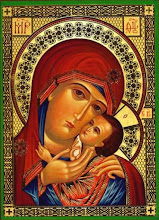
The Falling-Asleep ("Dormition") of our Most Holy Lady Mother of God and Ever-Virgin Mary

Troparion (Tone I): In giving birth thou didst preserve thy virginity,/ and in thy falling asleep thou hast not forsaken the world, O Theotokos./ Thou hast been, translated to life, as thou art the Mother of Life.// And by thy supplications thou dost deliver our souls from death.

Kontakion (Tone II): The tomb and mortality could not hold the Theotokos,/ who is untiring in her supplications/ and our certain hope in her intercessions./ For, as the Mother of Life, she hath passed over to the Life// Who dwelt within her ever-virgin womb.
 
The following is from a sermon by St Gregory Palamas, Archbishop of Thessalonika (emphases added):
My present talk for your appreciation is occasioned both by love, and by necessity. I speak not only by reason of my love for you, and whereof I desire that the word of salvation should gain way to your God-loving hearing, and in such manner, be imbibed of by your souls; but also, wherein it be very needful for me, in conjunction with the churchly laudations, to expound on the majesty of the ever-Virgin Mother of God. And howso this wish, being twofold against the customary wont, doth impel and incline, and thus also inevitably need compel; though word canst not comprehend, that which is higher than any word, like as the sight canst not fix its gaze upon the sun. And insofar as it be not proper to speak about that which is beyond all words, therein ought primarily the love for the Mother of God to be consecrated in psalmody. If "venerable in the eyes of the Lord be the death of His holy ones" (Ps. 115 [116]: 15), and "the memory of the righteous one is with praises" (Prob. 10:7), then how much moreso – is the memory of the Holiest of the holy ones, through Whom – hath become all sanctification for the holy ones, – is the memory of the Ever-Virgin Mother of God, She Whose memory it now becometh us to celebrate with most exalted praises? We now make celebration of the holy Dormition, or Repose, through which was She brought low before the Angels, and yet did She excel beyond compare the Angels and the Archangels, and being over them by the consequent Power of Her closeness to God and by the fore-ordained over the ages wondrous deeds wrought over Her. It was on Her account that the God-inspired prophets did prophesy, and the miracles that beforehand did point out this great and universal wonder – the ever-Virgin Mother of God; manifest of the Spirit; in various ways being the foretype of the future actuality; manifesting the promise to beget without seed He born of God the Father in eternity... The King of all greatly desired the mysteried beauty of the ever-Virgin, and within Her did transpire the incarnating of the Power of the MostHigh, not through darkness and fire as it was for the God-inspired Moses, and not through means of storm and clouds as was manifest His Presence to the Prophet Elias (Elijah), nor by means of some pretext did the Power from on High overshadow the all-pure and virginal womb. What inexpressibly transpired within Her and of Her was that the Word of God came forth incarnated in the flesh, "to appear upon earth and live amongst mankind" (Baruch 3: 38), deifying our nature and granting us, according to the Divine Apostle, that "which the Angels have desire to look forward to" (1 Pet. 1: 12) – and in this is the wondrous glorification and the all-pure glory of the ever-Virgin Mary.

And what words are there, appropriate to explain what transpired after the inexplicable birth? Whereof, the Word of God issuing from on high and begotten through Her in Her co-operating and co-willing, She also is glorified together with Him in the dignity with which He is exalted, conjoined in His great and wondrous majesty. But with the going up to Heaven of He Incarnate of Her, She in turn through what came to Her of Him, – the excelling majesty of mind and word, as it were emulating Him with manifold deeds and prayers, and likewise solicitude for all the world, and the inspiring of preachers to all the ends of the earth. And all and everywhere She was the sole support and consoler, and in every way co-operating in the proclamation of the Gospel good-news, and clearly proving Herself in it with a life filled with struggle and mastery over mind and word. Whereof, certainly, Her life and death hath carried over into Heavenly and immortal life; and the remembrance of it is a joyous feast and universal solemnity. Into the hands of Her Son was taken the God-bearing spirit of the Ever-Virgin Mary; and indeed a short while afterwards, Her kindred body was translated by Him into the eternal Heavenly habitations. And all this was fully just and proper. In actual fact, many were vouchsafed over the ages the Divine condescension, glory and might, as David likewise sayeth: "For me exceedingly be esteemed Thine company, O God, and exceedingly assured be their dominion. I do look over them, and more than the sands be they numbered" (Ps. 138 [139]: 17-18). "Many a daughter, – according to Solomon, – hath acquired riches, and many have wrought power" (Prov. 31: 29-30). And here is She – the All-Pure Virgin Mary, and She is most exceedingly exalted over all and for all: She alone hath come betwixt God and the human race, She alone of all surpassing all nature is manifest the Mother of God by nature, and through the mysteried Birth-giving She hath become the Queen of everything both in the world and of transcendent creation. And in such manner being exalted over all subject to Her through Her Herself, and having Herself been made participant of utmost choosing through the Divine Spirit, She is become the highest of any of the most exalted and most-blest Queen of blessed lineage.

And now indeed She hath celestial proper habitation, as it were a palace most becoming Her, into which today She be translated from earth, to stand at the right side of the Almighty "adorned in golden robes, aglitter" (Ps. 44 [45]: 9-10), as expressed of Her by the psalmodist prophet. Beneathe the gilded garb Her God-worthy body is aglitter with manifold virtues – wherefore She alone with the Son in God-glorified body hath celestial habitation: for the earth, the grave and death have not power to hold on ultimately to the life-originative and God-receiving body more radiant than the heavens and of heaven the habitation of the heavens. And actually, if a soul having habitation (within it) of the grace of God, forsaking the mundane, it is borne up to heaven, as becometh clear from many an example, and we do believe this: therefore, how could there not be carried up from earth to heaven that body, not only having accepted within itself the Only-Begotten and Praeternal Son of God, the inexhaustible well-spring of grace, but moreover having begotten and manifest Him? How didst Thou, though dust subject to decay, Who being yet three years of age, and not yet having in Thyself the Prae-Celestial Indwelling, not yet having begotten the Incarnated One, – how didst Thou come to take up habitation in the Holy of Holies? [Vide 21 November account of feast of Entry of the Virgin into the Temple.] Wherefore, it is in that the body, having by nature begotten, is co-glorified with the God-becoming glory (together) with He-Begotten, and it is co-resuscitated, as expressed in prophetic song, together with the three-day first-resurrected Christ, in being His "Ark of Holiness" (Ps. 131 [132]: 8). There was, moreover, the evidence of Her [assumption into heaven] for the Apostles – the plaschanitsa and burial cloths, which alone remained in the grave and which alone were found in it by those having come to look things over: just precisely the way formerly it had transpired with Her Son and Lord. But here it was unnecessary that She should tarry a certain while upon the earth, as formerly had Her Son and God; and therefore, She was straightaway taken up from the grave into celestial habitation, from whence to shine with a resplendid radiance, illumining from thence all the earthly realm. And for all the faithful this is something worthy of veneration, worthy of praise and of song. Moreover, with what was said at the start, – that She was diminished for a short time before the Angels (in the sense of tasting of death), – this also should serve to the increase in everything in the majesty of the Mother of God. Wherefore also it be entirely proper that everything be united together and considered for the presentday solemnity.

And thus it is proper, that She containing the Fulfillment of all and the Existant before all should Herself achieve all and become foremost of all by Her virtues and utmost worthiness. And thus it is, that over all the ages it helped matters that all the best individual figures were the best, but that they possessed only the beneficences of God (each individually) whether angelic or human, – but all this She doth combine within Herself, and She alone inexpressibly and supra-abundantly: finding immortality through mortality, and in the flesh finding heaven together with Her Son and God, and from that time thereof there is the abundant outpouring of supra-abundant grace for all those honouring Her. She moreover doth bestow the boldness to hasten unto Her, the vessel of so many a beneficence: generously doth She distribute blessings and for us doth never cease this useful bestowing and gracious help.

Seeing in Her the source and treasury of every blessing, whosoever declares, that the Virgin is made perfect by virtue and by living virtuously, is as one for whom there is the sensory light for the creatures living beneathe it – which is the sun. But if he transfer his mental gaze to the Sun, eternally shining forth to mankind from This Virgin, – if gazing towards this Sun, Which by nature and supra-abundance hath everything, which be granted Her by grace, then the Virgin therewith doth stand forth amidst the heavens. And this be so because of the deigning of God through all blessedness, that She hath attained to an inheritance, by far the most precious, moreso than any beneficence beneathe or beyond the skies, – just as the sky is more vast than the sun, but the sun doth shine brighter than the sky.

What word is there to describe Thine God-seemly beauty, O Virgin Mother? It is impossible indeed to explain all about Thee in reasonings and words: so much doth it exceed both mind and word. But I mustneed sing Thine praises, if Thou permit out of love for mankind. For in as Thou – art the fount of all gracious gifts and the fullness of all righteousness, the chosen and inspired image of every blessing and every good, as only alone worthy of the gifts of the Spirit, and particularly alone as having held in Thine womb He its treasure, and having co-wrought miraculous habitation for Him; and wherefore now, having passed through mortality into immortality, and rightly gone forth from earth to Heaven, into the Praeternal habitation, Thou art become co-residing in eternal time, and there (dwellest Thou), not forsaking care for Thine inheritance, but with incessant supplications to Him moving Him to mercy for all. How much closer to God of all those closest to God is the Mother of God, and how much the greatest hath She been vouchsafed, in comparison with all (meaning not only the earth-born, but all even of the Angelic holy ranks).

It was about the angelic chief-ranks that Isaiah earlier once wrote: "and the Seraphim do stand round about Him" (Is. 6: 2). But concerning Her [the Mother of God] on the other hand is David: "the Queen stood at Thy right side" (Ps. 44 [45]: 9-10). Do you not see the variance of standing? And from this variance it is possible to discern also the variance of rank according to worthiness: since the Seraphim – are but around God, while next right beside Him – the One-Only Queen, Which be praised of and glorified by God Himself, announcing as it were concerning Her to His (Angelic) Powers that are round about and saying, as was said in the Song of Songs: "Thou art fair, My Dear" (Song 6: 4), a light most sparkling, a Divine paradise most sweet and of all the world both visible and invisible the most beautiful. And She in all due justice doth stand not only nearby, but at the right side: since that, where Christ is enthroned in the Heavens, She also there now doth stand, having gone up from earth to Heaven, – not only that She did desire this, nor mutually most of all it was wanted thus in accord with some most essential laws, but rather, it was because She is His true Throne. This Throne saw also Isaiah amidst the choir of the Seraphim and he called it high and exalted (Is. 6: 1), thus indicating (by this) the exalting of the Mother of God over the Heavenly Powers. Wherefore the prophet also did present these angels as glorifying God of Her and proclaiming: the blessing of the Glory of the Lord from His place (Ezek. 3: 12). The Patriarch Jacob, contemplatively surmising this, cried out: "for awesome be this place: this be naught other than the house of God, and this the Heavenly gate" (Gen. 28: 17). And David again, in gathering together with the multitude of the saved, as though it were to avail himself of certain tonal strings or the consonant varied notes about Her the Ever-Virgin into one harmony from over the various generations, expresses it in psalmody concerning Her, saying: "I wilt remember Thy name from every generation unto generation: whereof people shalt confess Thee unto ages of ages forever" (Ps. 44 [45]: 17-18).

Do ye not see, that the whole of creation doth glorify This the Virgin Mother, and not only over the course of some prescribed interval, but rather unto ages of ages forever? It is possible hence to deduce, moreover, that She ceaseth not through all the ages to be of benefit to all creatures. Isaiah pointed this out clearly: he saw, that the Seraphim did not directly take hold the offertory coal, but took hold of it by means of a tong, by which he touched it to the mouth of the prophet, bestowing cleansing (Is. 6: 6). This vision of the tongs was identical with that great sight which Moses did contemplate – the bush amidst the flame not consumed (Ex. 3: 2). Who knows, is not this bush and these tongs the Virgin Mother, without burn receiving the Fire of Divinity, such that there was the Archangel present at the Conception [during the Annunciation], by which through Her was adjoined to the human race the Burier of the sin of the world cleansing us through this inexplicable conjoining?

If recompense be in measure of love towards God, and the loving Son be beloved of by His Father, and there be manifest the abode of Both, mysteriedly abiding and dwelling in such as conform to the promise of the Lord (Jn. 14: 21), – then who would love Him more than His Mother, for Whom be He the Only-Begotten, but also begotten virginally, so that for Her there be a twofold cause of love of Him co-united and conjoined (with Her)? And who more than His Mother would be beloved by the Only-Begotten, – and moreover Begotten of Her inexplicably in the fullness of time while yet having been Begotten of the One Only Father in eternity, – how could there not be increase in conformity in mete propriety and honour befitting Her under the law, from Him Who was come to fulfill the law?

And thus, since through Her alone was come unto us He that did "appear upon earth and live amongst mankind" (Baruch 3: 38), and before Her being unseen, such that in the time following He manifest Himself to all as the fount of Divine illumination, and the fulfilled revelation of the Divine mysteries, and the full embodiment of spiritual gifts, being moreover uncontained of all, save Her. She Herself, foremost amongst all the repository of the most exceedingly excellent plenitude of He That filleth all in all, Herself doth furnish to all of Him That containeth all, bestowing to each as is possible in accord and in proportion to the purity of each, since that She is both the repository and the Mediatrix of the riches of God.

If such be the eternal law in the heavens, that through the less there enter into communion those having great power amidst the great, then certainly the Virgin Mother doth possess farmost exceedingly incomparable influence. It is through Her that there be conjoined to God all, who otherwise would not be conjoined. And Her they do recognise as the repository of He That containeth all, which but know God, and would praise Her together with God all who but praise God. She Herself is the pardoner of all that went before Her, and intercessor of all that came after Her, and Mediatrix of eternal blessings. She – is the reason of the prophesies of the prophets, the principal of the Apostles, the affirmation of the martyrs, the foundation of the teachers. She – is the glory of the earth-born, the joy of the Heavens, and the praise of all creatures. She – is the source, the fount and tap-root of inexpressible blessings; She – is the supreme perfecting of all the holy.

O Virgin Divine and now Heavenly! How can I relate everything about Thee? How might I glorify Thee, Thou the Treasury of Glory? Through Thee is illumined the gaze of reason, through Thee is enlightened the spirit discerned of the Holy Spirit, in as Thou art rendered repository and vessel of Its gifts; yet not such which Thou wouldst affirm unto Thyself, but such as Thou wouldst fulfill all with the gifts of grace. For the Master of inexhaustible treasures foreordaineth them unto Thee for the bestowing; else why would He have wrought the blessings, and otherwise remain hidden and unbegotten? Wherefore, O Lady, grant abundantly to all Thy people and this Thine inheritance both Thy mercy and Thine gifts. Grant deliverance from the misfortunes afflicting us; behold, how much and how greatly we are oppressed from both without and within. By Thy might transform all for the best; bestow for our sufferings Thine help and healing, granting unto our souls and our bodies abundant grace for every need. And if we be not, make us worthy receptacles and as such vouchsafe that we, saved and strengthened by Thy grace, might glorify Him Incarnated of Thee for our sakes – the Praeternal Word, together with His Father Without-Beginning and Life-Creating Spirit, both now and ever and unto ages of ages. Amen.
 
(source)

20100819

Transfiguration of our Lord


Hymn: Quicumque Christum
All who seek for Jesus, raise
Your eyes above, and upward gaze:
There may ye see the wondrous sign
Of never ending glory shine.

Behold Him in celestial rays
Who never knoweth end of days;
Exalted, infinite, sublime;
Older than heaven or hell or time.

This is the Gentiles' King and Lord;
The Prince by Judah's race adored,
Promised to Abraham of yore
And to his seed forevermore.

To Him the prophets testify;
And that same witness, from on high,
The Father seals by His decree:
Hear and believe my Son, saith He.

All glory, Lord, to Thee we pay,
Transfigured on the mount today;
All glory as is ever meet,
To Father and to Paraclete. Amen.

Antiphon on Magnificat
Christ Jesus, † the brightness of the Father and the express image of His person, Who upholdeth all things by the word of His power, while He was by Himself purging away our sins, vouchsafed on this day to shew Himself in glory uppon an high mountain.

Collect
O God, who in the glorious Transfiguration of Thine only-begotten Son didst confirm the mysteries of the faith by the testimony of the fathers, and in the voice which came down from the bright cloud didst marvellously foreshew the perfect adoption of sons: vouchsafe in Thy mercy to make us coheirs with this glorious King, and grant that we may be partakers of His glory. Through the same Jesus Christ our Lord, who with Thee in the unity of the Holy Spirit, liveth and reigneth God, world without end. Amen

(from the Monastic Diurnal, pg. 581, Transfiguration of our Lord Jesus Christ. Lancelot Andrewes Press)

20090607


In the Church's annual liturgical cycle, Pentecost is "the last and great day." It is the celebration by the Church of the coming of the Holy Spirit as the end - the achievement and fulfillment - of the entire history of salvation. For the same reason, however, it is also the celebration of the beginning: it is the "birthday" of the Church as the presence among us of the Holy Spirit, of the new life in Christ, of grace, knowledge, adoption to God and holiness.

This double meaning and double joy is revealed to us, first of all, in the very name of the feast. Pentecost in Greek means fifty, and in the sacred biblical symbolism of numbers, the number fifty symbolizes both the fulness of time and that which is beyond time: the Kingdom of God itself. It symbolizes the fulness of time by its first component: 49, which is the fulness of seven (7 x 7): the number of time. And, it symbolizes that which is beyond time by its second component: 49 + 1, this one being the new day, the "day without evening" of God's eternal Kingdom. With the descent of the Holy Spirit upon Christ's disciples, the time of salvation, the Divine work of redemption has been completed, the fulness revealed, all gifts bestowed: it belongs to us now to "appropriate" these gifts, to be that which we have become in Christ: participants and citizens of His Kingdom.

THE VIGIL OF PENTECOST

The all-night Vigil service begins with a solemn invitation:

"Let us celebrate Pentecost, the coming of the Holy Spirit, The appointed day of promise, and the fulfillment of hope, The mystery which is as great as it is precious."

In the coming of the Spirit, the very essence of the Church is revealed:

"The Holy Spirit provides all, Overflows with prophecy, fulfills the priesthood, Has taught wisdom to illiterates, has revealed fishermen as theologians, He brings together the whole council of the Church."

In the three readings of the Old Testament (Numbers 11:16-17, 24-29; Joel 2:23-32; Ezekiel 36:24-28) we hear the prophecies concerning the Holy Spirit. We are taught that the entire history of mankind was directed towards the day on which God "would pour out His Spirit upon all flesh." This day has come! All hope, all promises, all expectations have been fulfilled. At the end of the Aposticha hymns, for the first time since Easter, we sing the hymn: "O Heavenly King, the Comforter, the Spirit of Truth…," the one with which we inaugurate all our services, all prayers, which is, as it were, the life-breath of the Church, and whose coming to us, whose "descent" upon us in this festal Vigil, is indeed the very experience of the Holy Spirit "coming and abiding in us."

Having reached its climax, the Vigil continues as an explosion of joy and light for "verily the light of the Comforter has come and illumined the world." In the Gospel reading (John 20:19-23) the feast is interpreted to us as the feast of the Church, of her divine nature, power and authority. The Lord sends His disciples into the world, as He Himself was sent by His Father. Later, in the antiphons of the Liturgy, we proclaim the universality of the apostles' preaching, the cosmical significance of the feast, the sanctification of the whole world, the true manifestation of God's Kingdom.

THE VESPERS OF PENTECOST

The liturgical peculiarity of Pentecost is a very special Vespers of the day itself. Usually this service follows immediately the Divine Liturgy, is "added" to it as its own fulfillment. The service begins as a solemn "summing up" of the entire celebration, as its liturgical synthesis. We hold flowers in our hands symbolizing the joy of the eternal spring, inaugurated by the coming of the Holy Spirit. After the festal Entrance, this joy reaches its climax in the singing of the Great Prokeimenon:

"Who is so great a God as our God?"

Then, having reached this climax, we are invited to kneel. This is our first kneeling since Easter. It signifies that after these fifty days of Paschal joy and fulness, of experiencing the Kingdom of God, the Church now is about to begin her pilgrimage through time and history. It is evening again, and the night approaches, during which temptations and failures await us, when, more than anything else, we need Divine help, that presence and power of the Holy Spirit, who has already revealed to us the joyful End, who now will help us in our effort towards fulfillment and salvation.

All this is revealed in the three prayers which the celebrant reads now as we all kneel and listen to him. In the first prayer, we bring to God our repentance, our increased appeal for forgiveness of sins, the first condition for entering into the Kingdom of God.

In the second prayer, we ask the Holy Spirit to help us, to teach us to pray and to follow the true path in the dark and difficult night of our earthly existence. Finally, in the third prayer, we remember all those who have achieved their earthly journey, but who are united with us in the eternal God of Love.

The joy of Easter has been completed and we again have to wait for the dawn of the Eternal Day. Yet, knowing our weakness, humbling ourselves by kneeling, we also know the joy and the power of the Holy Spirit who has come. We know that God is with us, that in Him is our victory.

Thus is completed the feast of Pentecost and we enter "the ordinary time" of the year. Yet, every Sunday now will be called "after Pentecost" - and this means that it is from the power and light of these fifty days that we shall receive our own power, the Divine help in our daily struggle. At Pentecost we decorate our churches with flowers and green branches - for the Church "never grows old, but is always young." It is an evergreen, ever-living Tree of grace and life, of joy and comfort. For the Holy Spirit - "the Treasury of Blessings and Giver of Life - comes and abides in us, and cleanses us from all impurity," and fills our life with meaning, love, faith and hope. Father

Alexander Schmemann (1974)

(from oca.org)

20090528

The Ascension of our Lord


"AND ASCENDED INTO HEAVEN...." V. Rev. George Florovsky, D.D.

"I ascend unto My Father and your Father, and to My God, and Your God" (John 20:17).

In these words the Risen Christ described to Mary Magdalene the mystery of His Resurrection. She had to carry this mysterious message to His disciples, "as they mourned and wept" (Mark 16:10). The disciples listened to these glad tidings with fear and amazement, with doubt and mistrust. It was not Thomas alone who doubted among the Eleven. On the contrary, it appears that only one of the Eleven did not doubt - St John, the disciple "whom Jesus loved." He alone grasped the mystery of the empty tomb at once: "and he saw, and believed" (John 20:8). Even Peter left the sepulcher in amazement, "wondering at that which was come to pass" (Luke 24:12).

The disciples did not expect the Resurrection. The women did not, either. They were quite certain that Jesus was dead and rested in the grave, and they went to the place "where He was laid," with the spices they had prepared, "that they might come and anoint Him." They had but one thought: "Who shall roll away the stone from the door of the sepulcher for us?" (Mark 16:1-3; Luke 24:1). And therefore, on not finding the body, Mary Magdalene was sorrowful and complained: "They have taken away my Lord, and I know not where they have laid Him' (John 20:13). On hearing the good news from the angel, the women fled from the sepulchre in fear and trembling: "Neither said they anything to any man, for they were afraid" (Mark 16:8). And when they spoke no one believed them, in the same way as no one 'had believed Mary, who saw the Lord, or the disciples as they walked on their way into the country, (Mark 16:13), and who recognized Him in the breaking of bread. "And afterward He appeared unto the Eleven as they sat at meat, and upbraided them with their unbelief and hardness of heart, because they believed not them who had seen Him after He was risen' (Mark 16:1O-14).

From whence comes this "hardness of heart" and hesitation? Why were their eyes so "holden," why were the disciples so much afraid of the news, and why did the Easter joy so slowly, and with such difficulty, enter the Apostles' hearts? Did not they, who were with Him from the beginning, "from the baptism of John," see all the signs of power which He performed before the face of the whole people? The lame walked, the blind saw, the dead were raised, and all infirmities were healed. Did they not behold, only a week earlier, how He raised by His word Lazarus from the dead, who had already been in the grave for four days? Why then was it so strange to them that the Master had arisen Himself? How was it that they came to forget that which the Lord used to tell them on many occasions, that after suffering and death He would arise on the third day?

The mystery of the Apostles' "unbelief" is partly disclosed in the narrative of the Gospel: "But we trusted that it had been He which should have redeemed Israel," with disillusionment and complaint said the two disciples to their mysterious Companion on the way to Emmaus(Luke 24:21). They meant: He was betrayed, condemned to death and crucified. The news of the Resurrection brought by the women only "astonished" them. They still wait for an earthly triumph, for an exernal victory. The same temptation possesses their hearts, which first prevented them from accepting "the preaching of the Cross" and made them argue every time the Saviour tried to reveal His mystery to them. "Ought not Christ to have suffered these things and to enter into His glory?" (Luke 24:26). It was still difficult to understand this.

He had the power to arise, why did He allow what that had happened to take place at all? Why did He take upon Himself disgrace, blasphemy and wounds? In the eyes of all Jerusalem, amidst the vast crowds assembled for the Great Feast, He was condemned and suffered a shameful death. And now He enters not into the Holy City, neither to the people which beheld His shame and death, nor to the High Priests and elders, nor to Pilate - so that He might make their crime obvious and smite their pride. Instead, He sends His disciples away to remote Galilee and appears to them there. Even much earlier the disciples wondered, "How is it that Thou wilt manifest Thyself unto us, and not unto the world?" (John 14:22). Their wonder continues, and even on the day of His glorious Ascension the Apostles question the Lord, "Lord, wilt Thou at this time restore again the kingdom to Israel?" (Acts 1:6). They still did not comprehend the meaning of His Resurrection, they did not understand what it meant that He was "ascending" to the Father. Their eyes were opened but later, when "the promise of the Father" had been fulfilled.

In the Ascension resides the meaning and the fullness of Christ's Resurrection.

The Lord did not rise in order to return again to the fleshly order of life, so as to live again and commune with the disciples and the multitudes by means of preaching and miracles. Now he does not even stay with them, but only "appears" to them during the forty days, from time to time, and always in a miraculous and mysterious manner. "He was not always with them now, as He was before the Resurrection," comments St John Chrysostom. "He came and again disappeared, thus leading them on to higher conceptions. He no longer permitted them to continue in their former relationship toward Him, but took effectual measures to secure these two objects: That the fact of His Resurrection should be believed, and that He Himself should be ever after apprehended to be greater than man." There was something new and unusual in His person (cf. John 21:1-14). As St John Chrysostom says, "It was not an open presence, but a certain testimony of the fact that He was present." That is why the disciples were confused and frightened. Christ arose not in the same way as those who were restored to life before Him. Theirs was a resurrection for a time, and they returned to life in the same body, which was subject to death and corruption - returned to the previous mode of life. But Christ arose for ever, unto eternity. He arose in a body of glory, immortal and incorruptible. He arose, never to die, for "He clothed the mortal in the splendor of incorruption." His glorified Body was already exempt from the fleshly order of existence. "It is sown in corruption, it is raised in incorruption. It is sown in dishonor, it is raised in glory. It is sown in weakness, it is raised in power. It is sown a natural body, it is raised a spiritual body" (I Cor. 15:42-44). This mysterious transformation of human bodies, of which St Paul was speaking in the case of our Lord, had been accomplished in three days. Christ's work on earth was accomplished. He had suffered, was dead and buried, and now rose to a higher mode of existence. By His Resurrection He abolished and destroyed death, abolished the law of corruption, "and raised with Himself the whole race of Adam." Christ has risen, and now "no dead are left in the grave" (cf. The Easter Sermon of St John Chrysostom). And now He ascends to the Father, yet He does not "go away," but abides with the faithful for ever (cf. The Kontakion of Ascension). For He raises the very earth with Him to heaven, and even higher than any heaven. God's power, in the phrase of St John Chrysostom, "manifests itself not only in the Resurrection, but in something much stronger." For "He was received up into heaven, and sat on the right hand of God" (Mark 16:19).

And with Christ, man's nature ascends also.

"We who seemed unworthy of the earth, are now raised to heaven," says St John Chrysostom. "We who were unworthy of earthly dominion have been raised to the Kingdom on high, have ascended higher than heaven, have came to occupy the King's throne, and the same nature from which the angels guarded Paradise, stopped not until it ascended to the throne of the Lord." By His Ascension the Lord not only opened to man the entrance to heaven, not only appeared before the face of God on our behalf and for our sake, but likewise "transferred man" to the high places. "He honored them He loved by putting them close to the Father." God quickened and raised us together with Christ, as St Paul says, "and made us sit together in heavenly places in Christ Jesus" (Ephes. 2:6). Heaven received the inhabitants of the earth. "The First fruits of them that slept" sits now on high, and in Him all creation is summed up and bound together. "The earth rejoices in mystery, and the heavens are filled with joy."

"The terrible ascent...." Terror-stricken and trembling stand the angelic hosts, contemplating the Ascension of Christ. And trembling they ask each other, "What is this vision? One who is man in appearance ascends in His body higher than the heavens, as God."

Thus the Office for the Feast of the Ascension depicts the mystery in a poetical language. As on the day of Christ's Nativity the earth was astonished on beholding God in the flesh, so now the Heavens do tremble and cry out. "The Lord of Hosts, Who reigns over all, Who is Himself the head 'Of all, Who is preeminent in all things, Who has reinstated creation in its former order - He is the King of Glory." And the heavenly doors are opened: "Open, Oh heavenly gates, and receive God in the flesh." It is an open allusion to Psalms 24:7-10, now prophetically interpreted. "Lift up your heads, Oh ye gates, and be lifted up, ye everlasting doors, and the King of Glory shall come in. Who is this King of glory? The Lord strong and mighty...." St Chrysostom says, "Now the angels have received that for which they have long waited, the archangels see that for which they have long thirsted. They have seen our nature shining on the King's throne, glistening with glory and eternal beauty.... Therefore they descend in order to see the unusual and marvelous vision: Man appearing in heaven."

The Ascension is the token of Pentecost, the sign of its coming, "The Lord has ascended to heaven and will send the Comforter to the world'

For the Holy Spirit was not yet in the world, until Jesus was glorified. And the Lord Himself told the disciples, "If I go not away, the Comforter will not come unto you" (John 16:7). The gifts of the Spirit are "gifts of reconciliation," a seal of an accomplished salvation and of the ultimate reunion of the world with God. And this was accomplished only in the Ascension. "And one saw miracles follow miracles," says St John Chrysostom, "ten days prior to this our nature ascended to the King's throne, while today the Holy Ghost has descended on to our nature." The joy of the Ascension lies in the promise of the Spirit.' "Thou didst give joy to Thy disciples by a promise of the Holy Spirit." The victory of Christ is wrought in us by the power of the Holy Spirit.

"On high is His body, here below with us is His Spirit. And so we have His token on high, that is His body, which He received from us, and here below we have His Spirit with us. Heaven received the Holy Body, and the earth accepted the Holy Spirit. Christ came and sent the Spirit. He ascended, and with Him our body ascended also" St John Chrysostom). The revelation of the Holy Trinity was completed. Now the Spirit Comforter is poured forth on all flesh. "Hence comes foreknowledge of the future, understanding of mysteries, apprehension of what is hidden, distribution of good gifts, the heavenly citizenship, a place in the chorus of angels, joy without end, abiding in God, the being made like to God, and, highest of all, ,the being made God!" (St Basil, On the Holy Spirit, IX). Beginning with the Apostles, and through communion with them - by an unbroken succession - Grace is spread to all believers. Through renewal and glorification in the Ascended Christ, man's nature became receptive of the spirit. "And unto the world He gives quickening forces through His human body," says Bishop Theophanes. "He holds it completely in Himself and penetrates it with His strength, out of Himself; and He likewise draws the angels to Himself through the spirit of man, giving them space for action and thus making them blessed." All this is done through the Church, which is "the Body of Christ;" that is, His "fullness" (Ephesians 1:23). "The Church is the fulfillment of Christ," continues Bishop Theophanes, "perhaps in the same way as the tree is the fulfillment of the seed. That which is contained in the seed in a contracted form receives its development in the tree."

The very existence of the Church is the fruit of the Ascension. It is in the Church that man's nature is truly ascended to the Divine heights. "And gave Him to be Head over all things" (Ephesians 1:22). St John Chrysostom comments: "Amazing! Look again, whither He has raised the Church. As though He were lifting it up by some engine, He has raised it up to a vast height, and set it on yonder throne; for where the Head is, there is the body also. There is no interval of separation between the Head and the body; for were there a separation, then would the one no longer be a body, nor would the other any longer be a Head." The whole race of men is to follow Christ, even in His ultimate exaltation, "to follow in His train." Within the Church, through an acquisition of the Spirit in the fellowship of Sacraments, the Ascension continues still, and will continue until the measure is full. "Only then shall the Head be filled up, when the body is rendered perfect, when we are knit together and united," concludes St John Chrysostom.

The Ascension is a sign and token of the Second Coming. "This same Jesus, which is taken up from you into heaven, shall so come in like manner as ye have seen Him go into heaven" (Acts 1:11).

The mystery of God's Providence will be accomplished in the Return of the Risen Lord. In the fulfillment of time, Christ's kingly power will be revealed and spread over the whole of faithful mankind. Christ bequeathes the Kingdom to the whole of the faithful. "And I appoint unto you a Kingdom as My Father has appointed unto me. That ye may eat and drink at My table in My Kingdom, and sit on thrones judging the twelve tribes of Israel" (Luke 22:29-30). Those who followed Him faithfully will sit with Him on their thrones on the day of His coming. "To him that overcomes will I grant to sit with Me in My throne, even as I also overcame, and am set down with My Father in His throne" (Rev. 3:21). Salvation will be consummated in the Glory. "Conceive to yourself the throne, the royal throne, conceive the immensity of the privilege. This, at least if we chose, might more avail to startle us, yea, even than hell itself" (St John Chrysostom).

We should tremble more at the thought of that abundant Glory which is appointed unto the redeemed, than at the thought of the eternal darkness. "Think near Whom Thy Head is seated...." Or rather, Who is the Head. In very truth, "wondrous and terrible is Thy divine ascension from the mountain, 0 Giver of Life." A terrible and wondrous height is the King's throne. In face of this height all flesh stands silent, in awe and trembling. "He has Himself descended to the lowest depths of humiliation, and raised up man to the height of exaltation."

What then should we do? "If thou art the body of Christ, bear the Cross, for He bore it' (St John Chrysostom).

"With the power of Thy Cross, Oh Christ, establish my thoughts, so that I may sing and glorify Thy saving Ascension."

Originally published in St Vladimir's Seminary Quarterly, Vol. 2 # 3, 1954. Used with permission.


20090407

The Annunciation of our Most Holy Lady, the Theotokos and Ever-Virgin Mary

The Feast of the Annunciation is one of the earliest Christian feasts, and was already being celebrated in the fourth century. There is a painting of the Annunciation in the catacomb of Priscilla in Rome dating from the second century. The Council of Toledo in 656 mentions the Feast, and the Council in Trullo in 692 says that the Annunciation was celebrated during Great Lent.

The Greek and Slavonic names for the Feast may be translated as "good tidings." This, of course, refers to the Incarnation of the Son of God and the salvation He brings. The background of the Annunciation is found in the Gospel of St Luke (1:26-38). The troparion describes this as the "beginning of our salvation, and the revelation of the eternal mystery," for on this day the Son of God became the Son of Man.

There are two main components to the Annunciation: the message itself, and the response of the Virgin. The message fulfills God's promise to send a Redeemer (Genesis 3:15): "I will put enmity between you and the woman, between your seed and her seed; he shall crush your head, and you shall lie in wait for his heel." The Fathers of the Church understand "her seed" to refer to Christ. The prophets hinted at His coming, which they saw dimly, but the Archangel Gabriel now proclaims that the promise is about to be fulfilled.

We see this echoed in the Liturgy of St Basil, as well: "When man disobeyed Thee, the only true God who had created him, and was deceived by the guile of the serpent, becoming subject to death by his own transgressions, Thou, O God, in Thy righteous judgment, didst send him forth from Paradise into this world, returning him to the earth from which he was taken, yet providing for him the salvation of regeneration in Thy Christ Himself."

The Archangel Gabriel was sent by God to Nazareth in Galilee. There he spoke to the undefiled Virgin who was betrothed to St Joseph: "Hail, thou who art highly favoured, the Lord is with thee: blessed art thou among women. And, behold, thou shalt conceive in thy womb, and bring forth a son, and shalt call his name Jesus. He shall be great, and shall be called the Son of the Most High: and the Lord God shall give unto him the throne of his father David: And he shall reign over the house of Jacob for ever; and of his kingdom there shall be no end."

In contrast to Eve, who was readily deceived by the serpent, the Virgin did not immediately accept the Angel's message. In her humility, she did not think she was deserving of such words, but was actually troubled by them. The fact that she asked for an explanation reveals her sobriety and prudence. She did not disbelieve the words of the angel, but could not understand how they would be fulfilled, for they spoke of something which was beyond nature.

Then said Mary unto the angel, How shall this be, seeing I know not a man?" (Luke 1:34).

"And the angel answered and said unto her, The Holy Ghost shall come upon thee, and the power of the Most High shall overshadow thee: therefore also that which shall be born of thee shall be called the Son of God. And, behold, thy cousin Elisabeth hath also conceived a son in her old age: and this is the sixth month with her, who was called barren. For with God nothing shall be impossible.' And Mary said, 'Behold the handmaid of the Lord; be it unto me according to thy word.' And the angel departed from her" (Luke 1: 35-38)."

In his Sermon 23 on the day of the Annunciation, St Philaret of Moscow boldly stated that "the word of the creature brought the Creator down into the world." He explains that salvation is not merely an act of God's will, but also involves the Virgin's free will. She could have refused, but she accepted God's will and chose to cooperate without complaint or further questions.

The icon of the Feast shows the Archangel with a staff in his left hand, indicating his role as a messenger. Sometimes one wing is upraised, as if to show his swift descent from heaven. His right hand is stretched toward the holy Virgin as he delivers his message.

The Virgin is depicted either standing or sitting, usually holding yarn in her left hand. Sometimes she is shown holding a scroll. Her right hand may be raised to indicate her surprise at the message she is hearing. Her head is bowed, showing her consent and obedience. The descent of the Holy Spirit upon her is depicted by a ray of light issuing from a small sphere at the top of the icon, which symbolizes heaven. In a famous icon from Sinai, a white dove is shown in the ray of light.

There are several famous icons of the Annunciation. One is in the Moscow Kremlin in the church of the Annunciation. This icon appeared in connection with the rescue of a prisoner by the Mother of God during the reign of Ivan the Terrible. Another is to be found in the Dormition Cathedral in Moscow (July 8). It was originally located in Ustiug, and was the icon before which St Procopius the fool (July 8) prayed to save the city from destruction in 1290. One of the most highly revered icons in Greece is the Tinos icon of the Annunciation (January 30).

The Annunciation falls during Lent, but it is always celebrated with great joy. The Liturgy of St Basil or St John Chrysostom is served, even on the weekdays of Lent. It is one of the two days of Great Lent on which the fast is relaxed and fish is permitted (Palm Sunday is the other).

From OCA

20090329

The Fourth Sunday of Lent: Feast of St John (Climacus) of Sinai, Author of 'The Ladder of Divine Ascent'

The Monk John of the Ladder (Lestvichnik; Klimatikos; Climaticus) is honoured by Holy Church as a great ascetic and author of the reknown spiritual work called "The Ladder", whereby the monk likewise received the title "of-the-Ladder" [Lestvichnik (Slav.); Klimatikos (Grk.); Climaticus (Lat.)].

About the origins of the monk John there is almost no account preserved. Tradition suggests, that he was born about the year 570, and was the son of Saints Xenophones and Maria, – whose is celebrated by the Church on 26 January. The sixteen year old lad John arrived at the Sinai monastery. Abba Martyrios became instructor and guide of the monk. After four years of living on Sinai, Saint John Lestvichnik was vowed into monasticism. One of those present at the taking of vows, – Abba Stratigios, predicted, that he was set to become a great luminary in the Church of Christ. Over the course of 19 years the monk John pursued asceticism in obedience to his spiritual father. After the death of abba Martyrios the monk John chose an hermit's life, settling into a wild place called Tholos, where he spent 40 years in deeds of silence, fasting, prayer and tears of penitence. It is not by chance that in "The Ladder" the monk John speaks thus about tears of repentance: "Just as fire burns and destroys firewood, so thus do pure tears wash away all impurity, both outer and inner". His holy prayer was strong and efficacious, as evidenced from an example from the life of the God-pleasing saint.

About the manner of life of the monk John is known, that he nourished himself by such as what is not prohibited a fasting life by the ustav, but – in moderation. He did not spend the night without sleep, although he slept not much, only as much as was necessary for keeping up his strength, so that by an unceasing vigilance he would not destroy the mind. "I do not fast excessively, – said he about himself, – nor do I give myself over to intense all-night vigil, nor lay upon the ground, but restrain myself..., and the Lord soon saved me". The following example of humility of the monk John Lestvichnik is noteworthy. Gifted with a deeply penetrating mind, and having become wise by profound spiritual experience, he lovingly received all who came to him so as to guide them to salvation.

Concealing his ascetic deeds from people, the monk John sometimes withdrew into a cave, but accounts of his holiness spread far beyond the locality: incessantly there came to him visitors from every rank and calling, wanting to hear his words of edification and salvation. At age 75, after forty years of ascetic striving in solitude, the monk was chosen as hegumen [abbot] of the Sinai monastery. For about four years the monk John Lestvichnik governed the holy Sinai monastery. Towards the end of his life, the Lord granted the monk grace-bearing gifts of perspicacity and wonderworking.

During the time of his governing the monastery, – at the request of the hegumen of the Raipha monastery Saint John (Comm. on Cheesefare Saturday), there was written for the monks the reknown "Ladder", – an instruction for rising to spiritual perfection. Knowing about the wisdom and spiritual gifts of the monk, the Raipha hegumen on behalf of all the monks of his monastery requested him to write down for them "a true instruction for those following after invariably, and as such would be a ladder of affirmation, which would lead those wishing it to the Heavenly gates..." The monk John, noted for his humble opinion about himself, was at first perplexed, but afterwards out of obedience he set about fulfilling the request of the Raipha monks. The monk thus also named his work – "The Ladder", and explained the title in the following manner: "I have constructed a ladder of ascent... from the earthly to the holy... in the form of the thirty years of age for the Lord's maturity, symbolically I have constructed a ladder of 30 steps, by which, having attained the Lord's age, we find ourselves with the righteous and secure from falling down". The purpose of this work, is to teach – that the reaching of salvation requires difficult self-denial and demanding ascetic deeds.

The content of one of the steps of "The Ladder" (the 22nd) discusses the ascetic deed of the destruction of vainglory. The monk John writes: "Vanity springs out in front of each virtue. When, for example, I keep a fast – I am given over to vanity, and when I in concealing the fasting from others permit myself food, I am again given over to vanity – by my prudence. Dressing up in bright clothing, I am vanquished by love of honour and, having changed over into drab clothing – I am overcome by vanity. If I stand up to speak – I fall under the power of vanity. If I wish to keep silence, I am again given over to it. Wherever this thorn comes up, it everywhere stands with its points upwards. It is vainglorious..., on the surface to honour God, and in deed to strive to please people rather than God... People of lofty spirit bear insult placidly and willingly, but to hear praise and feel nothing of pleasure is possible only for the saints and for the unblameworthy... When thou hearest, that thy neighbour or friend either afront the eyes or behind the eyes slandereth thee, praise and love him... Does this not shew humility, and who can reproach himself, and be intolerant with himself? But who, having been discredited by another, would not diminish in his love for him... Whoever is exalted by natural gifts – a felicitous mind, a fine education, reading, pleasant elocution and other similar qualities, which are readily enough acquired, that person might yet never obtain to supernatural gifts. Wherefore whoever is not faithful in the small things, that one also is not faithful in the large, and is vainglorous. It often happens, that God Himself humbles the vainglorious, sending a sudden misfortune... If prayer does not destroy a proud thought, we bring to mind the leaving of the soul from this life. And if this does not help, we threaten it with the shame of the Last Judgement. "Rising up to humble oneself" even here, before the future age. When praisers, or better – flatterers, start to praise us, immediately we betake ourselves to recollection of all our iniquities and we find, that we are not at all worth that which they impute to us".

This and other examples, located in "The Ladder", offer us an image of this saint's zealousness about his own salvation, which is necessary for each person who wishes to live piously. It is a written account of his thought, the collective fruit of many and also of his refined observation from his own soul and his own profound spiritual experience. It reveals itself as a guide and great help on the way to truth and good.

The steps of "The Ladder" – this proceeding from strength to strength on the path of man's proclivity to perfection, is not something suddenly but rather gradually to be reached, as in the saying of the Saviour: "The Kingdom of Heaven is taken by strength, and those utilising strength shalt delight of it" (Mt 11: 12).


Courtesy of Holy Trinity Orthodox Church
For more information on the icon, click here

20090308

Sunday of Orthodoxy


The following is from the Greek Archdiocese:

The Sunday of Orthodoxy is the first Sunday of Great Lent. The dominant theme of this Sunday since 843 has been that of the victory of the icons. In that year the iconoclastic controversy, which had raged on and off since 726, was finally laid to rest, and icons and their veneration were restored on the first Sunday in Lent. Ever since, this Sunday has been commemorated as the "Triumph of Orthodoxy."

Historical Background
The Seventh Ecumenical Council dealt predominantly with the controversy regarding icons and their place in Orthodox worship. It was convened in Nicaea in 787 by Empress Irene at the request of Tarasios, Patriarch of Constantinople. The Council was attended by 367 bishops.

Almost a century before this, the iconoclastic controversy had once more shaken the foundations of both Church and State in the Byzantine empire. Excessive religious respect and the ascribed miracles to icons by some members of society, approached the point of worship (due only to God) and idolatry. This instigated excesses at the other extreme by which icons were completely taken out of the liturgical life of the Church by the Iconoclasts. The Iconophiles, on the other-hand, believed that icons served to preserve the doctrinal teachings of the Church; they considered icons to be man's dynamic way of expressing the divine through art and beauty.

The Council decided on a doctrine by which icons should be venerated but not worshipped. In answering the Empress' invitation to the Council, Pope Hadrian replied with a letter in which he also held the position of extending veneration to icons but not worship, the last befitting only God.

The decree of the Council for restoring icons to churches added an important clause which still stands at the foundation of the rationale for using and venerating icons in the Orthodox Church to this very day: "We define that the holy icons, whether in colour, mosaic, or some other material, should be exhibited in the holy churches of God, on the sacred vessels and liturgical vestments, on the walls, furnishings, and in houses and along the roads, namely the icons of our Lord God and Saviour Jesus Christ, that of our Lady the Theotokos, those of the venerable angels and those of all saintly people. Whenever these representations are contemplated, they will cause those who look at them to commemorate and love their prototype. We define also that they should be kissed and that they are an object of veneration and honour (timitiki proskynisis), but not of real worship (latreia), which is reserved for Him Who is the subject of our faith and is proper for the divine nature. The veneration accorded to an icon is in effect transmitted to the prototype; he who venerates the icon, venerated in it the reality for which it stands" [emphasis added].

An Endemousa (Regional) Synod was called in Constantinople in 843. Under Empress Theodora. The veneration of icons was solemnly proclaimed at the Hagia Sophia Cathedral. The Empress, her son Michael III, Patriarch Methodios, and monks and clergy came in procession and restored the icons in their rightful place. The day was called "Triumph of Orthodoxy." Since that time, this event is commemorated yearly with a special service on the first Sunday of Lent, the "Sunday of Orthodoxy".

Orthodox teaching about icons, as defined at the Seventh Ecumenical Council of 787, is embodied in the texts sung on this Sunday.

From Vespers: “Inspired by your Spirit, Lord, the prophets foretold your birth as a child incarnate of the Virgin. Nothing can contain or hold you; before the morning star you shone forth eternally from the spiritual womb of the Father. Yet you were to become like us and be seen by those on earth. At the prayers of those your prophets in your mercy reckon us fit to see your light, "for we praise your resurrection, holy and beyond speech. Infinite, Lord, as divine, in the last times you willed to become incarnate and so finite; for when you took on flesh you made all its properties your own. So we depict the form of your outward appearance and pay it relative respect, and so are moved to love you; and through it we receive the grace of healing, following the divine traditions of the apostles.”

“The grace of truth has shone out, the things once foreshadowed now are revealed in perfection. See, the Church is decked with the embodied image of Christ, as with beauty not of this world, fulfilling the tent of witness, holding fast the Orthodox faith. For if we cling to the icon of him whom we worship, we shall not go astray. May those who do not so believe be covered with shame. For the image of him who became human is our glory: we venerate it, but do not worship it as God. Kissing it, we who believe cry out: O God, save your people, and bless your heritage.”

“We have moved forward from unbelief to true faith, and have been enlightened by the light of knowledge. Let us then clap our hands like the psalmist, and offer praise and thanksgiving to God. And let us honor and venerate the holy icons of Christ, of his most pure Mother, and of all the saints, depicted on walls, panels and sacred vessels, setting aside the unbelievers' ungodly teaching. For the veneration given to the icon passes over, as Basil says, to its prototype. At the intercession of your spotless Mother, O Christ, and of all the saints, we pray you to grant us your great mercy. We venerate your icon, good Lord, asking forgiveness of our sins, O Christ our God. For you freely willed in the flesh to ascend the cross, to rescue from slavery to the enemy those whom you had formed. So we cry to you with thanksgiving: You have filled all things with joy, our Savior, by coming to save the world.”

The name of this Sunday reflects the great significance which icons possess for the Orthodox Church. They are not optional devotional extras, but an integral part of Orthodox faith and devotion. They are held to be a necessary consequence of Christian faith in the incarnation of the Word of God, the Second Person of the Trinity, in Jesus Christ [emphasis added]. They have a sacramental character, making present to the believer the person or event depicted on them. So the interior of Orthodox churches is often covered with icons painted on walls and domed roofs, and there is always an icon screen, or iconostasis, separating the sanctuary from the nave, often with several rows of icons. No Orthodox home is complete without an icon corner (iconostasion), where the family prays.

Icons are venerated by burning lamps and candles in front of them, by the use of incense and by kissing. But there is a clear doctrinal distinction between the veneration paid to icons and the worship due to God. The former is not only relative, it is in fact paid to the person represented by the icon. This distinction safeguards the veneration of icons from any charge of idolatry.

The theme of the victory of the icons, by its emphasis on the incarnation, points us to the basic Christian truth that the one whose death and resurrection we celebrate at Easter was none other than the Word of God who became human in Jesus Christ.

Before the Triumph of Orthodoxy came to be celebrated on the first Sunday of Lent, there was on this day a commemoration of Moses, Aaron, Samuel and the prophets. Traces of this more ancient observance can still be seen in the choice of the Epistle reading at the Liturgy and in the Alleluia verse appointed before the Gospel: “Moses and Aaron among His priests, and Samuel among them that call upon His Name.”

Orthodox Christian Commemoration of the Sunday of Orthodoxy
The Sunday of Orthodoxy is commemorated with the Divine Liturgy of Saint Basil the Great, which is preceded by the Matins service. A Great Vespers is conducted on Saturday evening. The hymns of the Triodion for this day are added to the usual prayers and hymns of the weekly commemoration of the Resurrection of Christ.

Scripture readings for the Sunday of Orthodoxy are: At the Orthros (Matins): The prescribed weekly Gospel reading. At the Divine Liturgy: Hebrews 11:24-26,32-40; John 1:43-51.

At the conclusion of the Divine Liturgy, a service is conducted in commemoration of the affirmations of the Seventh Ecumenical Council in 787 and the restoration of the use of icons in 843. Orthodox faithful carry icons in a procession, while the clergy offer petitions for the people, civil authorities, and those who have reposed in the faith. Following is a reading of excerpts from the Affirmation of Faith of the Seventh Ecumenical Council and the singing of the Great Prokeimenon.

It is becoming a common practice that the Procession of the Icons is conducted as part of a Pan-Orthodox Vespers service on the evening of the Sunday of Orthodoxy. This is a service when Orthodox Christians of the various jurisdictions in America come together for worship and in a united affirmation of the Truth of the Orthodox Faith.

On the Saturday before this Sunday, the third of three Saturdays of the Souls are held. This is a special commemoration when the Church offers a Divine Liturgy and Memorial Service for the departed faithful. This is considered a universal commemoration of the dead. Through the memorial services, the Church is commending to God all who have departed and who are now awaiting the Last Judgment.

This specific Saturday is a special commemoration of the Great Martyr Theodore of Tyre and the miracle of the kolyva. In 361, Julian the Apostate was doing his utmost to restore pagan customs. Knowing that the Christians were accustomed to sanctify the first week of Lent by fasting and prayer, the wily tyrant told the Prefect of Constantinople to have all of the food set out for sale in the markets sprinkled with the blood of animals sacrificed to the gods, so that no one in the city would escape the contagion of idolatry. However, the Lord did not abandon His chosen people, but sent His servant Theodore to outwit the tyrant. Appearing in a vision to Patriarch Eudoxius (360-364), the holy Martyr informed him of what was happening and told him to instruct the Christians not to buy food from the markets but instead to eat kolyva made from grains of boiled wheat. Thus, thanks to the intervention of the holy Martyr Theodore, the Christian people were preserved from the stain of idolatry. The Church has commemorated this miracle ever since on the first Saturday of Great Lent, in order to remind the faithful that fasting and temperance have the power to cleanse all the stains of sin.

Troparion
We venerate Your most pure image, O Good One,
And ask forgiveness of our transgressions, O Christ God.
Of Your own will You were pleased to ascend the Cross in the flesh
To deliver Your creatures from bondage to the enemy.
Therefore with thanksgiving we cry aloud to You:
You have filled all with joy, O our Savior,
By coming to save the world.

For Further reading:
Sunday of Orthodoxy (Schmemann)
The First Sunday of Lent: The Sunday of Orthodoxy
The Sermon of St Tikhon on the Sunday of the Triumph of Orthodoxy
The Seventh Ecumenical Council (CCEL)

20090301

Forgiveness Sunday

From the Greek Archdiocese

The Sunday of Forgiveness is the last Sunday prior to the commencement of Great Lent. During the pre-Lenten period, the services of the Church include hymns from the Triodion, a liturgical book that contains the services from the Sunday of the Publican and the Pharisee, the tenth before Pascha (Easter), through Great and Holy Saturday. On the Sunday of Forgiveness focus is placed on the exile of Adam and Eve from the Garden of Eden, and event that shows us how far we have fallen in sin and separated ourselves from God. At the onset of Great Lent and a period of intense fasting, this Sunday reminds us of our need for God’s forgiveness and guides our hearts, minds, and spiritual efforts on returning to Him in repentance.

Biblical Story
The Sunday of Forgiveness, the last of the preparatory Sundays before Great Lent, has two themes: it commemorates Adam’s expulsion from Paradise, and it accentuates our need for forgiveness. There are obvious reasons why these two things should be brought to our attention as we stand on the threshold of Great Lent. One of the primary images in the Triodion is that of the return to Paradise. Lent is a time when we weep with Adam and Eve before the closed gate of Eden, repenting with them for the sins that have deprived us of our free communion with God. But Lent is also a time when we are preparing to celebrate the saving event of Christ’s death and rising, which has reopened Paradise to us once more (Luke 23:43). So sorrow for our exile in sin is tempered by hope of our re-entry into Paradise.

The second theme, that of forgiveness, is emphasized in the Gospel reading for this Sunday (Matthew 6:14-21) and in the special ceremony of mutual forgiveness at the end of the Vespers on Sunday evening. Before we enter the Lenten fast, we are reminded that there can be no true fast, no genuine repentance, no reconciliation with God, unless we are at the same time reconciled with one another. A fast without mutual love is the fast of demons. We do not travel the road of Lent as isolated individuals but as members of a family. Our asceticism and fasting should not separate us from others, but should link us to them with ever-stronger bonds.

The Sunday of Forgiveness also directs us to see that Great Lent is a journey of liberation from our enslavement to sin. The Gospel lesson sets the conditions for this liberation. The first one is fasting—the refusal to accept the desires and urges of our fallen nature as normal, the effort to free ourselves from the dictatorship of the flesh and matter over the spirit. To be effective, however, our fast must not be hypocritical, a “showing off.” We must “appear not unto men to fast but to our Father who is in secret” (vv. 16-18).

The second condition is forgiveness—“If you forgive men their trespasses, your Heavenly Father will also forgive you” (vv. 14-15). The triumph of sin, the main sign of its rule over the world, is division, opposition, separation, hatred. Therefore, the first break through this fortress of sin is forgiveness—the return to unity, solidarity, love. To forgive is to put between me and my “enemy” the radiant forgiveness of God Himself. To forgive is to reject the hopeless “dead-ends” of human relations and to refer them to Christ. Forgiveness is truly a “breakthrough” of the Kingdom into this sinful and fallen world.

Orthodox Christian Celebration of the Sunday of Forgiveness
The Sunday of Forgiveness is commemorated with the Divine Liturgy of Saint John Chrysostom, which is preceded by the Matins service. A Great Vespers is conducted on Saturday evening. The hymns of the Triodion for this day are added to the usual prayers and hymns of the weekly commemoration of the Resurrection of Christ. The naming of the Sunday is taken from the commemoration of the Exile of Adam and Eve from Paradise and from the Gospel reading of the Divine Liturgy.

Scripture readings for the Sunday of the Last Judgment are: At the Orthros (Matins): The prescribed weekly Gospel reading. At the Divine Liturgy: Romans 13:11-14:4, Matthew 6:14-21.

The Sunday of Forgiveness is also known as Cheesefare Sunday. This is the last day that dairy products can be eaten before the Lenten fast. The full fast begins the following day on Clean Monday, the first day of Great Lent. On the evening of the Sunday of Forgiveness the Church conducts the first service of Great Lent, the Vespers of Forgiveness, a service that directs us further on the path of repentance and helps us to acknowledge our need for forgiveness from God and to seek forgiveness from our brothers and sisters in Christ. This is the first time that the Lenten prayer of St. Ephraim accompanied by prostrations is read. At the end of the service all the faithful approach the priest and one another asking for mutual forgiveness.

Orthodox Christians are encouraged to enter Great Lent in repentance and confession by attending these services, coming for the Sacrament of Confession, and dedicating themselves to worship, prayer, and fasting throughout the Lenten period. The first day of Lent, Clean Monday, signifies the beginning of a period of cleansing and purification of sins through repentance.

On the Saturday before this Sunday, the second of three Saturdays of the Souls are held. This is a special commemoration when the Church offers a Divine Liturgy and Memorial Service for the departed faithful. This is considered a universal commemoration of the dead. Through the memorial services, the Church is commending to God all who have departed and who are now awaiting the Last Judgment. This specific Saturday is a general commemoration of all the ascetic Saints of the Church, both men and women. As we set out on the Lenten fast we are reminded that we will make this journey as members of a family, supported by the intercessions of the Saints.

20090215

Sunday of the Prodigal Son

What great blessings have I forsaken, wretch that I am?
From what kingdom have I miserably fallen?
I have squandered the riches that were given me;
I have transgressed the commandments!
Woe to me when I shall be condemned to eternal fire!
Cry out to Christ, O my soul, before the end draws near:
Receive me as the Prodigal, O God, and have mercy on me!

I hid my face in shame, a wretched man!
I have squandered the riches my father gave to me;
I went to live with senseless beasts:
I sought their food and hungered, for I had not enough to eat.
I will arise, I will return to my compassionate father:
He will accept my tears as I kneel before Him crying:
In Your tender love for all men reveive me as one of Your servants
And save me!

Jesus my God, accept me also now in repentance as You did the Prodigal Son:
I have lived all my life in carelessness and provoked You to anger.
I have sinfully wasted the divine wealth that once You gave me;
I have departed far from You and lived as the Prodigal.
Compassionate Father, accept me now also as I return.
Open Your arms to embrace me as a Father now,
accepting me also as the Prodigal Son,
That I may glorify You with thanksgiving most merciful Lord!


(The four Sundays prior to Great Lent are geared toward putting Christians into a mindset of penitence and humility. The themes of each of these days are: Zacchaeus (Lk 19.1-10), the Publican and the Pharisee (Lk 18.9-14), the Prodigal Son (Lk 15.11-32), and the Last Judgement (Rev 20.12–15). Today, in addition to being the Feast of the Entry of our Lord in the Temple, is also the Sunday of the Prodigal Son. The above text is taken from the Vespers service for today.)

The Feast of the Meeting of the Lord in the Temple

On the Feast of the Meeting of the Lord, the Church commemorates an important event in the earthly life of our Lord Jesus Christ (Lk 2: 22-40). On the 40th day after birth the God-Infant was taken to the Jerusalem Temple – the centre of religious life of the God-chosen nation. By the Law of Moses (Lev 12) a woman, having given birth to a child of the male gender, was forbidden for 40 days to enter into the Temple of God. After this interval the mother came to the Temple with the child, so as to offer to the Lord thanksgiving and a purification sacrifice.

At this time there lived at Jerusalem the righteous elder Simeon. It had been revealed to him that he would not die until he should behold Christ the Saviour. By inspiration from above, the pious elder went to the Temple at that very moment when the Most Holy Mother of God and Righteous Joseph had brought there the Infant Jesus, so as to fulfill the ritual ceremony of the Law. The God-Bearer Simeon took the God-Infant in his arms, and having given thanks to God, he uttered a prophecy about the Saviour of the world: "Now lettest Thou Thy servant depart, O Lord, with peace according to Thy word, wherefore hath mine eyes beheld Thy salvation, which Thou hast prepared before the face of all peoples, a light to the enlightening of gentiles and the glory of Thy people Israel" (Lk 2: 29-32). Righteous Simeon said to the MostHoly Virgin: "Behold, This One is set for the fall and rising up of many in Israel and for the sign spoken against, and for Thee Thyself a sword shalt pierce the soul, so that the thoughts of many hearts might be revealed" (Lk 2: 35).

At the Temple also the 84 year old widow Anna the Prophetess, daughter of Phanuel (Comm. 3 February), "who did not leave the temple, serving God both day and night in fasting and prayer. And she also at that time, having drawn near, glorified the Lord and spake about Him (the God-Infant) to all awaiting deliverance at Jerusalem" (Lk 2: 37-38).

Before the Birth of Christ, all righteous men and women lived by faith in the Future Messiah the Saviour of the world, and they awaited His coming. The final righteous ones of the closing Old Testament – Righteous Simeon and the Prophetess Anna – were deemed worthy to meet at the Temple the Bearer of the New Testament, in the Person of Whom both Divinity and humanity do meet.

The Feast of the Meeting of the Lord is among the most ancient feasts of the Christian Church. It is known, that on the day of this solemnity were proclaimed sermons by Sainted Bishops Methodios of Patara (+ 312), Cyril of Jerusalem (+ 360), Gregory the Theologian (+ 389), Amphylokios of Iconium (+ 394), Gregory of Nyssa (+ 400), and John Chrysostom (+ 407). But in spite of its early origin, this feast was not so solemnly celebrated until the VI Century. During the reign of Justinian in the year 528, a catastrophe befell Antioch – an earthquake, in which many people perished. And upon this misfortune there followed others. In the year 544 there appeared a pestilential plague, daily carrying off several thousand people. During these days of widespread travail, it was revealed to a certain pious christian that the celebration of the Meeting of the Lord should be done more solemnly.

When at the day of the Meeting of the Lord the all-night vigil was finally made with church procession, the disasters at Byzantium ceased. In thanksgiving to God, the Church established in 544 that the Meeting of the Lord should be done more solemnly.

Church melodists adorned this feast with many a church work of song: in the VII Century – Sainted Andrew ArchBishop of Crete; in the VIII Century – Sainted Cosma Bishop of Maium, Monk John Damascene, Sainted Germanos Patriarch of Constantinople; and in the IX Century – Sainted Joseph the Studite, ArchBishop of Thessalonika.


Courtesy of
Holy Trinity Orthodox Church

20090119

When You, O Lord were baptized in the Jordan
The worship of the Trinity was made manifest
For the voice of the Father bore witness to You
And called You His beloved Son.
And the Spirit, in the form of a dove,
Confirmed the truthfulness of His word.
O Christ, our God, You have revealed Yourself
And have enlightened the world, glory to You!
(Theophany Troparion)

20090109

Q&A

Q: What is Theophany and why is it important?

A: One of the greatest feasts of the Orthodox year [is] the Feast of Theophany, Christ’s Baptism in the Jordan river. Across the world Orthodox Christians will gather after the Liturgy to bless the waters: the ocean, a river, a spring, etc.

Every feast day in Orthodoxy is connected to the Feast of Pascha [i.e. Easter], because Pascha is God’s great act of salvation. However, some feasts show this connection more clearly than others. Three feasts in the year share the same pattern of services: Pascha, Nativity, and Theophany. Each has a Vesperal Liturgy on its Eve and a Vigil the night before (with occasional variances).

The icons of the three feasts are strikingly similar, with Christ descending into a background that is usually rendered with darkness. At Pascha the darkness is the darkness of death and Hell where Christ has gone to raise the dead.

(click images to enlarge)

At Nativity the darkness is the cave in which he is born. This darkness is the darkness of the world that is caught in sin and death – but it is the same darkness as Hell.

At Theophany the icon depicts Christ standing on the waters of the Jordan – but the waters themselves are depicted as dark, or at least highlighted with a dark background. The darkness at this feast is precisely the same darkness as that pictured in the icon of Pascha. For Theophany is the feast of Christ’s baptism – and baptism, St. Paul tells us is a baptism into the death of Christ. His Baptism is a prefigurement of His death.

Thus the waters of the Jordan become symbolic of Hades. Christ’s descent into the waters becomes his descent into Hades where he “leads captivity captive” (Ephesians 4:8) and sets free those who have been held in bondage to death. The vigil of Theophany, like the vigil of Pascha, includes the reading of the book of the prophet Jonah – the reluctant messenger of God who was thrown overboard by his companions and swallowed by a great fish. This book is read because it contains the same image as the icons – the descent into the depths of Hades.

Then Jonah prayed unto the LORD his God out of the fish’s belly, and said, I cried by reason of mine affliction unto the LORD, and he heard me; out of the belly of hell cried I, and thou heardest my voice. For thou hadst cast me into the deep, in the midst of the seas; and the floods compassed me about: all thy billows and thy waves passed over me. Then I said, I am cast out of thy sight; yet I will look again toward thy holy temple. The waters compassed me about, even to the soul: the depth closed me round about, the weeds were wrapped about my head. I went down to the bottoms of the mountains; the earth with her bars was about me for ever: yet hast thou brought up my life from corruption, O LORD my God.
At the Vespers of Theophany we hear this phrase:

Thou hast bowed Thine head before the Forerunner and hast crushed the heads of the dragons. Thou hast descended into the waters and hast given light to all things, that they may glorify Thee, O Savior, the Enlightenment of our souls.
The phrase, “crushed the heads of the dragons,” comes from Psalm 74:

Yet God my King is from of old, working salvation in the midst of the earth. Thou didst divide the sea by thy might; thou didst break the heads of the dragons on the waters. Thou didst crush the heads of Leviathan, thou didst give him as food for the creatures of the wilderness.
In this Psalm, God is recalled both as Creator, but also as the one who has brought order into the chaos of the world. He not only creates the waters, but crushes the heads of the dragons that dwell there. The “dragons” in the Psalm are an old English translation of the Hebrew word for whales. But the word “dragon” is an apt description of the demonic forces that are defeated in Christ’s death and its prefigurement in Baptism.

In the prayer over the waters, the priest says:

Thou didst sanctify the streams of Jordan, sending down from heaven Thy Holy Spirit, and didst crush the heads of the dragons that lurked therein.
This same prayer is prayed over the waters blessed on the day of Theophany. The service for the blessing of the waters usually takes place by a local body of water.. At the very heart of the blessing a hand cross is thrown out into the water three times and retrieved with the singing of the festal troparion:

When Thou O Christ wast baptized in the Jordan,
the worship ofthe Trinity was made manifest.
For the voice of the Father bear witness to Thee,
and called Thee His beloved Son.
And the Spirit in the form of a dove,
confirmed the truthfulness of His word.
O Christ, our God who hast revealed Thyself,
and hast enlightened the world glory to Thee!

The same troparion is sung throughout the homes of the faithful during the season after Theophany as the priest carries the same blessing into our homes. Theophany is a proclamation to nature itself of Christ’s salvation. Our lives have plenty of “dragons,” in all shapes and sizes. But Christ is victorious over everything that would destroy his creation – particularly the people who are His own.


Courtesy of Orrologion

20090107

Nativity, Part 2

Yesterday, Christians of Israel, Russia, Macedonia, Serbia, Georgia, Ukraine, and Greece began the celebration of the birth of Christ. A few Old Calendar churches in the U.S. and elsewhere did as well, including the church Kathryn and I attend.

Christmas on the Orthodox Old calendar is, like everything else in Orthodox Christianity, unlike any other Christmas celebration I've previously experienced. "Western Christmas," as it is sometimes called by those who observe the old calendar, takes place as the culmination of a two-month-long exercise in market-driven chaos. It's not difficult under the circumstances to forget why we celebrate Christmas in the first place.

Old calendar churches are able to celebrate Christ's birth long after the noise has died down. As it turns out, it's easier to refocus on what's important when one isn't reminded every other second that "Santa Claus is coming to town." So, Tuesday evening we enjoyed a delightful twelve-course Lenten (meaning that it is in keeping with the fasting guidelines, i.e. no meat or oil) meal at the church, and then celebrated the Nativity Vigil. Then yesterday morning was the Nativity Divine Liturgy. It was as celebratory and dignified and worshipful as ever; and totally, completely focused on Christ, free of clutter, free of distraction.

I like old calendar Christmas because it pays no attention to what is important to the world.

And I learned yesterday that the Orthodox Church is the only church that, to this day still worships Christ with gold, frankincense, and myrrh.

Nativity